
Is your church against celebrating Halloween and trick or treat?
![[Post New]](/jforum/templates/default/images/icon_minipost_new.gif)
Anonymous
Exactly. |
Anonymous
I Oh yes they were. Were you there? I was and they signed their church's name! I came from a predominately Catholic area on Long Island I definitely know a Catholic Church. |
Anonymous
Of course it was a passover meal. That was not in question and I am not sure why you imply it was. The point is that passover and easter are both appropriated equinox holidays, and easter still uses the equinox and lunar cycle to calculate it's date, just as the pagans did when they invented it. The pagan celebrations were already happening, so the religious leaders appropriated them for celebrating the biblical stories of Jesus' resurrection and the time God killed a whole bunch of children but not certain ones. It was a originally festival celebrating spring planting and reproduction, hence eggs and bunnies, neither of which have anything to do with Christianity or Judaism. And the name comes from the goddess Eostre. This all pre-dates Christianity. Jeez I really thought most adults knew this. |
Anonymous
I think many adults "know" this, but there's not actually much evidence for the story. Bunnies aren't a thing until the 17th century and there's no actual evidence to connect that to any documented pagan traditions that pre-date Christianity. Decorated eggs are older than Christianity, but again there's no evidence to connect them to any pagan spring festivals. All these "connections" make sense to more ears and they make for good stories, but they're all conjecture, usually ill-informed 19th century conjecture, without real evidence. -NP |
Anonymous
Did you ignore everything on the previous page? Here, reposting the gist for you. It makes no sense to argue about the English word, because nobody was speaking English for centuries after the crucifixion. To spell it out: the English word couldn’t have had anything to do with establishing the timing of the festival in the ancient world (Passover did). For the first few centuries of Christianity, it was called Pascha (Passover) in Latin and Greek, and Paques in French. After that, there’s good consensus (except among pagans and atheists) that the English word Easter came to us first from the Latin designation of Easter week as in albis (plural of alba or dawn) which was translated into old high German as Eostarum (also “dawn”). Your turn. You’ve already been asked to explain why pagans have a monopoly on bunnies and eggs. What specific pagan traditions involving bunnies and eggs have been transmitted from pagan times in antiquity to the more modern version of paganism? While you’re at it, could you please explain the Wicca goat. TIA. 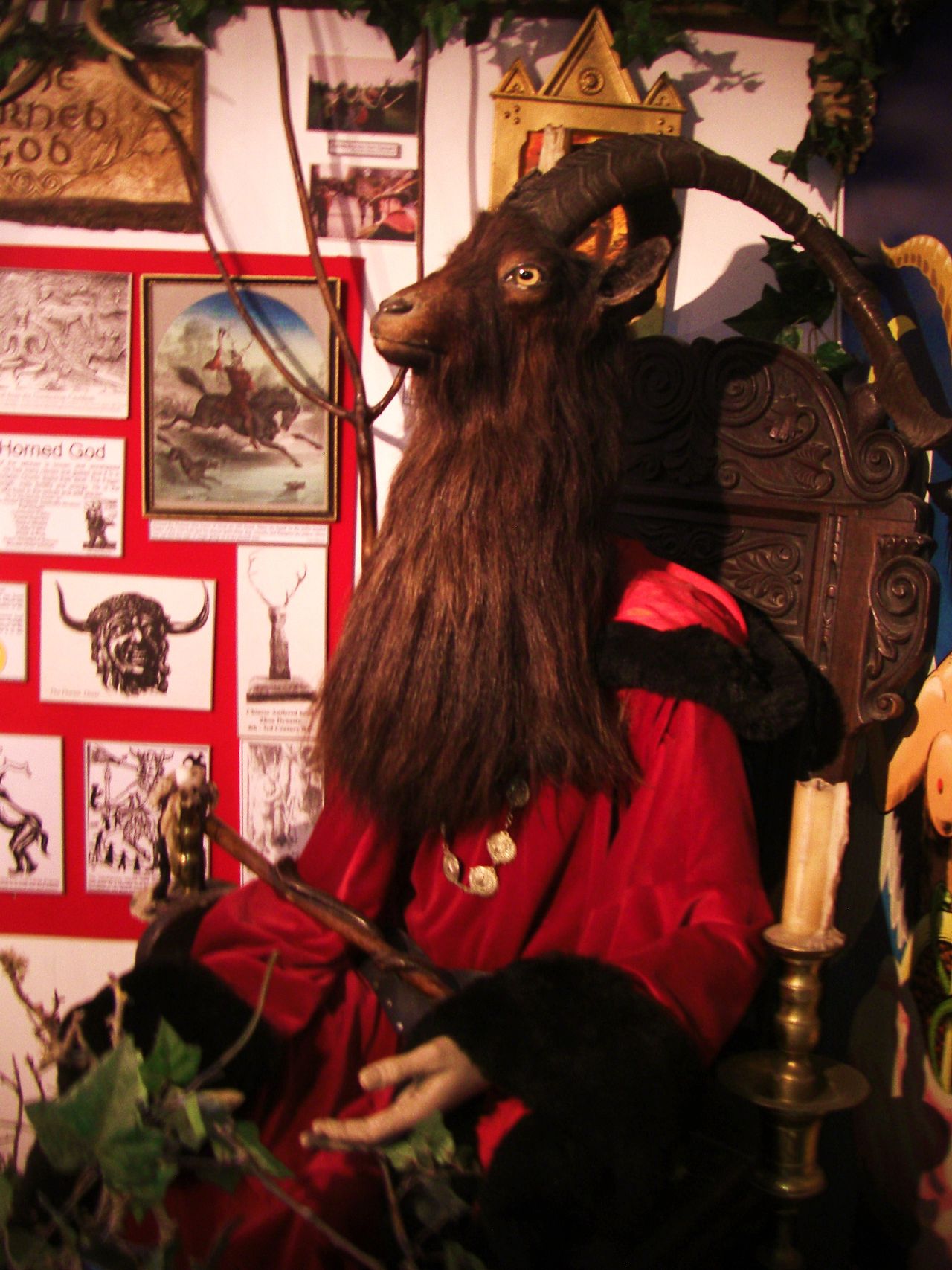
|
Anonymous
| I am also interested in the above question. |
Anonymous
|
Oh my gosh.
Pagans don’t have a monopoly on the lunar calendar. Ask Muslims, Jews, some Buddhists and the Chinese who still use the lunar calendar ton calculate holidays. In fact, the solar calendar wasn’t adopted in Britain until 1752. |
Anonymous
Oh, are we talking about evidence now? Great. I'm ready. Where's yours? Start with the resurrection or the Pesach. Eosturmonath has a name which is now translated "Paschal month", and which was once called after a goddess of theirs named Eostre, in whose honour feasts were celebrated in that month. Now they designate that Paschal season by her name, calling the joys of the new rite by the time-honoured name of the old observance. That was written in the 8th century. By a Christian monk named Bede. Now it's your turn. |
Anonymous
Ēostre is not an English word. Fail. See the post above about Bede's writing. https://en.wikipedia.org/wiki/%C4%92ostre Ēosturmōnaþ (the equivalent of April), pagan Anglo-Saxons had held feasts in Ēostre's honour, but that this tradition had died out by his time, replaced by the Christian Paschal month, a celebration of the resurrection of Jesus. If you disagree with that, change the wikipedia page and see what happens. Cite your sources if you want it to last.
A monopoly? WTF are you talking about? We're talking about the cultural origins of these icons of the holiday. And I am a different poster who knows nothing about modern paganism and cares less than that about it. |
Anonymous
Pagan pp has it backwards. First came the lunar calendar. Then came the many religions that based their festivals in the lunar calendar, and paganism was just one more of these. |
Anonymous
You're making a claim; turning around and demanding that I produce evidence on a different claim (one I've not even made) is not a response. Your "evidence" also doesn't prove what you're trying to claim. Bede does, indeed, claim that the word Easter derives from the goddess Eostre, but he doesn't mention eggs or rabbits. He also might well be wrong; Bede isn't writing about contemporary history, he's writing about a period a couple hundred years before he lived. Hell, it was (and to an extent still is) debated whether or not Bede invented the Eostre entirely. That seems unlikely (to me) based on some inscriptions with etymologically similar names, but you're hanging a lot on a single source who is demonstrably wrong on some issues. He has some etymologies of Anglo Saxon months that are widely considered to be wrong, for instance, which isn't unexpected given that he's describing a distant historical practice, not his own day (and invented etymologies are common in late antique and medieval writing). Either way, the "name of Easter ultimately derives from a pagan goddess" isn't proving what you think it is. The timing of Easter was set before Bede ever lived and before the Anglo Saxons were Christianized. He describes nothing in the celebration of Eostre at all, much less anything that sounds like Easter eggs and bunnies. As I said originally, you might choose to guess that that's what Eostre worship was like, but there's no evidence that you're right, it's just conjecture. Conjecture no one made until Adolf Holtzmann wrote about it in the 1870s. I am a Christian, but I'm not concerned about this as a Christian. I have no problem with "baptizing" useful pagan customs. I have a problem with these stories, because they fail as history. There simply isn't evidence for them, and people believe them because they show up on the History Channel between showings of Ancient Aliens. |
Anonymous
Um. No. That was a test of faith |
Anonymous
Incorrect. Every tradition you listed is pagan in origin. Costumes were used to blend in with the deceased. Treats or tricks were a big part of the festival. Pumpkins were carved to scare evil spirits. |
Anonymous
I can’t speak for all pagans. I’m a witch. And a Christian. It bothers me that the church does nothing to honor where the traditions they loosely celebrate come from. |
Anonymous
Sure! Easter comes from the Saxon word Eostre. We celebrate the spring equinox. It is celebrated the Sunday following the first full moon after the spring equinox. Very much pagan. The feast celebrates the end of the darkness and fertility. Bunnies and eggs represent new life and fertility. I guess the Christians kinda liked that part. The goat associated with Wicca is a way of honoring horned deities, of which there are many. All witches are not Wiccan. Most witches aren’t using goats in their practice. |