
CNN Special - Moms who voted for Biden explain why they voted for a Republican(Youngkin) in Virginia
![[Post New]](/jforum/templates/default/images/icon_minipost_new.gif)
Anonymous
I actually think Youngkin's kids being in-person during a terrible year is a bonus for his campaign. He understand exactly how much the kids of his constituents were losing out on. |
Anonymous
Listen, you kids were home for months with online school, how much framing “equity, etc” did you see? Nothing in their math classes, science classes, my kid was reading 1984, and even in US history it covered the same events I grew up with. Did you actually observe any thing that Fox News is scaremongering you with? |
Anonymous
|
^^^
Different poster they just canceled my kids Halloween parade so the kids can walk for causes including LGBTQ. My kid is in elementary school. Stop acting like this isn’t happening. We aren’t stupid. |
Anonymous
Who canceled your kids Halloween parade? The neighborhood HOA? The school principal? The town mayor? |
Anonymous
Please explain - with links - how Youngkin voters "don't want equality." We'll wait. |
Anonymous
This. How do Dems not see that the progressive wing of their party is extremely unappealing to moderates and independents, i.e. the voters they need in order to win elections in purple states?! |
Anonymous
DP. You seem a little out of touch. Here's some light reading for you, straight from the Virginia Department of Education. Anti-racism requires acknowledging that racist beliefs and structures are pervasive in education and then actively doing work to tear down those beliefs and structures. Strategic planning around racial equity that does not include systemic analysis of racism helps to maintain systems of oppression. In doing so, students are hurt. Systemic racism impacts student learning—resulting in disparate educational outcomes—but it also has a significant impact on students’ social-emotional wellbeing. Racialized outcomes do not require racist actors. Racism goes far beyond individual instances of mistreatment due to skin color. The focus of an anti-racist education agenda should instead be on interrogating and dismantling the system of social structures that produces cumulative, durable, race-based inequalities. Striving for equity and inclusion is not interchangeable with acknowledging systemic racism. Racism cannot be defeated unless it is named for what it is. By naming and framing racism it is no longer ‘masked’ by coded language and denial (from: How school and district leaders can address systemic racism). Racism is dynamic and ever-changing. Racism has been ingrained into society through the incorporation of racialized practices into all the social and economic structures of the United States. The work to dismantle systemic racism—and create school environments grounded in the principles of anti-racism—must adapt to the dynamism of racism through ongoing and active work. In other words, school leaders should not expect to eradicate racism in a few weeks, but rather to continuously evaluate current and future practices with anti-racism as the goal (from: Racial Equity Tools, & Grassroots Policy Project. (n.d.). Race, Power and Policy: Dismantling Structural Racism). Anti-racism requires systemic analysis and proactive action. Anti-racism acknowledges that racism exists, directly and openly names it, and actively works to identify ways in which racism permeates organizational systems. Only then are leaders able to remedy and prevent the racially inequitable outcomes, power imbalances, and the structures that sustain inequities in schools and divisions. Structural racialization is a system of social structures that produce and reproduce cumulative, durable, race-based inequalities. (from The Kirwan Institute for the Study of Race and Ethnicity) Anti-racist school leaders explicitly and implicitly challenge all manifestations of racism and racialization. Systemic and institutional racism are interchanged, but school and division leaders should note that institutional racism focuses on unfair practices or policies within and between institutions—such as discipline policies—that disproportionately impact students of color. Systemic racism includes institutional racism but takes it further by examining the historical, cultural, and social factors in the unequal power, access, opportunities, treatment, and outcomes between white students and students of color (from: How school and district leaders can address systemic racism). https://www.doe.virginia.gov/edequityva/navigating-equity-book.pdf https://www.virginiaisforlearners.virginia.gov/anti-racism-in-education/ |
Anonymous
| I honestly do not understand how people think that Democrats can support closing schools for well over a year, berate parents raising concerns, and see no electoral consequences. |
Anonymous
Terry said: IDK but that wasn't me. And to show you just how much I care I'm bringing on stage the AFT head who made it happen. Round of a applause ladies and gentlemen! |
Anonymous
|
LOOOL the delusion
|
Anonymous
Let me get this straight. You voted for Youngkin because your kid's Halloween parade [that would have taken away from instructional time] got cancelled. Meanwhile, you're upset that your kid had such little instructional time last year? Ooooooohkay |
Anonymous
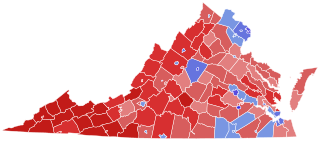
| You guys know that the vast majority of Northern Virginia still voted blue, right? You've seen that map? |
Anonymous
DP. Seems like that tantrum won.  See you at the inauguration. See you at the inauguration.
|
Anonymous
30% of NOVA going red + all of RVA going red = a red state. Enjoy. |
Anonymous
As much as you want that narrative to be true, this election was not decided by moderates and independents, these people are not the ones that swung the election. MORE people voted in this election than ever before. The majority of them were from the southern, rural regions. Republicans (most of them invigorated by the Trump movement) came out in full force, like presidential election-level full force, and there were simply more of them than Democrats. If Democrats had run an Obama-type candidate, perhaps they would have inspired more young voters and minority voters who skipped this election to come out and vote. |