
ECNL moving to school year part 2

Anonymous
Anonymous wrote:
Anonymous wrote:
Anonymous wrote:
Anonymous wrote:
Anonymous wrote:
Anonymous wrote:
Anonymous wrote:
Anonymous wrote:
Anonymous wrote:As a parent of an August player who is misaligned on grade, my biggest takeaway from this thread is to look into HGH

On a serious note, the question is what benefits an August misaligned player more:

- playing on age and being one of the oldest and top players on A team
- playing on grade with kids up to 12 months older and being mid-low A team or mid-top B team

I can definitely see how RAE plays a role here.

Don't forget being ignored by recruiters when your kid gets older if they play down.

Also dont buy into the rae nonsense that just because your kid was born a certain month that their entire future is predetermined. Even right now in BY there's all kinds of 3rd and 4th quarter birthdays that are playing up a grade and start.


Are there idiots on here who don't realize RAE ONLY APPLIES TO LATE (skilled) AND EARLY DEVELOPERS

RAE is about the proven obvious Bias in the Selection process of picking the big kids over the smaller kids.
It's not about skills.

I dont even know what to say rae is dumb but selective rae is dumber.


Moron, it's selective because a Q3 or Q4 can be an early developer

Every Q3 or Q4 isn't tiny. Neither is every Q2 or Q1 a giant

Understand now or should I type slower?

Better yet, why don't you show us a scientific academic study that disproves and contradicts all the RAE studies?

like this one?

https://medium.com/@giacorada/the-fascinating-birth-trend-among-professional-soccer-players-b2a48d015e7d
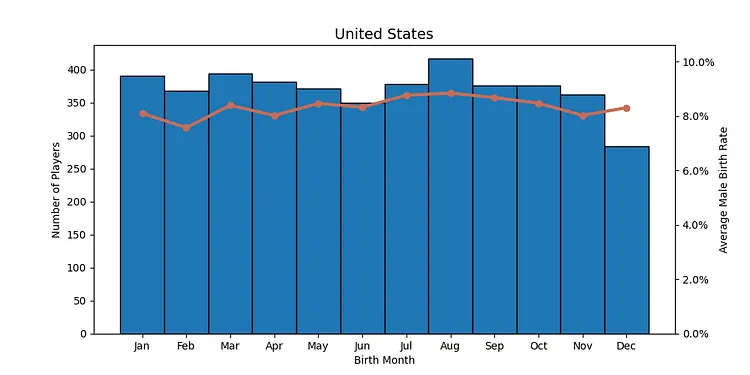
He wasn't very transparent in whether the players played in the US as kids, and over half of MLS is foreign players. He said US professional soccer players, he didn't say US born professional soccer players.

"Interestingly, the distribution of the number of US professional soccer players by birth month does not show a decreasing linear trend like the other countries we investigated."

The US distribution seems to be a combo of various European and South and Central American players.


No study of RAE focuses on Professional rosters only
Because RAE is about the selection of early developers over late developers, in KIDS

I know one that did.

https://medium.com/@giacorada/the-fascinating-birth-trend-among-professional-soccer-players-b2a48d015e7d


If this chart about Professional Adult players is RAE, can someone point out the part where the adults go through a second puberty?
Since every RAE study is about pre-puberty selections and impact of puberty on late developers
Anonymous
Anonymous wrote:
Anonymous wrote:
Anonymous wrote:
Anonymous wrote:You ask for a study and one is provided with American defined data.

Just accept reality.
That's a great chart in showing that a change in the 12 month age range can mitigate RAE but it might be the result of just layering SY and BY RAE on top of each other in the cumulative data. He should do a Fischer's transformation based on birth year on the two populations to test this. Considering he thought SY in 2023 was birthdate cutoff for these players who were up to what 40 years old, he didn't even think of it. It's why you do research on the subject you know with data you know.


Have him find a chart of the USYNT rosters.
Because this is what US Soccer says

**The Relative Age Effect (RAE) in US Youth National Team (USYNT) rosters means players born earlier in the cutoff period (e.g., Jan-Mar) get selected due to being physically more mature (bigger/stronger), creating a developmental advantage over later-born players (Aug-Oct) who are often more skilled but overlooked. U.S. Soccer has tried different cutoffs (August 1st to January 1st and back) to lessen RAE and align with school years, but RAE persists, though studies show it's less pronounced in elite YNTs, with later-born, late-maturing players sometimes appearing more in those rosters.

How RAE Affects USYNTs
Selection Bias: Early-born players often seem more talented at younger ages because they are physically bigger and faster, leading coaches to favor them.
Disadvantage for Late Developers: Skilled players born later in the year (e.g., Oct-Dec) get overlooked because they aren't as physically developed as their older peers, potentially losing out on crucial early identification**


That's all well and true but Aug guy only likes the study that benefits his anti-rae argument.

It appears that you dont like the study that only includes American data.
Anonymous
Anonymous wrote:
Anonymous wrote:
Anonymous wrote:You ask for a study and one is provided with American defined data.

Just accept reality.
That's a great chart in showing that a change in the 12 month age range can mitigate RAE but it might be the result of just layering SY and BY RAE on top of each other in the cumulative data. He should do a Fischer's transformation based on birth year on the two populations to test this. Considering he thought SY in 2023 was birthdate cutoff for these players who were up to what 40 years old, he didn't even think of it. It's why you do research on the subject you know with data you know.

Ahhh, but the author said nothing about that. Sounds more like your reinterpretation of the data.
Is your position that because the author didn't know that youth soccer went from SY to BY in 2016 that it didn't happen?
Anonymous
Anonymous wrote:
Anonymous wrote:
Anonymous wrote:
Anonymous wrote:You ask for a study and one is provided with American defined data.

Just accept reality.
That's a great chart in showing that a change in the 12 month age range can mitigate RAE but it might be the result of just layering SY and BY RAE on top of each other in the cumulative data. He should do a Fischer's transformation based on birth year on the two populations to test this. Considering he thought SY in 2023 was birthdate cutoff for these players who were up to what 40 years old, he didn't even think of it. It's why you do research on the subject you know with data you know.

Ahhh, but the author said nothing about that. Sounds more like your reinterpretation of the data.
Is your position that because the author didn't know that youth soccer went from SY to BY in 2016 that it didn't happen?

No its because thats what the data says.

Your personal views don't matter.
Anonymous
Anonymous wrote:
Anonymous wrote:
Anonymous wrote:
Anonymous wrote:
Anonymous wrote:You ask for a study and one is provided with American defined data.

Just accept reality.
That's a great chart in showing that a change in the 12 month age range can mitigate RAE but it might be the result of just layering SY and BY RAE on top of each other in the cumulative data. He should do a Fischer's transformation based on birth year on the two populations to test this. Considering he thought SY in 2023 was birthdate cutoff for these players who were up to what 40 years old, he didn't even think of it. It's why you do research on the subject you know with data you know.


Have him find a chart of the USYNT rosters.
Because this is what US Soccer says

**The Relative Age Effect (RAE) in US Youth National Team (USYNT) rosters means players born earlier in the cutoff period (e.g., Jan-Mar) get selected due to being physically more mature (bigger/stronger), creating a developmental advantage over later-born players (Aug-Oct) who are often more skilled but overlooked. U.S. Soccer has tried different cutoffs (August 1st to January 1st and back) to lessen RAE and align with school years, but RAE persists, though studies show it's less pronounced in elite YNTs, with later-born, late-maturing players sometimes appearing more in those rosters.

How RAE Affects USYNTs
Selection Bias: Early-born players often seem more talented at younger ages because they are physically bigger and faster, leading coaches to favor them.
Disadvantage for Late Developers: Skilled players born later in the year (e.g., Oct-Dec) get overlooked because they aren't as physically developed as their older peers, potentially losing out on crucial early identification**


That's all well and true but Aug guy only likes the study that benefits his anti-rae argument.

It appears that you dont like the study that only includes American data.


A study that says August is the highest represented birth month in US youth soccer? 🤣🤣🤣🤣

Imagine we're the only country in the world where Q3 is more represented than Q1 and Q2 lol

Can't believe people are arguing with this guy. Ludicrous
Anonymous
Anonymous wrote:
Anonymous wrote:
Anonymous wrote:
Anonymous wrote:
Anonymous wrote:You ask for a study and one is provided with American defined data.

Just accept reality.
That's a great chart in showing that a change in the 12 month age range can mitigate RAE but it might be the result of just layering SY and BY RAE on top of each other in the cumulative data. He should do a Fischer's transformation based on birth year on the two populations to test this. Considering he thought SY in 2023 was birthdate cutoff for these players who were up to what 40 years old, he didn't even think of it. It's why you do research on the subject you know with data you know.

Ahhh, but the author said nothing about that. Sounds more like your reinterpretation of the data.
Is your position that because the author didn't know that youth soccer went from SY to BY in 2016 that it didn't happen?

No its because thats what the data says.

Your personal views don't matter.
So you are saying the data says that youth soccer didn't go from SY to BY in 2016?
Anonymous
I'm so torn, do we like arguing about RAE or Aug-Sept grades? Come on, people, this is like slamming our heads against the wall. He's not changing his mind. He's is just here to needle you all.
Anonymous
Anonymous wrote:
Anonymous wrote:
Anonymous wrote:
Anonymous wrote:
Anonymous wrote:You ask for a study and one is provided with American defined data.

Just accept reality.
That's a great chart in showing that a change in the 12 month age range can mitigate RAE but it might be the result of just layering SY and BY RAE on top of each other in the cumulative data. He should do a Fischer's transformation based on birth year on the two populations to test this. Considering he thought SY in 2023 was birthdate cutoff for these players who were up to what 40 years old, he didn't even think of it. It's why you do research on the subject you know with data you know.

Ahhh, but the author said nothing about that. Sounds more like your reinterpretation of the data.
Is your position that because the author didn't know that youth soccer went from SY to BY in 2016 that it didn't happen?

No its because thats what the data says.

Your personal views don't matter.


So we should ignore actual rosters, US Soccer and multiple studies from actual academic organizations

But listen to a dude who came up with your madness chart
Anonymous
Anonymous wrote:
Anonymous wrote:
Anonymous wrote:
Anonymous wrote:
Anonymous wrote:
Anonymous wrote:You ask for a study and one is provided with American defined data.

Just accept reality.
That's a great chart in showing that a change in the 12 month age range can mitigate RAE but it might be the result of just layering SY and BY RAE on top of each other in the cumulative data. He should do a Fischer's transformation based on birth year on the two populations to test this. Considering he thought SY in 2023 was birthdate cutoff for these players who were up to what 40 years old, he didn't even think of it. It's why you do research on the subject you know with data you know.

Ahhh, but the author said nothing about that. Sounds more like your reinterpretation of the data.
Is your position that because the author didn't know that youth soccer went from SY to BY in 2016 that it didn't happen?

No its because thats what the data says.

Your personal views don't matter.


So we should ignore actual rosters, US Soccer and multiple studies from actual academic organizations

But listen to a dude who came up with your madness chart


If you look at the whole paper, it actually pretty much shows RAE everywhere but in the US data.
Anonymous
Anonymous wrote:
Anonymous wrote:
Anonymous wrote:
Anonymous wrote:
Anonymous wrote:
Anonymous wrote:You ask for a study and one is provided with American defined data.

Just accept reality.
That's a great chart in showing that a change in the 12 month age range can mitigate RAE but it might be the result of just layering SY and BY RAE on top of each other in the cumulative data. He should do a Fischer's transformation based on birth year on the two populations to test this. Considering he thought SY in 2023 was birthdate cutoff for these players who were up to what 40 years old, he didn't even think of it. It's why you do research on the subject you know with data you know.

Ahhh, but the author said nothing about that. Sounds more like your reinterpretation of the data.
Is your position that because the author didn't know that youth soccer went from SY to BY in 2016 that it didn't happen?

No its because thats what the data says.

Your personal views don't matter.


So we should ignore actual rosters, US Soccer and multiple studies from actual academic organizations

But listen to a dude who came up with your madness chart

Or just read and review what the data says.

Which is that American pro players birth month is equally distributed though the year.
Anonymous
Anonymous wrote:
Anonymous wrote:
Anonymous wrote:
Anonymous wrote:
Anonymous wrote:
Anonymous wrote:
Anonymous wrote:You ask for a study and one is provided with American defined data.

Just accept reality.
That's a great chart in showing that a change in the 12 month age range can mitigate RAE but it might be the result of just layering SY and BY RAE on top of each other in the cumulative data. He should do a Fischer's transformation based on birth year on the two populations to test this. Considering he thought SY in 2023 was birthdate cutoff for these players who were up to what 40 years old, he didn't even think of it. It's why you do research on the subject you know with data you know.

Ahhh, but the author said nothing about that. Sounds more like your reinterpretation of the data.
Is your position that because the author didn't know that youth soccer went from SY to BY in 2016 that it didn't happen?

No its because thats what the data says.

Your personal views don't matter.


So we should ignore actual rosters, US Soccer and multiple studies from actual academic organizations

But listen to a dude who came up with your madness chart


If you look at the whole paper, it actually pretty much shows RAE everywhere but in the US data.


Yes, the real question is why was the US an outlier. The author wonders (not conclusively) if that's because of our P2P system. BUT he doesn't acknowledge the BY to SY switch. A huge confounder that could explain everything.
Anonymous
Anonymous wrote:
Anonymous wrote:
Anonymous wrote:
Anonymous wrote:
Anonymous wrote:
Anonymous wrote:
Anonymous wrote:You ask for a study and one is provided with American defined data.

Just accept reality.
That's a great chart in showing that a change in the 12 month age range can mitigate RAE but it might be the result of just layering SY and BY RAE on top of each other in the cumulative data. He should do a Fischer's transformation based on birth year on the two populations to test this. Considering he thought SY in 2023 was birthdate cutoff for these players who were up to what 40 years old, he didn't even think of it. It's why you do research on the subject you know with data you know.

Ahhh, but the author said nothing about that. Sounds more like your reinterpretation of the data.
Is your position that because the author didn't know that youth soccer went from SY to BY in 2016 that it didn't happen?

No its because thats what the data says.

Your personal views don't matter.


So we should ignore actual rosters, US Soccer and multiple studies from actual academic organizations

But listen to a dude who came up with your madness chart

Or just read and review what the data says.

Which is that American pro players birth month is equally distributed though the year.

Heres the study.

https://medium.com/@giacorada/the-fascinating-birth-trend-among-professional-soccer-players-b2a48d015e7d

Anonymous
Anonymous wrote:
Anonymous wrote:
Anonymous wrote:
Anonymous wrote:
Anonymous wrote:
Anonymous wrote:
Anonymous wrote:You ask for a study and one is provided with American defined data.

Just accept reality.
That's a great chart in showing that a change in the 12 month age range can mitigate RAE but it might be the result of just layering SY and BY RAE on top of each other in the cumulative data. He should do a Fischer's transformation based on birth year on the two populations to test this. Considering he thought SY in 2023 was birthdate cutoff for these players who were up to what 40 years old, he didn't even think of it. It's why you do research on the subject you know with data you know.

Ahhh, but the author said nothing about that. Sounds more like your reinterpretation of the data.
Is your position that because the author didn't know that youth soccer went from SY to BY in 2016 that it didn't happen?

No its because thats what the data says.

Your personal views don't matter.


So we should ignore actual rosters, US Soccer and multiple studies from actual academic organizations

But listen to a dude who came up with your madness chart

Or just read and review what the data says.

Which is that American pro players birth month is equally distributed though the year.
Over half of the pro players in America's MLS are foreign, aka didn't play here as kids.
Anonymous
Anonymous wrote:
Anonymous wrote:
Anonymous wrote:
Anonymous wrote:
Anonymous wrote:
Anonymous wrote:
Anonymous wrote:
Anonymous wrote:You ask for a study and one is provided with American defined data.

Just accept reality.
That's a great chart in showing that a change in the 12 month age range can mitigate RAE but it might be the result of just layering SY and BY RAE on top of each other in the cumulative data. He should do a Fischer's transformation based on birth year on the two populations to test this. Considering he thought SY in 2023 was birthdate cutoff for these players who were up to what 40 years old, he didn't even think of it. It's why you do research on the subject you know with data you know.

Ahhh, but the author said nothing about that. Sounds more like your reinterpretation of the data.
Is your position that because the author didn't know that youth soccer went from SY to BY in 2016 that it didn't happen?

No its because thats what the data says.

Your personal views don't matter.


So we should ignore actual rosters, US Soccer and multiple studies from actual academic organizations

But listen to a dude who came up with your madness chart

Or just read and review what the data says.

Which is that American pro players birth month is equally distributed though the year.
Over half of the pro players in America's MLS are foreign, aka didn't play here as kids.


Sorry, that's not the best counter argument. The data takes country of origin (not where they play) and birth month. These are American players.
Anonymous
Anonymous wrote:
Anonymous wrote:
Anonymous wrote:
Anonymous wrote:
Anonymous wrote:
Anonymous wrote:
Anonymous wrote:
Anonymous wrote:You ask for a study and one is provided with American defined data.

Just accept reality.
That's a great chart in showing that a change in the 12 month age range can mitigate RAE but it might be the result of just layering SY and BY RAE on top of each other in the cumulative data. He should do a Fischer's transformation based on birth year on the two populations to test this. Considering he thought SY in 2023 was birthdate cutoff for these players who were up to what 40 years old, he didn't even think of it. It's why you do research on the subject you know with data you know.

Ahhh, but the author said nothing about that. Sounds more like your reinterpretation of the data.
Is your position that because the author didn't know that youth soccer went from SY to BY in 2016 that it didn't happen?

No its because thats what the data says.

Your personal views don't matter.


So we should ignore actual rosters, US Soccer and multiple studies from actual academic organizations

But listen to a dude who came up with your madness chart

Or just read and review what the data says.

Which is that American pro players birth month is equally distributed though the year.

Heres the study.

https://medium.com/@giacorada/the-fascinating-birth-trend-among-professional-soccer-players-b2a48d015e7d

Well, that would be a big a reason it wasn't in a peer reviewed journal and is a medium article / working paper.
post reply Forum Index » Soccer
Message Quick Reply
Go to: