
UVA acceptances and socioeconomic status

Anonymous
Anonymous wrote:They can be “need blind” and still filter for economic status. For example, is it harder to get in from an expensive private than from a large city public that seves an underserved population?


It's pretty crafty to drop that in as a question. You're trying to make a suggestion, but have zero evidence, so you pose it like this.

Most of the kids there are from public schools because that's where most kids go to school.
Anonymous
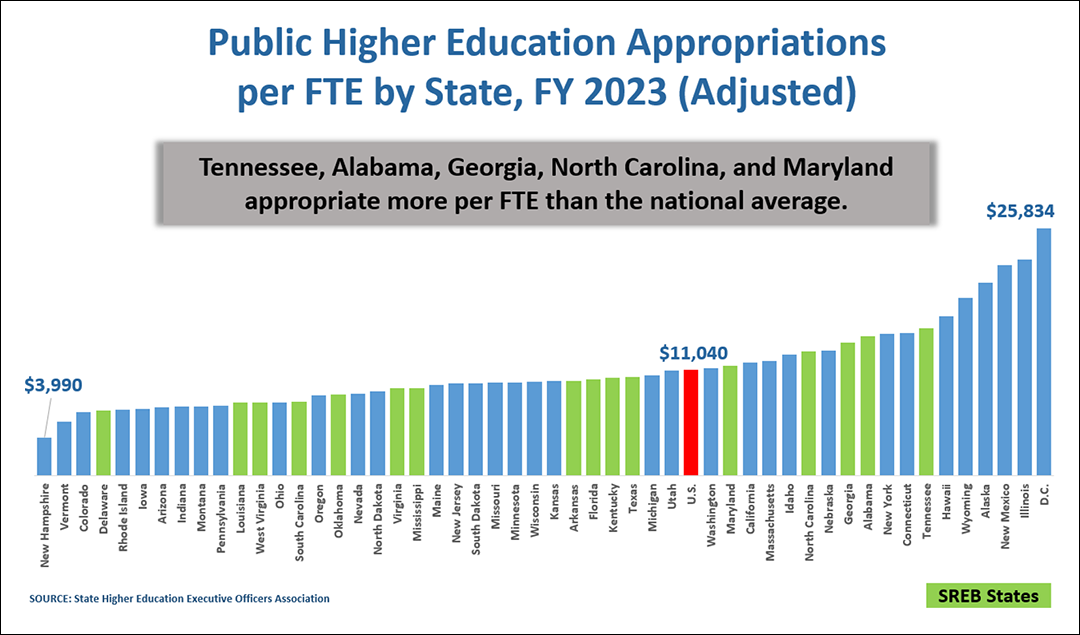
Virginia is far below average on higher ed spending. Maryland is above average. North Caroline is among the top.

Anonymous
Even more recent data. Virginia far below. Maryland and North Carolina above.
Anonymous
Anonymous wrote:I don't doubt it. The wealth of out-of-state kids in the first year class is absurd. My child went to a 55k private so is no stranger to being around money but has never seen wealth like there is at UVA among many OOS kids. They had a professor comment on it, unprovoked during office hours because the professor feels like it's really increased in recent years.


What are the signs of this wealth? Especially that the professors are noticing?
Anonymous
Anonymous wrote:
Anonymous wrote:I don't doubt it. The wealth of out-of-state kids in the first year class is absurd. My child went to a 55k private so is no stranger to being around money but has never seen wealth like there is at UVA among many OOS kids. They had a professor comment on it, unprovoked during office hours because the professor feels like it's really increased in recent years.


What are the signs of this wealth? Especially that the professors are noticing?

One student said one professor had an comment. That's all they based this on.
Anonymous
Anecdotal (I know), but I remember once as a UVa student my professor asked our class who had a part-time and no one raised their hand. He was flabbergasted.
Anonymous
Anonymous wrote:
Anonymous wrote:They can be “need blind” and still filter for economic status. For example, is it harder to get in from an expensive private than from a large city public that seves an underserved population?


Fine with me if it is. It’s a public school serving the state of Virginia, whose residents are overwhelmingly educated in public schools.


What are you even talking about? There are residents of Virginia, paying the same taxes, that attend private schools. Of course they deserve the same access to the state’s public universities. It shouldn’t be harder or easier to get into UVA from a private school.
Anonymous
Anonymous wrote:
Anonymous wrote:
Anonymous wrote:They can be “need blind” and still filter for economic status. For example, is it harder to get in from an expensive private than from a large city public that seves an underserved population?


Fine with me if it is. It’s a public school serving the state of Virginia, whose residents are overwhelmingly educated in public schools.


What are you even talking about? There are residents of Virginia, paying the same taxes, that attend private schools. Of course they deserve the same access to the state’s public universities. It shouldn’t be harder or easier to get into UVA from a private school.


Your tax paying status gets you in-state tuition at any Virginia university, not a seat at any specific one. If you choose a high school that can cherry pick top students and your kid finds it harder to stand out, that’s on you.
Anonymous
Anonymous wrote:
Anonymous wrote:
Anonymous wrote:
Anonymous wrote:They can be “need blind” and still filter for economic status. For example, is it harder to get in from an expensive private than from a large city public that seves an underserved population?


Fine with me if it is. It’s a public school serving the state of Virginia, whose residents are overwhelmingly educated in public schools.


What are you even talking about? There are residents of Virginia, paying the same taxes, that attend private schools. Of course they deserve the same access to the state’s public universities. It shouldn’t be harder or easier to get into UVA from a private school.


Your tax paying status gets you in-state tuition at any Virginia university, not a seat at any specific one. If you choose a high school that can cherry pick top students and your kid finds it harder to stand out, that’s on you.


My kid did get into UVA from private school. My comment was a reply to the poster that said it was fine with them if it was harder for a kid at a private school to get into UVA. They were being rude for no reason. It shouldn't be harder or easier. You are compared to people at your own high school.
Anonymous
Anonymous wrote:
Anonymous wrote:
Anonymous wrote:
Anonymous wrote:
Anonymous wrote:
Anonymous wrote:
Anonymous wrote:
Anonymous wrote:I don't doubt it. The wealth of out-of-state kids in the first year class is absurd. My child went to a 55k private so is no stranger to being around money but has never seen wealth like there is at UVA among many OOS kids. They had a professor comment on it, unprovoked during office hours because the professor feels like it's really increased in recent years.


UVA goes for a relatively low percentage of in state, compared to most others (UNC requires 85% in state?). Isn’t that against the mission of large public state universities?


Compared to who?
UVA is about 1/3 out of state
Michigan is about 50/50
Berkeley and UCLA are about 15-20% out of state
UNC is about 18% out of state


1/3rd out of state is a very large contingent, larger than most of the examples you are citing.


Virginia ranks relatively low in funding higher education, so out of state enrollment is needed from a funding perspective. North Carolina, for instance, provides significantly higher funding for higher education.


This, UVA receives less than 6% of its budget from the Commonwealth. Most publics are at 100%


Above is true.

However, the percentage of budget that comes from the Commonwealth is a bit higher than 6% if one separates out the (large) UVA Health System and only considers the academic budget.


It’s actually not true at all for a flagship.

First, your point on the UVA budget is right but it’s not “a bit higher” than 6%. It’s almost 12%. And you should separate out the medical center, because UVA does as well in its budgeting and the medical center is self funded. The state provides almost 12% of the academic division (ie, the university) revenues, it does not fund the medical center. See here: https://uvafinance.virginia.edu/sites/uvafinance/files/2024-08/Pages%20from%20June%2024%20Finance%20Committee%20Slides%20Final.pdf

Now, is that 12% vs 100% at other large publics? Apples to apples comparisons are tough because everyone budgets differently, but no, it’s not even close. For example, UNC was mentioned. Even if you strip out revenue from patients (because they combine the hospital and academic parts) to make it more like UVA, state appropriations are about 18% of total revenues. At Michigan it is about 7%. And so on.


No large state publics are anywhere close to 100% funded by state general fund appropriations. States typically don't fund the majority of sponsored research, auxiliary enterprises (housing and dining), intercollegiate athletics, hospital operations, etc.

However, if you take away state funding, even at UVA, in-state tuition and fees would have to rise to near private school levels to compensate for the revenue loss.

Anonymous
Anonymous wrote:Even more recent data. Virginia far below. Maryland and North Carolina above.


I think Virginia universities overperform relative to their level of support from the state.
Anonymous
Anonymous wrote:
Anonymous wrote:
Anonymous wrote:
Anonymous wrote:
Anonymous wrote:
Anonymous wrote:
Anonymous wrote:
Anonymous wrote:
Anonymous wrote:I don't doubt it. The wealth of out-of-state kids in the first year class is absurd. My child went to a 55k private so is no stranger to being around money but has never seen wealth like there is at UVA among many OOS kids. They had a professor comment on it, unprovoked during office hours because the professor feels like it's really increased in recent years.


UVA goes for a relatively low percentage of in state, compared to most others (UNC requires 85% in state?). Isn’t that against the mission of large public state universities?


Compared to who?
UVA is about 1/3 out of state
Michigan is about 50/50
Berkeley and UCLA are about 15-20% out of state
UNC is about 18% out of state


1/3rd out of state is a very large contingent, larger than most of the examples you are citing.


Virginia ranks relatively low in funding higher education, so out of state enrollment is needed from a funding perspective. North Carolina, for instance, provides significantly higher funding for higher education.


This, UVA receives less than 6% of its budget from the Commonwealth. Most publics are at 100%


Above is true.

However, the percentage of budget that comes from the Commonwealth is a bit higher than 6% if one separates out the (large) UVA Health System and only considers the academic budget.


It’s actually not true at all for a flagship.

First, your point on the UVA budget is right but it’s not “a bit higher” than 6%. It’s almost 12%. And you should separate out the medical center, because UVA does as well in its budgeting and the medical center is self funded. The state provides almost 12% of the academic division (ie, the university) revenues, it does not fund the medical center. See here: https://uvafinance.virginia.edu/sites/uvafinance/files/2024-08/Pages%20from%20June%2024%20Finance%20Committee%20Slides%20Final.pdf

Now, is that 12% vs 100% at other large publics? Apples to apples comparisons are tough because everyone budgets differently, but no, it’s not even close. For example, UNC was mentioned. Even if you strip out revenue from patients (because they combine the hospital and academic parts) to make it more like UVA, state appropriations are about 18% of total revenues. At Michigan it is about 7%. And so on.


No large state publics are anywhere close to 100% funded by state general fund appropriations. States typically don't fund the majority of sponsored research, auxiliary enterprises (housing and dining), intercollegiate athletics, hospital operations, etc.

However, if you take away state funding, even at UVA, in-state tuition and fees would have to rise to near private school levels to compensate for the revenue loss.


It looks like Virginia kicks in ~$6k/year. The UVA tuition is about $40K less than private
post reply Forum Index » College and University Discussion
Message Quick Reply
Go to: