New study explains why many elite colleges won’t give up legacy admissions

Anonymous
Anonymous wrote:Kentanji Brown Jackson was first generation Harvard. Her husband was I believe from a multigenerational Harvard legacy family. From everything I have read and heard about him, I don’t think he was an admit that only got in because of legacy like George W. Bush (look at his grades) or the Trump children at Penn. Legacy doubles down on prior privilege. I mean if your great-grandfather or grandfather went to Yale and your Dad went, you are benefitting from a legacy preference that dates back to a time tjose schools actively discriminated against applicants based on race or religion. A time when their grandmothers couldn’t go. Athletics is just another way of building in privilege. Just look at the makeup of the athletic teams and the sports. A lot of wealthy sports are represented. Squash, sailing, water polo, fencing, etc. There’s no recruiting for the debate team, robotics team, band, etc.

Yep. IMO, the "donation" angle is just code for keeping the privilege in house, and the "diversity" angle is their attempt to show that they aren't trying to keep the privilege in house.
Anonymous
I used to give regularly (around 200) to my top 20 alma mater that my siblings also attended. They waitlisted my nephew and sent m brother a letter that basically said let’s talk bigger donation. It ticked me off. My family has some big unexpected ongoing expenses this year. The combination caused me to stop giving.
Anonymous
My school got rid of legacy and it irks me a bit because I was first generation to go to a fancy school, and my kid will not get any preference over our neighbors who have equivalent stats but who are third generation old money rich people or who are getting legacy at their parents alma maters. Since the whole college admission system is now just a lottery in which your stats just have to be good enough to buy you a ticket, I’d like for my alma mater to give my kid a little leg up over the very equivalent kids who also have a lottery ticket. I wouldn’t expect my kid to get a preference over first Gen college students or students from an impoverished background. But it irks a little that she gets no preference over her friends who are getting preferences at other schools or who come from generational wealth.
Anonymous
Anonymous wrote:
Anonymous wrote:
Anonymous wrote:They express it in reverse.

Alumni are liable to stop donating if their children are rejected.


My spouse and I attended the same college as did my father and his brother. We give every year and have since graduation, and we would stop if DS is rejected. We'd continue if DS declined, but I'd see a rejection as the school severing the link.


My spouse and I both attended the same school and we donate every year - our children aren't even applying - they don't want to go. We will still donate because we are supporting the school, not paying so that we will be given special favors for our children.


PP said the same; but if your child did want to go, and did apply, and they rejected your child (and thus your family), you might feel differently about whether they wanted or needed your families donations anymore, especially since the school that does accept your child will soon be asking for donations too.
Anonymous
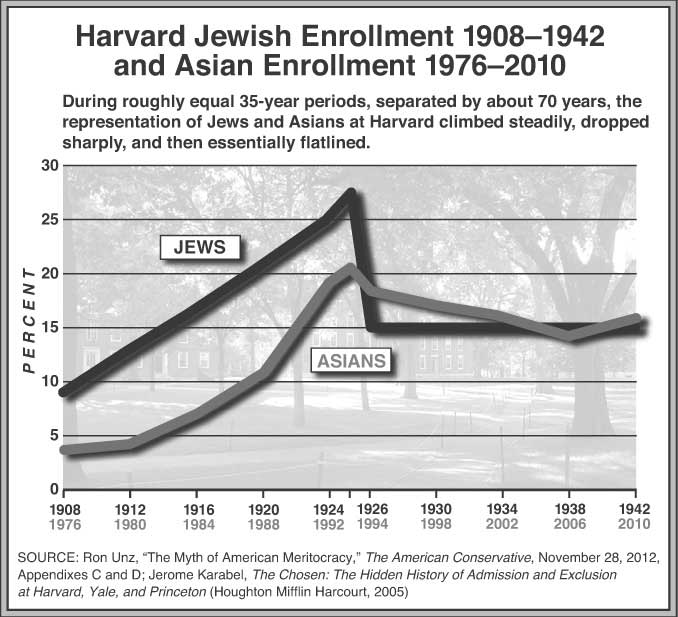
Anonymous wrote:It's complete BS. It's a practice that they used as a way to not increase the Jewish population, and now it's a practice they use as a way to not increase the Asian American population.


https://www.theguardian.com/us-news/2019/jan/23/elite-schools-ivy-league-legacy-admissions-harvard-wealthier-whiter

Disturbing to think they are still using a method created by white supremacists back in the 1920s as an excuse to say, "oh, we need rich people's money so we can admit more URM".

If they lowered the cost, coupled with the amount these univ have in their endowments, the would not need to rely on legacy donations.

Rich parents is how Trump and Bushes got into ivy leagues. Let that sink in.


You are focused on a tiny handful of universities. Not every school has that kind of money.
Anonymous
Anonymous wrote:
Anonymous wrote:Kentanji Brown Jackson was first generation Harvard. Her husband was I believe from a multigenerational Harvard legacy family. From everything I have read and heard about him, I don’t think he was an admit that only got in because of legacy like George W. Bush (look at his grades) or the Trump children at Penn. Legacy doubles down on prior privilege. I mean if your great-grandfather or grandfather went to Yale and your Dad went, you are benefitting from a legacy preference that dates back to a time tjose schools actively discriminated against applicants based on race or religion. A time when their grandmothers couldn’t go. Athletics is just another way of building in privilege. Just look at the makeup of the athletic teams and the sports. A lot of wealthy sports are represented. Squash, sailing, water polo, fencing, etc. There’s no recruiting for the debate team, robotics team, band, etc.

Yep. IMO, the "donation" angle is just code for keeping the privilege in house, and the "diversity" angle is their attempt to show that they aren't trying to keep the privilege in house.


In addition to your exact statement having mutually exclusive conditions, rendering it logically worthless, you have no evidence of the intent of the institutions for either part of it.
Anonymous
After grad school, we have given $200/yr every year.

Also started giving to my undergrad at that time $100/yr and spouse gives same to another grad school they attended.


It is hard to believe this level of giving would give you a leg-up on having your kid admitted. Are you really on their radar screen if you give less than five figures a year?
Anonymous
Anonymous wrote:Kentanji Brown Jackson was first generation Harvard. Her husband was I believe from a multigenerational Harvard legacy family. From everything I have read and heard about him, I don’t think he was an admit that only got in because of legacy like George W. Bush (look at his grades) or the Trump children at Penn. Legacy doubles down on prior privilege. I mean if your great-grandfather or grandfather went to Yale and your Dad went, you are benefitting from a legacy preference that dates back to a time tjose schools actively discriminated against applicants based on race or religion. A time when their grandmothers couldn’t go. Athletics is just another way of building in privilege. Just look at the makeup of the athletic teams and the sports. A lot of wealthy sports are represented. Squash, sailing, water polo, fencing, etc. There’s no recruiting for the debate team, robotics team, band, etc.


People are not saying that every legacy would not have gotten in otherwise. They are saying it shouldn't be considered in admissions. At a school that doesn't use legacy (Hopkins for example), noone can ever say you got in because of legacy status. (Note - this is not to say that you don't benefit in so may other ways from life experience of being a legacy...ways in which will already give you a boost over 90% of the population)
Anonymous
Anonymous wrote:
Anonymous wrote:
Anonymous wrote:
Anonymous wrote:They express it in reverse.

Alumni are liable to stop donating if their children are rejected.


My spouse and I attended the same college as did my father and his brother. We give every year and have since graduation, and we would stop if DS is rejected. We'd continue if DS declined, but I'd see a rejection as the school severing the link.


My spouse and I both attended the same school and we donate every year - our children aren't even applying - they don't want to go. We will still donate because we are supporting the school, not paying so that we will be given special favors for our children.


PP said the same; but if your child did want to go, and did apply, and they rejected your child (and thus your family), you might feel differently about whether they wanted or needed your families donations anymore, especially since the school that does accept your child will soon be asking for donations too.


Again - I would not feel differently if my child applied and was rejected. We NEVER gave with any expectation of getting ANYTHING back - in fact we consider it GIVING back to the school so they can help OTHERS benefit in the ways we did from our time there. We would LOVE for the school to do away with legacy policies. I can't be more clear on this. I understand how you all feel differently - but I do not feel the same way as you do. Our giving is meant fully for giving - no quid pro quo - at all. Clearly not everyone feels (or gives) that way. You be you...no judgment - but don't twist our decisions to meld with yours.
Anonymous
Anonymous wrote:
Anonymous wrote:Kentanji Brown Jackson was first generation Harvard. Her husband was I believe from a multigenerational Harvard legacy family. From everything I have read and heard about him, I don’t think he was an admit that only got in because of legacy like George W. Bush (look at his grades) or the Trump children at Penn. Legacy doubles down on prior privilege. I mean if your great-grandfather or grandfather went to Yale and your Dad went, you are benefitting from a legacy preference that dates back to a time tjose schools actively discriminated against applicants based on race or religion. A time when their grandmothers couldn’t go. Athletics is just another way of building in privilege. Just look at the makeup of the athletic teams and the sports. A lot of wealthy sports are represented. Squash, sailing, water polo, fencing, etc. There’s no recruiting for the debate team, robotics team, band, etc.

Yep. IMO, the "donation" angle is just code for keeping the privilege in house, and the "diversity" angle is their attempt to show that they aren't trying to keep the privilege in house.


+1. I'll go further to say these schools need diversity to ensure the elite and legacies get a a chance to interact with the other 99% of the population for at least a 4 year period of their life, before they retreat back into their gilded bubble. Interacting/gaining understanding with humans other than your own kind is known to be the key to a healthy society.
Anonymous
Anonymous wrote:
After grad school, we have given $200/yr every year.

Also started giving to my undergrad at that time $100/yr and spouse gives same to another grad school they attended.


It is hard to believe this level of giving would give you a leg-up on having your kid admitted. Are you really on their radar screen if you give less than five figures a year?


No - we do not expect our giving to be on their radar as anything meaningful for admissions. But my point continues to be that we do not give (and never have) with any thoughts about how it helps us or whether it would be a boost in admissions. The donations are meant to help the school and the students there.

Our donations are always targeted to the specific academic departments that we were part of. I am certain that those departments DO care about our giving because faculty are in contact with us annually to thank us and to tell us how those funds are used to help students in the department. So, in that sense, we are fully ON their radar - which is the radar we intend to be on. I highly doubt they tell admissions and we would never ask them to do so.
Anonymous
You typically don't need to give for the legacy status to help you. There is also a targeted list from the development office that is bigger donor specific where any legacy info is included. That is how it was when I worked in admissions years ago anyway.
Anonymous
Anonymous wrote:The above are probably the same screaming about meritocracy. No way others were more qualified than their child.

Talk about buying your kid a spot.


That’s nothing. A few mil can buy you a spot at Yale(because apparently Harvard would not be believed.)
Anonymous
Anonymous wrote:You typically don't need to give for the legacy status to help you. There is also a targeted list from the development office

that is bigger donor specific where any legacy info is included. That is how it was when I worked in admissions years ago anyway.


Yup. Except now it has to be millions (plural).
Anonymous
Anonymous wrote:Kentanji Brown Jackson was first generation Harvard. Her husband was I believe from a multigenerational Harvard legacy family. From everything I have read and heard about him, I don’t think he was an admit that only got in because of legacy like George W. Bush (look at his grades) or the Trump children at Penn. Legacy doubles down on prior privilege. I mean if your great-grandfather or grandfather went to Yale and your Dad went, you are benefitting from a legacy preference that dates back to a time tjose schools actively discriminated against applicants based on race or religion. A time when their grandmothers couldn’t go. Athletics is just another way of building in privilege. Just look at the makeup of the athletic teams and the sports. A lot of wealthy sports are represented. Squash, sailing, water polo, fencing, etc. There’s no recruiting for the debate team, robotics team, band, etc.


There absolutely is recruiting for debate and band. One college counselor told us the easiest way to get into a top school was to play an obscure instrument.

post reply Forum Index » College and University Discussion
Message Quick Reply
Go to: