
Why is Pomona so special?
![[Post New]](/jforum/templates/default/images/icon_minipost_new.gif)
Anonymous
Hi Pomona troll. Nice to see you back on another thread. As we discussed last time, the 5Cs are completely separate entities that share location and resources, so saying “the 5Cs” did anything is meaningless. But of course you remember that from last time you got smacked down by everyone for making these meaningless claims. |
Anonymous
Nice deflection! |
Anonymous
ts rolling through. And, I too, live there and have been on campus many times. It is HOT as a PP mentioned because all of that land used to be a dried-up flat ocean bed with a few tumbleweeds going by. What you call "mountains" in So. Cals are, in reality, foothills and "rolling peaks". If you are talking about access to skiing, to get to any real mountains, your student will need a car or borrow one to drive to Big Sur, or Mammoth (the San Bernardino mountains don't count as "mountains" for most skiers - it's mostly for beginning skiers and has very short runs). Clairemont is geographically in the Pomona Valley, an alluvial fan. It is low and flat in three directions. The only "Mountain" near it is the Gabriel Mountain Range to the North West which loses elevation at Clairemont and Ontario andterminates/ at Cajon pass. To the North there is a hilly park above Clairemont called Clairemont Hill Wilderness Park. Once upon a time, there was a nice restaurant there for after-graduation meals To skip properly, you must make a long drive upstate to Mammoth, or Lake Tahoe. I had no car and didn't have to money to do that trip. So the location is not the be it all for some that the brochures and marketing make it out to be. You must have a car to get to any of those places. (or figure out rail or bus. It is hot but sunny. I don't like the air quality |
Anonymous
Are they completely separate, in the way that Haverford, Bryn Mawr and Swarthmore are? |
Anonymous
This is the main factor that makes Pomona special, says this Pomona College alum, but not the only one. As someone else said, there are no strong competitors to Pomona (a twin of Amherst and Williams in many respects) in the west except for perhaps CMC. We went everywhere--to LA, San Diego, hiking at Mt. Baldy, the Angeles National Forest, Vegas, Joshua Tree, Catalina, all of the beaches, skiing at Mammoth Lakes, the Getty Center, Huntington Library, Rodeo Drive, Beverly Center, Angels baseball games, Disneyland, USC games, cultural events in LA, you name it. Students on exchange from Swarthmore and Colby would comment on how the culture at Pomona was academically rigorous just like at their colleges but still had a more laid back feel because of the location and weather. As a former first gen, low income student (before that was even a thing with a label), I can also attest to the fact that Pomona stands out because it provides generous merit and financial aid--extremely generous financial aid. Its endowment is very large for a SLAC. I would not have been able to afford my local flagship university, but with very modest student loans, large grants, and work-study for all four years (during which I worked with Pop--Gregg Popovich), I could afford Pomona. Go figure. The third ingredient in Pomona's secret sauce is the five-college consortium. I took classes at all five schools, and used all of their dining halls and libraries as well. (Loved Denison Library at Scripps, and dinner at CMC.) Five-college parties were also a blast back in the 1980s (Harvey Mudd knew how to throw parties); I can't speak to what they are like now. Another key factor is (or was) the professors. They are incredible as a rule. I experienced one or two exceptions, but the vast majority were outstanding educators who truly enjoyed working with students. That stands in contrast to my kid's experience at a top 4 public university (on the smaller side). Radically different experiences with so much less regular professor contact in the university environment, though both SLACs and universities have their strengths and weaknesses. Some students don't want close contact with their professors. Applicants needs to understand that a liberal arts undergrad degree often requires additional advanced education. At the time I was at Pomona, about 97% of students went on for higher degrees. Many of the majors make it difficult to secure a high-paying job out of the gate, which many college grads are seeking these days. Those who had the easiest time were the math, econ, and comp sci majors. Without pre-professional majors, Pomona doesn't have the name recognition to carry it. For example, there has been an ongoing debate over whether to teach data science courses at Pomona (not establish a major, but rather offer courses at all). Without certain courses that become keywords on a resume (often filtered by AI before they ever reach human resources departments), Pomona students can be at a disadvantage immediately after graduation when seeking employment. |
Anonymous
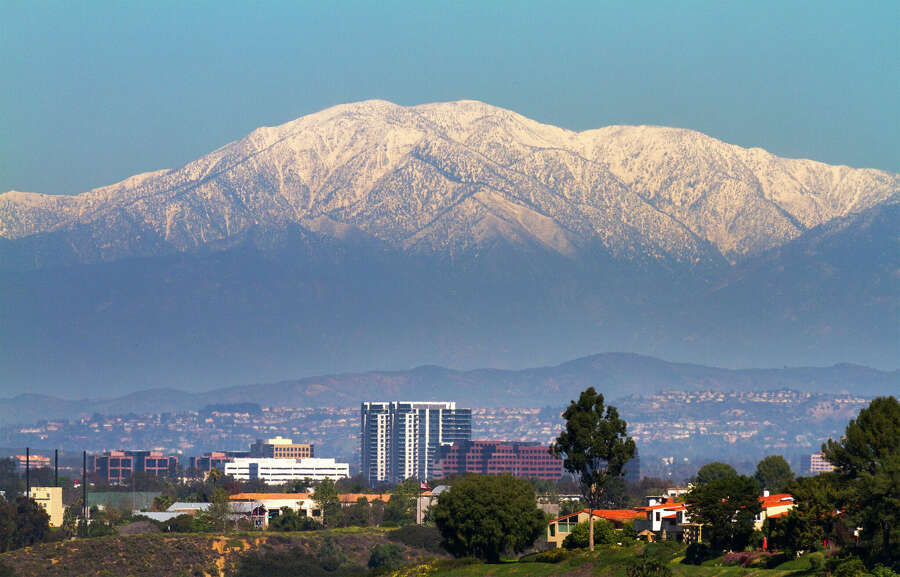
When I was there I never heard of anyone going to Mt Baldy. That photo is deceptive, a view of the mountains is very uncommon, mostly they are obscured by smog. The way I would describe the area around campus for many miles is “boring suburbia” - somewhat like if you went to GMU. |
Anonymous
I can’t imagine you went to one of the 5Cs without hearing about anyone going to Mount Baldy. My kid goes up that way all the time. I mean, why wouldn’t you? Among other things, there’s apparently a brew pub up that way that they enjoy. And as for “many miles around” being boring suburbia — why the weird gas lighting? My kid’s apartment sits 1.25 miles from the border of the Angles National Forest and 13 miles as the crow flies from the summit of Mt San Antonio (aka Mt Baldy) at 10,064 feet. Who are you trying to kid? You’re as silly as the “THeY’RE rOLlINg HiLls” poster. |
Anonymous
Exactly, the 5Cs are all right next to each other (like - cross a tiny neighborhood street from Pomona and you are at CMC) - I can't imagine it takes more than 20 minutes to walk between the two furthest buildings within the 5 schools and you would always be on one of the 5 campuses while you walk |
Anonymous
I don’t know much about Haverford, Bryn Mawr and Swarthmore, but the 5Cs are totally separate in terms of admissions, policies, graduation requirements, and stuff like that. They are physically right next to each other. Students can take up to like 50% of their classes at other colleges, and the class registration process is somewhat shared, although some schools seem more open to allowing students from the other schools into popular classes. When my searches for a class though, they see the equivalent class at all the schools, of, e.g. for music, at the 2 schools that offer it. Students can also eat in dining facilities for any school. In terms of graduation, aid, and admissions, they have different priorities and different policies. |
Anonymous
Just stop. The mountains of Angeles Forest are not blocked by smog from Claremont. It's literally a couple of miles from the BASE of those mountains. Sometimes they are obscured from the coast (or from UCLA - closer to your beaches), but not even "all the time". |
Anonymous
Bless your heart. Keep trying! Tell us more about the evil things this imaginary entity “the 5Cs” did? Or was it the Illuminati? |
Anonymous
|
Here’s an article about road closures due to avalanches two weeks ago in the “rolling hills/boring” that’s just under 10 miles from Claremont.
https://www.nbclosangeles.com/news/local/avalanches-reported-on-mount-baldy-after-cold-storm-drops-several-feet-of-snow/3105443/ |
Anonymous
| *boring suburbia |
Anonymous
I mean, is that somehow different from most other LACs in Pomona's league? I grew up in Pasadena and trust me, I'm no fan of the Inland Empire (although most people really don't consider Claremont part of that) but I'd say Claremont and its surrounding areas have more going on than Williamstown or Amherst, MA or Middlebury or whatever LAC you deem "acceptable." |
Anonymous
| OP- are there particular academic areas where Pomona especially excels? For example it seems CMC is all about politics and economics (and I guess yayo). What is Pomona’s strength (and preferred narcotic)? |