
So many engineering students

Anonymous
Anonymous wrote:I graduated from UVA in 2000 with a degree in Computer Engineering and worked for Apple, Nvidia, and Intel for the past 20 years. I got layoff by Intel last year and had not been able to find work since. People often forget that an engineering degree has about 20 years runway before you become obsolete. It is EXTREMELY difficult to find a job after the age of 45. Many of friends who graduated from UVA at the same time as I did are currently unemployed. It is the ugly side of the tech industry that people rarely talk about. As you get older, your salary becomes a liability for the employer. YMMV.


I am visibly older. One has to keep educating oneself, in any field. Medical specialties are now different than 20 years ago, purely as an example. I have an ECE degree. I started in security, then did networks, then pivoted to radio, now doing SATCOM. The key is to keep teaching oneself new things and keep up with the technology.
Anonymous
Anonymous wrote:
Anonymous wrote:
Anonymous wrote:
Anonymous wrote:
Anonymous wrote:
Anonymous wrote:
Anonymous wrote:
Anonymous wrote:
Anonymous wrote:Liberal arts is in theory a fantastic intellectual foundation for life and a career, but in practice its been wrecked by wokeness. Everyone recognizes this and is staying away.

If we can reform the liberal arts, it will flourish again.

It did not die out due to wokeness. Liberal arts degrees have been declining for many years in part due to the growth in the tech sector, and more students majoring in business.


And why are people so interested in majoring in "business" which typically not a rigorous degree where you learn boring things that were just picked up on the job by intelligent, well-rounded people years ago without the need for any courses? Perhaps its all the stories they hear about people signing for literature courses and having to listen to political drivel rather than actually learn to appreciate literature.

People are interested in majoring in business because there's more money to be made as a business major than an English major.

Seriously, it's not that hard to understand.

FWIW, I am not a progressive, and I dislike that my kids had to read so much woke books in school. One year, the book choices were pretty much all about DEI.


Ok, but this was not historically true. Historically, business leaders actually went to elite, northeastern, private liberal arts colleges where they got a well rounded education learning about the intellectual history of Western Civilization. Over time, that got replaced more and more with critical theory to the point where many of these departments were almost entirely dominated by critical theorists and people started mistakenly assuming that critical theory WAS liberal arts, not just one sector of it. And of course what underpins critical theory is character assassination of anyone who pushes back on the theories, many of which are quite stupid. There is a time and place for critical theory but it's about 10x more prominent than it should be in a well rounded liberal arts curriculum. They also just started dumbing down the curriculum generally, which started to kids on the margins from failing out and getting sent to Vietnam, and really picked up steam when the colleges started jacking up tuition and treating the students (or really, their parents) as a revenue source and to be catered to rather than a pupil to be challenged.

Anyways, back in the day these well rounded students THEN went into business (some with MBAs, some without) and just picked up business on the job, which is fine because in most cases it ain't really that hard, esp. for someone that's in the top 1-5% of IQ and work ethic anyways, which is what the leadership was and is. These colleges didn't even HAVE business majors since it wasn't a real subject.

Some of their employees, who wouldn't have been able to complete those liberal arts programs back when they were actually rigorous, went to lower tier schools where they did study "business." Because they wouldn't have been capable of just picking it up on the fly, so they needed the extra training, and because they weren't being trained for leadership anyways, so having a broad education wasn't as important.

Anyways, you can think that system was great or terrible, but anyways it is 95% dead and gone and the critical theorists are the ones standing over the body with the murder weapon, desperately lecturing it about microaggressions as their disciplines fade further into irrelevance.

This analysis was so spot-on and so eloquently written! You must be a Liberal Arts (of old) major.

It's also very old fashioned thinking (back in the day) when people (mostly white men) got liberal arts degrees and then could find a white collar job after graduating because they didn't have to compete with uneducated men, minorities and women.

Times of changed. Supply and demand.


So tedious. "We can't read Milton anymore because [wokeness]." Meanwhile, there's a recent article in the Atlantic about how professors (even at really top schools, like Columbia) increasingly find their students cannot read college level books, have never read a book cover to cover at all, etc.

Btw, chat GPT told me that of the following schools (Harvard, Yale, Princeton, MIT, Stanford, Williams, Amherst, Swarthmore), only one of them has a business-related undergraduate major (MIT, which makes sense given it was historically more focused on trades). For all the rest, there is no major in any of business, accounting, finance or marketing. The closest approximation is studying economics, math or physics. So what I am saying still holds true at the top end of the pyramid. Interesting these schools are able to place so many into the upper echelons of business anyways and can do this even though white males are only a small fraction of their student body.

Even LACs are dropping English majors and adding business majors.

So, what I am saying is that even colleges realize that the demand for majors like English has gone down, while business and eng majors have gone up. Student not being able to read a book cover to cover is the fault of the HS education. One does not expect a college to have to provide a LA education just so that a student learns to read a book cover to cover.

Those colleges do have econ as a major, which is related to business, and they rely on alumni network for jobs. They also probably want people to spend more money by getting an MBA.

Historically, white males studied LA, graduated then got a white collar job because they didn't have to compete with minorities and women. Now that they do, they have to major in something that helps them get a job.

You can wish for the good ol' days all you want, but that's not what the market wants, and colleges are responding to that shift.

I also find it ironic that you used chatgpt to get information. LOL BTW, did chatgpt tell you that those universities do have engineering as a major. LOL


Economics is a liberal arts degree. Vanishingly few people analyze macroeconomic trends as part of their day job on Wall Street.
Learning to think critically, analyze human behavior, ready widely and write crisply will never go out of style. It is good for women and minorities to have those skills too. Your brain is addled by critical theory, which is why you have to default this sort of convoluted expectation where women and minorities killed the "old system."

Piss poor teaching killed the old system. If students are not actually being taught these core skills, then there is no point in them studying liberal arts and they well as well study marketing. It doesn't mean it's a more intellectually demanding or valuable field of study.

The issue is systemic because the graduate schools teach these methodologies, almost to the exclusion of any other. So the candidate pool is all filled with people with mushy brains like you. So it's going to take a long time to unwind the system. In the meantime, engineering is probably a better bet for an individual student. But we will fix it eventually, because people will vote with their feet and the system will adapt.
Anonymous
Anonymous wrote:
Anonymous wrote:I graduated from UVA in 2000 with a degree in Computer Engineering and worked for Apple, Nvidia, and Intel for the past 20 years. I got layoff by Intel last year and had not been able to find work since. People often forget that an engineering degree has about 20 years runway before you become obsolete. It is EXTREMELY difficult to find a job after the age of 45. Many of friends who graduated from UVA at the same time as I did are currently unemployed. It is the ugly side of the tech industry that people rarely talk about. As you get older, your salary becomes a liability for the employer. YMMV.


I am visibly older. One has to keep educating oneself, in any field. Medical specialties are now different than 20 years ago, purely as an example. I have an ECE degree. I started in security, then did networks, then pivoted to radio, now doing SATCOM. The key is to keep teaching oneself new things and keep up with the technology.


Typical engineer can't see a forest for trees, experience is undervalued in engineering, the PP is making an import point.
Anonymous
Anonymous wrote:
Anonymous wrote:
Anonymous wrote:
Anonymous wrote:
Anonymous wrote:
Anonymous wrote:
Anonymous wrote:
Anonymous wrote:
Anonymous wrote:
Anonymous wrote:Liberal arts is in theory a fantastic intellectual foundation for life and a career, but in practice its been wrecked by wokeness. Everyone recognizes this and is staying away.

If we can reform the liberal arts, it will flourish again.

It did not die out due to wokeness. Liberal arts degrees have been declining for many years in part due to the growth in the tech sector, and more students majoring in business.


And why are people so interested in majoring in "business" which typically not a rigorous degree where you learn boring things that were just picked up on the job by intelligent, well-rounded people years ago without the need for any courses? Perhaps its all the stories they hear about people signing for literature courses and having to listen to political drivel rather than actually learn to appreciate literature.

People are interested in majoring in business because there's more money to be made as a business major than an English major.

Seriously, it's not that hard to understand.

FWIW, I am not a progressive, and I dislike that my kids had to read so much woke books in school. One year, the book choices were pretty much all about DEI.


Ok, but this was not historically true. Historically, business leaders actually went to elite, northeastern, private liberal arts colleges where they got a well rounded education learning about the intellectual history of Western Civilization. Over time, that got replaced more and more with critical theory to the point where many of these departments were almost entirely dominated by critical theorists and people started mistakenly assuming that critical theory WAS liberal arts, not just one sector of it. And of course what underpins critical theory is character assassination of anyone who pushes back on the theories, many of which are quite stupid. There is a time and place for critical theory but it's about 10x more prominent than it should be in a well rounded liberal arts curriculum. They also just started dumbing down the curriculum generally, which started to kids on the margins from failing out and getting sent to Vietnam, and really picked up steam when the colleges started jacking up tuition and treating the students (or really, their parents) as a revenue source and to be catered to rather than a pupil to be challenged.

Anyways, back in the day these well rounded students THEN went into business (some with MBAs, some without) and just picked up business on the job, which is fine because in most cases it ain't really that hard, esp. for someone that's in the top 1-5% of IQ and work ethic anyways, which is what the leadership was and is. These colleges didn't even HAVE business majors since it wasn't a real subject.

Some of their employees, who wouldn't have been able to complete those liberal arts programs back when they were actually rigorous, went to lower tier schools where they did study "business." Because they wouldn't have been capable of just picking it up on the fly, so they needed the extra training, and because they weren't being trained for leadership anyways, so having a broad education wasn't as important.

Anyways, you can think that system was great or terrible, but anyways it is 95% dead and gone and the critical theorists are the ones standing over the body with the murder weapon, desperately lecturing it about microaggressions as their disciplines fade further into irrelevance.

This analysis was so spot-on and so eloquently written! You must be a Liberal Arts (of old) major.

It's also very old fashioned thinking (back in the day) when people (mostly white men) got liberal arts degrees and then could find a white collar job after graduating because they didn't have to compete with uneducated men, minorities and women.

Times of changed. Supply and demand.


So tedious. "We can't read Milton anymore because [wokeness]." Meanwhile, there's a recent article in the Atlantic about how professors (even at really top schools, like Columbia) increasingly find their students cannot read college level books, have never read a book cover to cover at all, etc.

Btw, chat GPT told me that of the following schools (Harvard, Yale, Princeton, MIT, Stanford, Williams, Amherst, Swarthmore), only one of them has a business-related undergraduate major (MIT, which makes sense given it was historically more focused on trades). For all the rest, there is no major in any of business, accounting, finance or marketing. The closest approximation is studying economics, math or physics. So what I am saying still holds true at the top end of the pyramid. Interesting these schools are able to place so many into the upper echelons of business anyways and can do this even though white males are only a small fraction of their student body.

Even LACs are dropping English majors and adding business majors.

So, what I am saying is that even colleges realize that the demand for majors like English has gone down, while business and eng majors have gone up. Student not being able to read a book cover to cover is the fault of the HS education. One does not expect a college to have to provide a LA education just so that a student learns to read a book cover to cover.

Those colleges do have econ as a major, which is related to business, and they rely on alumni network for jobs. They also probably want people to spend more money by getting an MBA.

Historically, white males studied LA, graduated then got a white collar job because they didn't have to compete with minorities and women. Now that they do, they have to major in something that helps them get a job.

You can wish for the good ol' days all you want, but that's not what the market wants, and colleges are responding to that shift.

I also find it ironic that you used chatgpt to get information. LOL BTW, did chatgpt tell you that those universities do have engineering as a major. LOL


Economics is a liberal arts degree. Vanishingly few people analyze macroeconomic trends as part of their day job on Wall Street.
Learning to think critically, analyze human behavior, ready widely and write crisply will never go out of style. It is good for women and minorities to have those skills too. Your brain is addled by critical theory, which is why you have to default this sort of convoluted expectation where women and minorities killed the "old system."

Piss poor teaching killed the old system. If students are not actually being taught these core skills, then there is no point in them studying liberal arts and they well as well study marketing. It doesn't mean it's a more intellectually demanding or valuable field of study.

The issue is systemic because the graduate schools teach these methodologies, almost to the exclusion of any other. So the candidate pool is all filled with people with mushy brains like you. So it's going to take a long time to unwind the system. In the meantime, engineering is probably a better bet for an individual student. But we will fix it eventually, because people will vote with their feet and the system will adapt.

The "old system" kept the poor from advancing. Elitist attitudes like yours is why now we have more students majoring in "vocational" style majors.
Anonymous
Anonymous wrote:
Anonymous wrote:
Anonymous wrote:
Anonymous wrote:
Anonymous wrote:
Anonymous wrote:
Anonymous wrote:
Anonymous wrote:
Anonymous wrote:
Anonymous wrote:
Anonymous wrote:Liberal arts is in theory a fantastic intellectual foundation for life and a career, but in practice its been wrecked by wokeness. Everyone recognizes this and is staying away.

If we can reform the liberal arts, it will flourish again.

It did not die out due to wokeness. Liberal arts degrees have been declining for many years in part due to the growth in the tech sector, and more students majoring in business.


And why are people so interested in majoring in "business" which typically not a rigorous degree where you learn boring things that were just picked up on the job by intelligent, well-rounded people years ago without the need for any courses? Perhaps its all the stories they hear about people signing for literature courses and having to listen to political drivel rather than actually learn to appreciate literature.

People are interested in majoring in business because there's more money to be made as a business major than an English major.

Seriously, it's not that hard to understand.

FWIW, I am not a progressive, and I dislike that my kids had to read so much woke books in school. One year, the book choices were pretty much all about DEI.


Ok, but this was not historically true. Historically, business leaders actually went to elite, northeastern, private liberal arts colleges where they got a well rounded education learning about the intellectual history of Western Civilization. Over time, that got replaced more and more with critical theory to the point where many of these departments were almost entirely dominated by critical theorists and people started mistakenly assuming that critical theory WAS liberal arts, not just one sector of it. And of course what underpins critical theory is character assassination of anyone who pushes back on the theories, many of which are quite stupid. There is a time and place for critical theory but it's about 10x more prominent than it should be in a well rounded liberal arts curriculum. They also just started dumbing down the curriculum generally, which started to kids on the margins from failing out and getting sent to Vietnam, and really picked up steam when the colleges started jacking up tuition and treating the students (or really, their parents) as a revenue source and to be catered to rather than a pupil to be challenged.

Anyways, back in the day these well rounded students THEN went into business (some with MBAs, some without) and just picked up business on the job, which is fine because in most cases it ain't really that hard, esp. for someone that's in the top 1-5% of IQ and work ethic anyways, which is what the leadership was and is. These colleges didn't even HAVE business majors since it wasn't a real subject.

Some of their employees, who wouldn't have been able to complete those liberal arts programs back when they were actually rigorous, went to lower tier schools where they did study "business." Because they wouldn't have been capable of just picking it up on the fly, so they needed the extra training, and because they weren't being trained for leadership anyways, so having a broad education wasn't as important.

Anyways, you can think that system was great or terrible, but anyways it is 95% dead and gone and the critical theorists are the ones standing over the body with the murder weapon, desperately lecturing it about microaggressions as their disciplines fade further into irrelevance.

This analysis was so spot-on and so eloquently written! You must be a Liberal Arts (of old) major.

It's also very old fashioned thinking (back in the day) when people (mostly white men) got liberal arts degrees and then could find a white collar job after graduating because they didn't have to compete with uneducated men, minorities and women.

Times of changed. Supply and demand.


So tedious. "We can't read Milton anymore because [wokeness]." Meanwhile, there's a recent article in the Atlantic about how professors (even at really top schools, like Columbia) increasingly find their students cannot read college level books, have never read a book cover to cover at all, etc.

Btw, chat GPT told me that of the following schools (Harvard, Yale, Princeton, MIT, Stanford, Williams, Amherst, Swarthmore), only one of them has a business-related undergraduate major (MIT, which makes sense given it was historically more focused on trades). For all the rest, there is no major in any of business, accounting, finance or marketing. The closest approximation is studying economics, math or physics. So what I am saying still holds true at the top end of the pyramid. Interesting these schools are able to place so many into the upper echelons of business anyways and can do this even though white males are only a small fraction of their student body.

Even LACs are dropping English majors and adding business majors.

So, what I am saying is that even colleges realize that the demand for majors like English has gone down, while business and eng majors have gone up. Student not being able to read a book cover to cover is the fault of the HS education. One does not expect a college to have to provide a LA education just so that a student learns to read a book cover to cover.

Those colleges do have econ as a major, which is related to business, and they rely on alumni network for jobs. They also probably want people to spend more money by getting an MBA.

Historically, white males studied LA, graduated then got a white collar job because they didn't have to compete with minorities and women. Now that they do, they have to major in something that helps them get a job.

You can wish for the good ol' days all you want, but that's not what the market wants, and colleges are responding to that shift.

I also find it ironic that you used chatgpt to get information. LOL BTW, did chatgpt tell you that those universities do have engineering as a major. LOL


Economics is a liberal arts degree. Vanishingly few people analyze macroeconomic trends as part of their day job on Wall Street.
Learning to think critically, analyze human behavior, ready widely and write crisply will never go out of style. It is good for women and minorities to have those skills too. Your brain is addled by critical theory, which is why you have to default this sort of convoluted expectation where women and minorities killed the "old system."

Piss poor teaching killed the old system. If students are not actually being taught these core skills, then there is no point in them studying liberal arts and they well as well study marketing. It doesn't mean it's a more intellectually demanding or valuable field of study.

The issue is systemic because the graduate schools teach these methodologies, almost to the exclusion of any other. So the candidate pool is all filled with people with mushy brains like you. So it's going to take a long time to unwind the system. In the meantime, engineering is probably a better bet for an individual student. But we will fix it eventually, because people will vote with their feet and the system will adapt.

The "old system" kept the poor from advancing. Elitist attitudes like yours is why now we have more students majoring in "vocational" style majors.


Yet social mobility was higher in the years prior to the 1980s and has decreased markedly since then. Curious.
Anonymous
UVa Engineering gets no love here on DCUM, but it has a high graduation rate.

"https://ira.virginia.edu/university-data-home/graduation-retention-rates"

Select ENGINEERING at the above URL to see the UVa Engineering retention and graduation rates.

BLUF:
90.7% -- 4-year graduation rate
~95% -- 5-year+6-year graduation rate.

That is a much higher percentage than some previous posters have suggested is "normal".

Maybe people can find and post official numbers from other colleges' engineering programs?
Anonymous
China is graduating 10 engineers for our every 1. I don’t think we can have enough engineering majors.
Anonymous
Someone here seems intent on using this thread to advance right wing political views. I wish that troll.would just move on. All this about loan forgiveness and denigrating humanities with repeated labels of "wokeness." So suck of the free propaganda ad time at our expense.

I have 1 student studying liberal arts and 1 studying engineering. I do think those with humanities degrees may have an edge in the post AI age. My engineer also studies arts and humanities because that will help her bring value to the industry that AI cannot. My liberal arts Kid got an amazing opportunity largely because of her combined STEM and communication skills. I think human creativity will be important however careers evolve.
Anonymous
Anonymous wrote:China is graduating 10 engineers for our every 1. I don’t think we can have enough engineering majors.


A lot of their "engineers" really are trained technicians, but I share the doubt that we will have an oversupply of engineers anytime soon.
Anonymous
Anonymous wrote:
Anonymous wrote:China is graduating 10 engineers for our every 1. I don’t think we can have enough engineering majors.


A lot of their "engineers" really are trained technicians, but I share the doubt that we will have an oversupply of engineers anytime soon.


Yes the engineers in my family say the Chinese trained engineers are very lacking in their ability to come up with creative solutions and even to perform basic safety checks or design.
Anonymous
Anonymous wrote:
Anonymous wrote:
Anonymous wrote:
Anonymous wrote:
Anonymous wrote:
Anonymous wrote:
Anonymous wrote:
Anonymous wrote:
Anonymous wrote:
Anonymous wrote:
Anonymous wrote:
Anonymous wrote:Liberal arts is in theory a fantastic intellectual foundation for life and a career, but in practice its been wrecked by wokeness. Everyone recognizes this and is staying away.

If we can reform the liberal arts, it will flourish again.

It did not die out due to wokeness. Liberal arts degrees have been declining for many years in part due to the growth in the tech sector, and more students majoring in business.


And why are people so interested in majoring in "business" which typically not a rigorous degree where you learn boring things that were just picked up on the job by intelligent, well-rounded people years ago without the need for any courses? Perhaps its all the stories they hear about people signing for literature courses and having to listen to political drivel rather than actually learn to appreciate literature.

People are interested in majoring in business because there's more money to be made as a business major than an English major.

Seriously, it's not that hard to understand.

FWIW, I am not a progressive, and I dislike that my kids had to read so much woke books in school. One year, the book choices were pretty much all about DEI.


Ok, but this was not historically true. Historically, business leaders actually went to elite, northeastern, private liberal arts colleges where they got a well rounded education learning about the intellectual history of Western Civilization. Over time, that got replaced more and more with critical theory to the point where many of these departments were almost entirely dominated by critical theorists and people started mistakenly assuming that critical theory WAS liberal arts, not just one sector of it. And of course what underpins critical theory is character assassination of anyone who pushes back on the theories, many of which are quite stupid. There is a time and place for critical theory but it's about 10x more prominent than it should be in a well rounded liberal arts curriculum. They also just started dumbing down the curriculum generally, which started to kids on the margins from failing out and getting sent to Vietnam, and really picked up steam when the colleges started jacking up tuition and treating the students (or really, their parents) as a revenue source and to be catered to rather than a pupil to be challenged.

Anyways, back in the day these well rounded students THEN went into business (some with MBAs, some without) and just picked up business on the job, which is fine because in most cases it ain't really that hard, esp. for someone that's in the top 1-5% of IQ and work ethic anyways, which is what the leadership was and is. These colleges didn't even HAVE business majors since it wasn't a real subject.

Some of their employees, who wouldn't have been able to complete those liberal arts programs back when they were actually rigorous, went to lower tier schools where they did study "business." Because they wouldn't have been capable of just picking it up on the fly, so they needed the extra training, and because they weren't being trained for leadership anyways, so having a broad education wasn't as important.

Anyways, you can think that system was great or terrible, but anyways it is 95% dead and gone and the critical theorists are the ones standing over the body with the murder weapon, desperately lecturing it about microaggressions as their disciplines fade further into irrelevance.

This analysis was so spot-on and so eloquently written! You must be a Liberal Arts (of old) major.

It's also very old fashioned thinking (back in the day) when people (mostly white men) got liberal arts degrees and then could find a white collar job after graduating because they didn't have to compete with uneducated men, minorities and women.

Times of changed. Supply and demand.


So tedious. "We can't read Milton anymore because [wokeness]." Meanwhile, there's a recent article in the Atlantic about how professors (even at really top schools, like Columbia) increasingly find their students cannot read college level books, have never read a book cover to cover at all, etc.

Btw, chat GPT told me that of the following schools (Harvard, Yale, Princeton, MIT, Stanford, Williams, Amherst, Swarthmore), only one of them has a business-related undergraduate major (MIT, which makes sense given it was historically more focused on trades). For all the rest, there is no major in any of business, accounting, finance or marketing. The closest approximation is studying economics, math or physics. So what I am saying still holds true at the top end of the pyramid. Interesting these schools are able to place so many into the upper echelons of business anyways and can do this even though white males are only a small fraction of their student body.

Even LACs are dropping English majors and adding business majors.

So, what I am saying is that even colleges realize that the demand for majors like English has gone down, while business and eng majors have gone up. Student not being able to read a book cover to cover is the fault of the HS education. One does not expect a college to have to provide a LA education just so that a student learns to read a book cover to cover.

Those colleges do have econ as a major, which is related to business, and they rely on alumni network for jobs. They also probably want people to spend more money by getting an MBA.

Historically, white males studied LA, graduated then got a white collar job because they didn't have to compete with minorities and women. Now that they do, they have to major in something that helps them get a job.

You can wish for the good ol' days all you want, but that's not what the market wants, and colleges are responding to that shift.

I also find it ironic that you used chatgpt to get information. LOL BTW, did chatgpt tell you that those universities do have engineering as a major. LOL


Economics is a liberal arts degree. Vanishingly few people analyze macroeconomic trends as part of their day job on Wall Street.
Learning to think critically, analyze human behavior, ready widely and write crisply will never go out of style. It is good for women and minorities to have those skills too. Your brain is addled by critical theory, which is why you have to default this sort of convoluted expectation where women and minorities killed the "old system."

Piss poor teaching killed the old system. If students are not actually being taught these core skills, then there is no point in them studying liberal arts and they well as well study marketing. It doesn't mean it's a more intellectually demanding or valuable field of study.

The issue is systemic because the graduate schools teach these methodologies, almost to the exclusion of any other. So the candidate pool is all filled with people with mushy brains like you. So it's going to take a long time to unwind the system. In the meantime, engineering is probably a better bet for an individual student. But we will fix it eventually, because people will vote with their feet and the system will adapt.

The "old system" kept the poor from advancing. Elitist attitudes like yours is why now we have more students majoring in "vocational" style majors.


Yet social mobility was higher in the years prior to the 1980s and has decreased markedly since then. Curious.

That's hysterical. Prior to the 80s, minorities and women were still making very little compared to white men.

The middle class may have shrunk but the UMC grew, mostly in the 90s/2000s. Lower class stayed about the same. Seems to me that majoring in "vocational" degrees has helped people go from middle class to upper middle class.
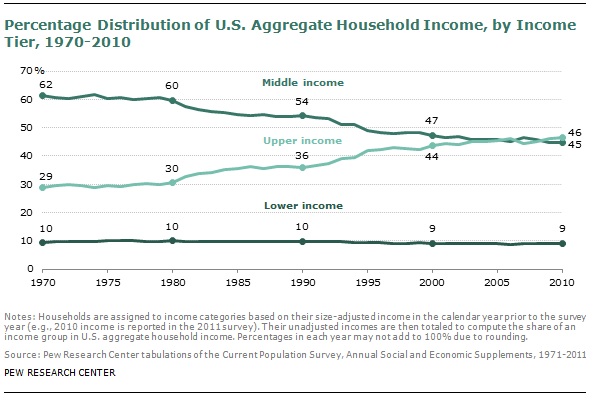


Anecdotally, I was able to go from low/middle class into UMC by majoring in business and CS, and my sibling in engineering.
Anonymous
Anonymous wrote:UVa Engineering gets no love here on DCUM, but it has a high graduation rate.

"https://ira.virginia.edu/university-data-home/graduation-retention-rates"

Select ENGINEERING at the above URL to see the UVa Engineering retention and graduation rates.

BLUF:
90.7% -- 4-year graduation rate
~95% -- 5-year+6-year graduation rate.

That is a much higher percentage than some previous posters have suggested is "normal".

Maybe people can find and post official numbers from other colleges' engineering programs?


That means nothing. For one, the top engineering schools usually have serious co-op programs with firms. In other words, companies begin recruiting many of their students for co-op or lengthier internship programs during regular semesters which often require a delay in graduation. But that's a good thing, because they are being recruited by employers earlier in college and have great jobs upon graduation and can make good money while still in college. Also, a lot of the better engineering programs have combo bachelor and maters programs where the student can achieve both the bachelor's degree and masters degree in 5 years.. Lastly, the better engineering schools are more difficult and intensive and may require more thatn 4 years to complete. That's the reality.
Anonymous
The 5-year and 6-year graduation rates were listed and also are higher than some posters said was normal.

It still would be interesting to see comparable numbers from other engineering programs.
Anonymous
Anonymous wrote:
Anonymous wrote:
Anonymous wrote:
Anonymous wrote:
Anonymous wrote:
Anonymous wrote:
Anonymous wrote:
Anonymous wrote:
Anonymous wrote:
Anonymous wrote:
Anonymous wrote:
Anonymous wrote:
Anonymous wrote:Liberal arts is in theory a fantastic intellectual foundation for life and a career, but in practice its been wrecked by wokeness. Everyone recognizes this and is staying away.

If we can reform the liberal arts, it will flourish again.

It did not die out due to wokeness. Liberal arts degrees have been declining for many years in part due to the growth in the tech sector, and more students majoring in business.


And why are people so interested in majoring in "business" which typically not a rigorous degree where you learn boring things that were just picked up on the job by intelligent, well-rounded people years ago without the need for any courses? Perhaps its all the stories they hear about people signing for literature courses and having to listen to political drivel rather than actually learn to appreciate literature.

People are interested in majoring in business because there's more money to be made as a business major than an English major.

Seriously, it's not that hard to understand.

FWIW, I am not a progressive, and I dislike that my kids had to read so much woke books in school. One year, the book choices were pretty much all about DEI.


Ok, but this was not historically true. Historically, business leaders actually went to elite, northeastern, private liberal arts colleges where they got a well rounded education learning about the intellectual history of Western Civilization. Over time, that got replaced more and more with critical theory to the point where many of these departments were almost entirely dominated by critical theorists and people started mistakenly assuming that critical theory WAS liberal arts, not just one sector of it. And of course what underpins critical theory is character assassination of anyone who pushes back on the theories, many of which are quite stupid. There is a time and place for critical theory but it's about 10x more prominent than it should be in a well rounded liberal arts curriculum. They also just started dumbing down the curriculum generally, which started to kids on the margins from failing out and getting sent to Vietnam, and really picked up steam when the colleges started jacking up tuition and treating the students (or really, their parents) as a revenue source and to be catered to rather than a pupil to be challenged.

Anyways, back in the day these well rounded students THEN went into business (some with MBAs, some without) and just picked up business on the job, which is fine because in most cases it ain't really that hard, esp. for someone that's in the top 1-5% of IQ and work ethic anyways, which is what the leadership was and is. These colleges didn't even HAVE business majors since it wasn't a real subject.

Some of their employees, who wouldn't have been able to complete those liberal arts programs back when they were actually rigorous, went to lower tier schools where they did study "business." Because they wouldn't have been capable of just picking it up on the fly, so they needed the extra training, and because they weren't being trained for leadership anyways, so having a broad education wasn't as important.

Anyways, you can think that system was great or terrible, but anyways it is 95% dead and gone and the critical theorists are the ones standing over the body with the murder weapon, desperately lecturing it about microaggressions as their disciplines fade further into irrelevance.

This analysis was so spot-on and so eloquently written! You must be a Liberal Arts (of old) major.

It's also very old fashioned thinking (back in the day) when people (mostly white men) got liberal arts degrees and then could find a white collar job after graduating because they didn't have to compete with uneducated men, minorities and women.

Times of changed. Supply and demand.


So tedious. "We can't read Milton anymore because [wokeness]." Meanwhile, there's a recent article in the Atlantic about how professors (even at really top schools, like Columbia) increasingly find their students cannot read college level books, have never read a book cover to cover at all, etc.

Btw, chat GPT told me that of the following schools (Harvard, Yale, Princeton, MIT, Stanford, Williams, Amherst, Swarthmore), only one of them has a business-related undergraduate major (MIT, which makes sense given it was historically more focused on trades). For all the rest, there is no major in any of business, accounting, finance or marketing. The closest approximation is studying economics, math or physics. So what I am saying still holds true at the top end of the pyramid. Interesting these schools are able to place so many into the upper echelons of business anyways and can do this even though white males are only a small fraction of their student body.

Even LACs are dropping English majors and adding business majors.

So, what I am saying is that even colleges realize that the demand for majors like English has gone down, while business and eng majors have gone up. Student not being able to read a book cover to cover is the fault of the HS education. One does not expect a college to have to provide a LA education just so that a student learns to read a book cover to cover.

Those colleges do have econ as a major, which is related to business, and they rely on alumni network for jobs. They also probably want people to spend more money by getting an MBA.

Historically, white males studied LA, graduated then got a white collar job because they didn't have to compete with minorities and women. Now that they do, they have to major in something that helps them get a job.

You can wish for the good ol' days all you want, but that's not what the market wants, and colleges are responding to that shift.

I also find it ironic that you used chatgpt to get information. LOL BTW, did chatgpt tell you that those universities do have engineering as a major. LOL


Economics is a liberal arts degree. Vanishingly few people analyze macroeconomic trends as part of their day job on Wall Street.
Learning to think critically, analyze human behavior, ready widely and write crisply will never go out of style. It is good for women and minorities to have those skills too. Your brain is addled by critical theory, which is why you have to default this sort of convoluted expectation where women and minorities killed the "old system."

Piss poor teaching killed the old system. If students are not actually being taught these core skills, then there is no point in them studying liberal arts and they well as well study marketing. It doesn't mean it's a more intellectually demanding or valuable field of study.

The issue is systemic because the graduate schools teach these methodologies, almost to the exclusion of any other. So the candidate pool is all filled with people with mushy brains like you. So it's going to take a long time to unwind the system. In the meantime, engineering is probably a better bet for an individual student. But we will fix it eventually, because people will vote with their feet and the system will adapt.

The "old system" kept the poor from advancing. Elitist attitudes like yours is why now we have more students majoring in "vocational" style majors.


Yet social mobility was higher in the years prior to the 1980s and has decreased markedly since then. Curious.

That's hysterical. Prior to the 80s, minorities and women were still making very little compared to white men.

The middle class may have shrunk but the UMC grew, mostly in the 90s/2000s. Lower class stayed about the same. Seems to me that majoring in "vocational" degrees has helped people go from middle class to upper middle class.


Anecdotally, I was able to go from low/middle class into UMC by majoring in business and CS, and my sibling in engineering.


This chart just says there are more upper income people now than in the past, which is logical because people are generally richer. It says nothing about social mobility one way or another. Which has declined. You can look it up instead of posting random charts that don't relate to the particular point being discussed.

Plus, are you actually arguing that the shrinking income gap between men and women is because men are majoring in liberal arts less frequently? That makes no sense at all. Your points are all garbled.
Anonymous
Anonymous wrote:
Anonymous wrote:
Anonymous wrote:China is graduating 10 engineers for our every 1. I don’t think we can have enough engineering majors.


A lot of their "engineers" really are trained technicians, but I share the doubt that we will have an oversupply of engineers anytime soon.


Yes the engineers in my family say the Chinese trained engineers are very lacking in their ability to come up with creative solutions and even to perform basic safety checks or design.


to be fair, the engineers in my family note that many "engineering" programs in the US are just technical degrees, and ABET is too minimal a bar to count on. one of these engineers works in industry and notes the school preferences have to do with the rigor of curriculum. other is a professor who started in industry/still partners with industry on research and notes the same preferential selection of students from certain programs, for phD or careers.
they had a very specific list of schools for DC: MIT, CMU, 6 of the ivies, Stanford and a couple other privates and only a few top publics. These have the curriculum depth, focus on scientific writing and an interdisciplinary curriculum as well as numerous cutting edge research faculty supportive of underclassmen joining labs, as they both insisted junior year is too late to start research. Kid only applied to these schools and their in-state backup. it was quite obvious on tours and admission sessions which schools focused undergraduate education on developing deep thinking creative engineers.
post reply Forum Index » College and University Discussion
Message Quick Reply
Go to: