Will US food quality improve?

Anonymous
Anonymous wrote:
Anonymous wrote:
Anonymous wrote:NP. This is a thread about improving food quality. No mention of junk food is appropriate here, unless we are condemning it.


It’s appropriate because the vast majority of American general population diet is junk food. The quality of milk, eggs, fruits/vegetables is a moot point because people aren’t even cooking actual food anymore and they don’t want to healthy foods. It’s all about convenience crap. Everyone is too “busy” to cook a decent meal, no matter how simple and affordable it actually is. So unless that culture changes and or junk food is taken off the shelves, people are still going to be overweight and unhealthy.


As the mom of a family with multiple, conflicting food restrictions and a tight budget, I find this so triggering. Cooking is NOT simple for me. If I’m making a pasta dinner, I’m making the sauce from scratch and cooking three different pastas/pasta alternatives. Cooking is hell. I do it because I’m a responsible adult, but I never liked it and resent that every time we find a new food intolerance, I need to find new recipes. Yet again. These are not small things. My kid will scream in agony on the toilet if I’m not paranoid. Yes, we eat organic.


This is a your family specific medical issue. Are blaming your kid’s multiple intolerances on our food supply?
Anonymous
Anonymous wrote:
Anonymous wrote:
Anonymous wrote:
Anonymous wrote:NP. This is a thread about improving food quality. No mention of junk food is appropriate here, unless we are condemning it.


It’s appropriate because the vast majority of American general population diet is junk food. The quality of milk, eggs, fruits/vegetables is a moot point because people aren’t even cooking actual food anymore and they don’t want to healthy foods. It’s all about convenience crap. Everyone is too “busy” to cook a decent meal, no matter how simple and affordable it actually is. So unless that culture changes and or junk food is taken off the shelves, people are still going to be overweight and unhealthy.


You're making sweeping generalizations that are probably off topic or deserve their own thread.
Yes this is true for the majority of the US.
For those of us on DCUM, who are over-educated, more fit than the average American, richer than the average American, etc. etc. etc, we do want to have a discussion about what is in the food that WE generally access, prepare and eat. I don't eat at McDonalds or Little Debbies, so I agree that that is a good place to start if you do.

I would like to continue the conversation about the (face it, more expensive and inaccessible) food that we do buy and why it isn't better quality like we see in European countries.


And the heathy, real foods you have access to and are eating are fine. Really, they are.


I am a cook but I do use plenty of canned goods and sauces. Worcestershire, canned tomatoes, water chestnuts, tamarind, etc. Right now when I go to HMart, I don't ever ever buy anything with made in China on the label. Do you? Now imagine the US has the same (non) regulations as there because maximizing shareholder profits is the point. What to do then?
Anonymous
Anonymous wrote:
Anonymous wrote:
Anonymous wrote:NP. This is a thread about improving food quality. No mention of junk food is appropriate here, unless we are condemning it.


It’s appropriate because the vast majority of American general population diet is junk food. The quality of milk, eggs, fruits/vegetables is a moot point because people aren’t even cooking actual food anymore and they don’t want to healthy foods. It’s all about convenience crap. Everyone is too “busy” to cook a decent meal, no matter how simple and affordable it actually is. So unless that culture changes and or junk food is taken off the shelves, people are still going to be overweight and unhealthy.


As the mom of a family with multiple, conflicting food restrictions and a tight budget, I find this so triggering. Cooking is NOT simple for me. If I’m making a pasta dinner, I’m making the sauce from scratch and cooking three different pastas/pasta alternatives. Cooking is hell. I do it because I’m a responsible adult, but I never liked it and resent that every time we find a new food intolerance, I need to find new recipes. Yet again. These are not small things. My kid will scream in agony on the toilet if I’m not paranoid. Yes, we eat organic.


Cooking is a lot of work even with no allergies, so I sympathize. I spend so much time cooking for my family as we don't eat out. But even my doing this means we eat some undesirable things: I'm not making bread from scratch often, and store bought bread, even from a supermarket bakery and baked on premises, can have way too many ingredients. There is no good bakery near me that has just the flour/salt/water kind. As for raising chickens, btdt growing up and it's not that easy. Same with planting a garden. It takes effort and as someone mentioned it comes with its own dangers depending on soil. It's not reasonable to put the effort on Americans, who work such long hours and with so much stress, to work hard as well to access good, simple products which should be affordable and available to all the way it is in many countries.
Anonymous
Anonymous wrote:
Anonymous wrote:
Anonymous wrote:
Anonymous wrote:
Anonymous wrote:NP. This is a thread about improving food quality. No mention of junk food is appropriate here, unless we are condemning it.


It’s appropriate because the vast majority of American general population diet is junk food. The quality of milk, eggs, fruits/vegetables is a moot point because people aren’t even cooking actual food anymore and they don’t want to healthy foods. It’s all about convenience crap. Everyone is too “busy” to cook a decent meal, no matter how simple and affordable it actually is. So unless that culture changes and or junk food is taken off the shelves, people are still going to be overweight and unhealthy.


You're making sweeping generalizations that are probably off topic or deserve their own thread.
Yes this is true for the majority of the US.
For those of us on DCUM, who are over-educated, more fit than the average American, richer than the average American, etc. etc. etc, we do want to have a discussion about what is in the food that WE generally access, prepare and eat. I don't eat at McDonalds or Little Debbies, so I agree that that is a good place to start if you do.

I would like to continue the conversation about the (face it, more expensive and inaccessible) food that we do buy and why it isn't better quality like we see in European countries.


And the heathy, real foods you have access to and are eating are fine. Really, they are.


I am a cook but I do use plenty of canned goods and sauces. Worcestershire, canned tomatoes, water chestnuts, tamarind, etc. Right now when I go to HMart, I don't ever ever buy anything with made in China on the label. Do you? Now imagine the US has the same (non) regulations as there because maximizing shareholder profits is the point. What to do then?


Well, that is not currently a thing, and never will be. So there is your answer.
Anonymous
Anonymous wrote:
Anonymous wrote:
Anonymous wrote:
Anonymous wrote:NP. This is a thread about improving food quality. No mention of junk food is appropriate here, unless we are condemning it.


It’s appropriate because the vast majority of American general population diet is junk food. The quality of milk, eggs, fruits/vegetables is a moot point because people aren’t even cooking actual food anymore and they don’t want to healthy foods. It’s all about convenience crap. Everyone is too “busy” to cook a decent meal, no matter how simple and affordable it actually is. So unless that culture changes and or junk food is taken off the shelves, people are still going to be overweight and unhealthy.


As the mom of a family with multiple, conflicting food restrictions and a tight budget, I find this so triggering. Cooking is NOT simple for me. If I’m making a pasta dinner, I’m making the sauce from scratch and cooking three different pastas/pasta alternatives. Cooking is hell. I do it because I’m a responsible adult, but I never liked it and resent that every time we find a new food intolerance, I need to find new recipes. Yet again. These are not small things. My kid will scream in agony on the toilet if I’m not paranoid. Yes, we eat organic.


This is a your family specific medical issue. Are blaming your kid’s multiple intolerances on our food supply?


Beyond that, we of course need an entire arm of a regulatory agency on top of this. Makes a lot of sense. Instead of the consumer being the one that bears the burden of their exotic issue.
Anonymous
Anonymous wrote:Is there any evidence that we’re being “poisoned” by food? Of all the issues the US faces, this one is way down on my list.


There’s extremely good evidence that wideplspread use of antibiotics for healthy stock animals is created antibiotic resistant bacteria that will kill a large number of our grandchildren (and maybe our children and us…). The EU banned this decades ago but the at lobby is too strong here. You should definitely buy antibiotic free meat. If RFK could do one thing, it should be to ban this practice.
Food dyes is a comparatively silly issue. Pesticides is a somewhat more complicated issue.
Anonymous
Anonymous wrote:

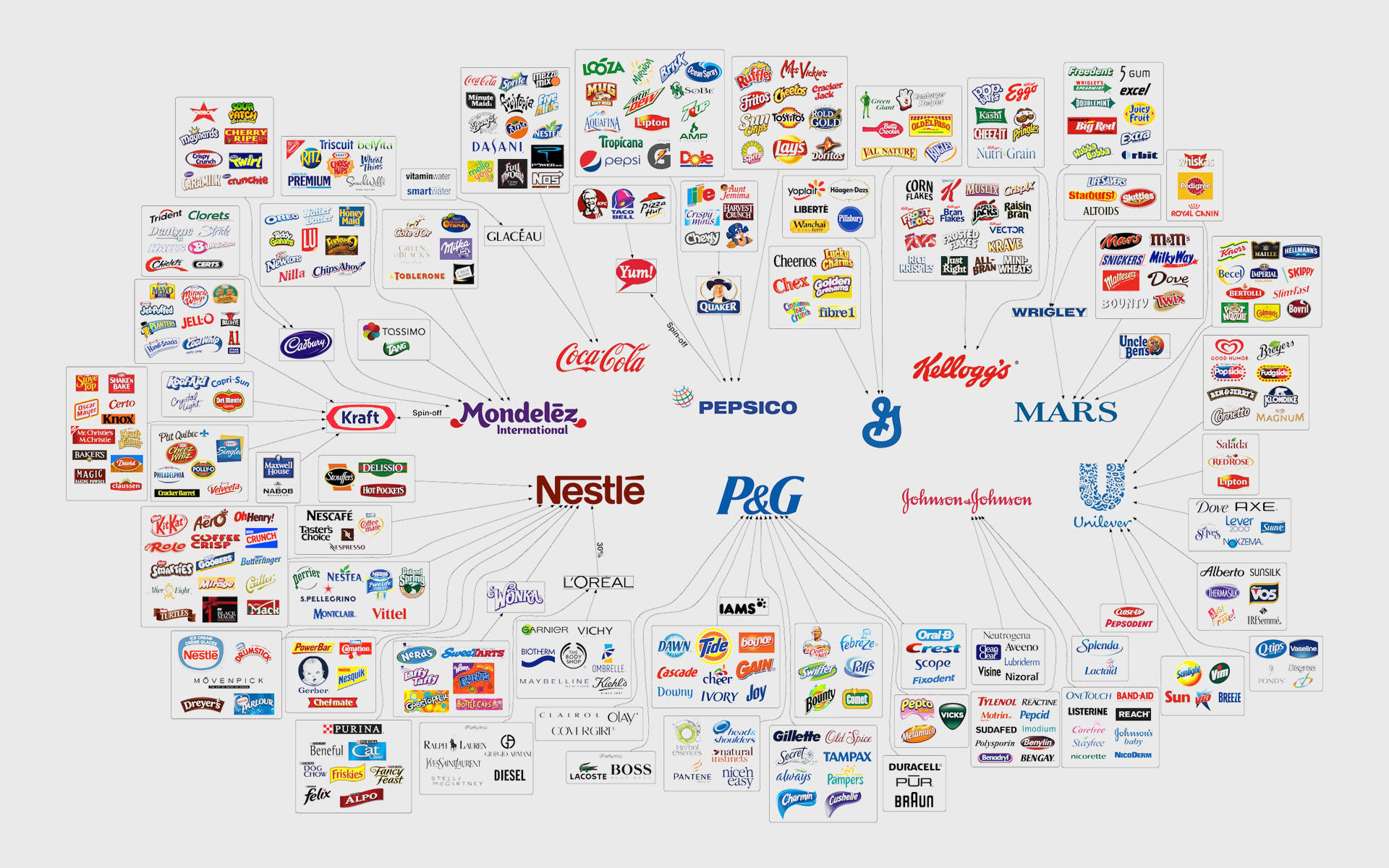
https://vocal.media/journal/companies-that-control-the-food-industry


This is super out of date. Mondolez and Nestle merged. Kellogg split in two and Mars bought half of it. It’s also missing Bimbo which owns a bunch of these companies.
Anonymous
Anonymous wrote:Sounds like it’s time to move, OP


+1. Just leave or stop complaining.
Anonymous
People are generally pretty f’ing stupid and this whole “EU food is healthier” proves the point. You have no idea how food is regulated in the EU. To begin with, food labeling isnt as precise, so you don’t actually know. And while additive x is “banned” in the EU it’s just rammed to additive 45 or something and no one actually knows what the hell it is. Then there are the substances that are banned in the EU because really large quantities are hazardous so they ban them in small quantities too.

Then these people get on Instagram and hyperventilate about “chemicals” (everything is a chemical you moron) and people freak out aided by grifters looking to make a buck like the Means and RFK.
Anonymous
Anonymous wrote:
Anonymous wrote:I bought eggs recently in that country I work in, won't say where as not to be recognized, and the yolk was so orange it was almost red. That is because they were not fed corn. They probably ate bugs and veggies. It is a completely different taste. These eggs are not from a highly developed country.


The free range heritage eggs are like that, the blue and dark brown kinds. Way darker yolk and better taste.


egg shell colors have nothing to do with whether the chicken was free range or what it was fed.
Anonymous
Anonymous wrote:People are generally pretty f’ing stupid and this whole “EU food is healthier” proves the point. You have no idea how food is regulated in the EU. To begin with, food labeling isnt as precise, so you don’t actually know. And while additive x is “banned” in the EU it’s just rammed to additive 45 or something and no one actually knows what the hell it is. Then there are the substances that are banned in the EU because really large quantities are hazardous so they ban them in small quantities too.

Then these people get on Instagram and hyperventilate about “chemicals” (everything is a chemical you moron) and people freak out aided by grifters looking to make a buck like the Means and RFK.


Well, they went to Europe and lost weight. So everything must be fundamentally different.
Anonymous
Anonymous wrote:
Anonymous wrote:
Anonymous wrote:I bought eggs recently in that country I work in, won't say where as not to be recognized, and the yolk was so orange it was almost red. That is because they were not fed corn. They probably ate bugs and veggies. It is a completely different taste. These eggs are not from a highly developed country.


The free range heritage eggs are like that, the blue and dark brown kinds. Way darker yolk and better taste.


egg shell colors have nothing to do with whether the chicken was free range or what it was fed.

We are talking about yolk color.
Anonymous
Anonymous wrote:
Anonymous wrote:
Anonymous wrote:
Anonymous wrote:I bought eggs recently in that country I work in, won't say where as not to be recognized, and the yolk was so orange it was almost red. That is because they were not fed corn. They probably ate bugs and veggies. It is a completely different taste. These eggs are not from a highly developed country.


The free range heritage eggs are like that, the blue and dark brown kinds. Way darker yolk and better taste.


egg shell colors have nothing to do with whether the chicken was free range or what it was fed.

We are talking about yolk color.


Farmer/small egg producer here - Shell color has nothing to do with yolk color either. Shell color is tied to the breed of hen and does not reflect what the hen's diet is. Yolk color is tied to what the hen is eating (mostly, because big producers can and do manipulate yolk color by feeding ground marigold and other dye in their chicken feed).

But generally, free range hens during the summer will produce bright orange yolks which reflects a diet rich in beta carotenes found in foraged grasses and bugs and you should be able to taste that in the yolk. During the winter, they still forage, but because the grass, weeds, and bugs that make up the majority of their diet, are dormant, the yolks will not be as vibrant colored - I try to supplement our birds diets with frozen spinach or other type of leafy green so they are at least getting something besides their normal pellets and scratch grains.
Anonymous
Anonymous wrote:
Anonymous wrote:
Anonymous wrote:
Anonymous wrote:I bought eggs recently in that country I work in, won't say where as not to be recognized, and the yolk was so orange it was almost red. That is because they were not fed corn. They probably ate bugs and veggies. It is a completely different taste. These eggs are not from a highly developed country.


The free range heritage eggs are like that, the blue and dark brown kinds. Way darker yolk and better taste.


egg shell colors have nothing to do with whether the chicken was free range or what it was fed.

We are talking about yolk color.


Blue and dark brown yolks? Really? Follow the thread.
Anonymous
Anonymous wrote:
Anonymous wrote:
Anonymous wrote:
Anonymous wrote:
Anonymous wrote:I bought eggs recently in that country I work in, won't say where as not to be recognized, and the yolk was so orange it was almost red. That is because they were not fed corn. They probably ate bugs and veggies. It is a completely different taste. These eggs are not from a highly developed country.


The free range heritage eggs are like that, the blue and dark brown kinds. Way darker yolk and better taste.


egg shell colors have nothing to do with whether the chicken was free range or what it was fed.

We are talking about yolk color.


Farmer/small egg producer here - Shell color has nothing to do with yolk color either. Shell color is tied to the breed of hen and does not reflect what the hen's diet is. Yolk color is tied to what the hen is eating (mostly, because big producers can and do manipulate yolk color by feeding ground marigold and other dye in their chicken feed).

But generally, free range hens during the summer will produce bright orange yolks which reflects a diet rich in beta carotenes found in foraged grasses and bugs and you should be able to taste that in the yolk. During the winter, they still forage, but because the grass, weeds, and bugs that make up the majority of their diet, are dormant, the yolks will not be as vibrant colored - I try to supplement our birds diets with frozen spinach or other type of leafy green so they are at least getting something besides their normal pellets and scratch grains.

Which was exactly what we were referring to.
post reply Forum Index » Food, Cooking, and Restaurants
Message Quick Reply
Go to: