Bad Art Friend

Anonymous
Anonymous wrote:
Anonymous wrote:So what is the line between just being terrible and plagiarizing?


Funny you ask that. I am one of the published authors who posted above and i just so happened to be turning in a MS this week and I ran this by my editor — what would you think if i included a verbatim private FB post in my book, and didn’t tell the original author? Would that be cool.

She laughed hard, and then said, “But seriously, no. Don’t do that.”

No legit author in their right mind is confused about this.


But then why are SO many writers on Twitter brushing this off or justifying it? It honestly blows my mind. I thought plagiarism was like the number one thing to NOT do, as writers?
Anonymous
Anonymous wrote:
Anonymous wrote:I'm on Dorland's side in this, also, and think the group texts were unbelievably mean, but I'm not sure the way he wrote the story is due to deceptiveness. He sifted through a lot of material, and presumably had live interviews that we didn't have here. Where he came out in the story isn't necessarily where we would come out. That doesn't mean he was trying to hoodwink us. Remember too that there was a Boston Globe exposee of the whole thing earlier and nobody seemed to have a problem with what Larson did there (though presumably they didn't expose the group texts.)

Anyway, ymmv.


Consider also that while he can relate to - and write about with true understanding - writing culture, how writers treat each other, what is plagiarism, ambition and success — he’s also a dude writing about a woman being mean-girled, and THAT is the piece of this story that so many of us, as women, have lived and are recoiling the most over.


Yes. Someone should really write a searing book about this. It's just so, so awful but relatable. That won't be me, but I'm sure someone will want to put it all down as an allegory for why mean girls ganging up on a socially awkward peer is horrible, and how it continues into adulthood.
Anonymous
Anonymous wrote:
Anonymous wrote:I'm on Dorland's side in this, also, and think the group texts were unbelievably mean, but I'm not sure the way he wrote the story is due to deceptiveness. He sifted through a lot of material, and presumably had live interviews that we didn't have here. Where he came out in the story isn't necessarily where we would come out. That doesn't mean he was trying to hoodwink us. Remember too that there was a Boston Globe exposee of the whole thing earlier and nobody seemed to have a problem with what Larson did there (though presumably they didn't expose the group texts.)

Anyway, ymmv.


Consider also that while he can relate to - and write about with true understanding - writing culture, how writers treat each other, what is plagiarism, ambition and success — he’s also a dude writing about a woman being mean-girled, and THAT is the piece of this story that so many of us, as women, have lived and are recoiling the most over.


Truth.

Those group texts do change the narrative a lot though. It was seeing those texts that locked me into this obsession with this narrative. Especially once you read what Dawn was writing to Larson around this time because... ugh, she knew. She knew, and also she didn't want to believe it, and Larson was very effectively lying to her.

The idea that there are group texts out there somewhere doing exactly what you think they might do (talking extensively about how much you suck) is pretty miserable.
Anonymous
Anonymous wrote:
Anonymous wrote:
Anonymous wrote:So what is the line between just being terrible and plagiarizing?


Funny you ask that. I am one of the published authors who posted above and i just so happened to be turning in a MS this week and I ran this by my editor — what would you think if i included a verbatim private FB post in my book, and didn’t tell the original author? Would that be cool.

She laughed hard, and then said, “But seriously, no. Don’t do that.”

No legit author in their right mind is confused about this.


But then why are SO many writers on Twitter brushing this off or justifying it? It honestly blows my mind. I thought plagiarism was like the number one thing to NOT do, as writers?

Because they are all connected in some way and/or they have similar shitty skeletons
Anonymous
Anonymous wrote:
Anonymous wrote:
Anonymous wrote:
Anonymous wrote:So what is the line between just being terrible and plagiarizing?


Funny you ask that. I am one of the published authors who posted above and i just so happened to be turning in a MS this week and I ran this by my editor — what would you think if i included a verbatim private FB post in my book, and didn’t tell the original author? Would that be cool.

She laughed hard, and then said, “But seriously, no. Don’t do that.”

No legit author in their right mind is confused about this.


But then why are SO many writers on Twitter brushing this off or justifying it? It honestly blows my mind. I thought plagiarism was like the number one thing to NOT do, as writers?

Because they are all connected in some way and/or they have similar shitty skeletons


This, plus the race angle. So many people engaging in a knee jerk response here where they side with a woman of color over a white woman. This was especially bad right after the article came out, especially when Ng was pushing this angle hard and several other prominent writers (including Roxane Gay) made this into a narrative about race. Which it really, really isn't. There are race elements and class elements and status elements and they are all working in interesting way. But this is not a situation where a white woman imposed on a woman of color. At all! It's offensive to anyone who has actually been in that dynamic to interpret it that way here.

I have seen several writers I follow say something along the lines of "I would like to remove myself from all aspects of the kidney gate situation please" in the last couple days. Because they jumped on the bandwagon early, then more info came out to make those initial reactions look rash at best, and then as it drags on a lot of people have realized this is really not something anyone should have been debating casually on Twitter at all. A real collective fail here.
Anonymous
Someone said something, at least.

Anonymous
Anonymous wrote:
Anonymous wrote:
Anonymous wrote:
Anonymous wrote:So what is the line between just being terrible and plagiarizing?


Funny you ask that. I am one of the published authors who posted above and i just so happened to be turning in a MS this week and I ran this by my editor — what would you think if i included a verbatim private FB post in my book, and didn’t tell the original author? Would that be cool.

She laughed hard, and then said, “But seriously, no. Don’t do that.”

No legit author in their right mind is confused about this.


But then why are SO many writers on Twitter brushing this off or justifying it? It honestly blows my mind. I thought plagiarism was like the number one thing to NOT do, as writers?

Because they are all connected in some way and/or they have similar shitty skeletons


Agreed — it’s some serious Emperor’s New Clothes behavior plus denial/secret worries over having done the same.
Anonymous
Anonymous wrote:
Anonymous wrote:
Anonymous wrote:So what is the line between just being terrible and plagiarizing?


Funny you ask that. I am one of the published authors who posted above and i just so happened to be turning in a MS this week and I ran this by my editor — what would you think if i included a verbatim private FB post in my book, and didn’t tell the original author? Would that be cool.

She laughed hard, and then said, “But seriously, no. Don’t do that.”

No legit author in their right mind is confused about this.


But then why are SO many writers on Twitter brushing this off or justifying it? It honestly blows my mind. I thought plagiarism was like the number one thing to NOT do, as writers?


For the purposes of this question — there are two kinds of writers. The first are “literary” writers whose heroes are Celeste Ng etc., most of whom will never publish a novel, but live off weird teaching gigs, day jobs, fellowships, and will spend their “careers” writing short stories that no one but other MFAs will read. They are a closed network, based out of few cities — Brooklyn, Boston, L.A, the Iowa writers workshop, Columbia MFA. They are a rarified bunch and very defensive about the fact that no one wants to pay money for their writing. There are so few shots at making it as an MFA writer that they are cutthroat competitive and very petty and resentful. So their currency is elitism, snobbism, classism. These are the writers in Twitter.

The second kind of writers are “commercial” writers, who get books deals, produce regularly, often collaborate with Netflix or other TV/Movie houses. The most successful of these are household names — think Lianne Moriarty or Michael Connelly — and most are not on Twitter and def.not part of this scene. They are “working” writers with deadlines and contracts and while their is much fellowship within genres, whether it is mystery, sci-if, women’s fiction, romance, thrillers . . . There is none of this clubbiness or exclusivity. In fact, in genre fiction, there are conferences where authors mix with fans, teach classes, help newbies etc. It’s a completely different vibe b/c working writers let the marketplace be the judge of a good story, while MFA writers think they are the ultimate judges.

Guess which type loves the petty toxic swampland of Twitter?

As Dennis Lehane put it, mystery writers are a great bunch who send the elevator down when they get to the top. And it’s true.
Anonymous
Anonymous wrote:
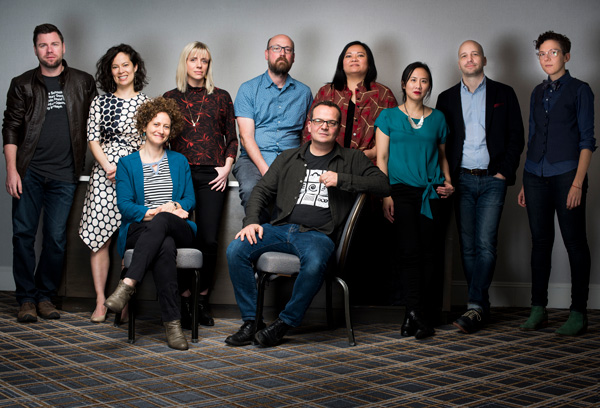
Anonymous wrote:Here they are, in all their Chunkster glory. So glad they named names so I can know who to avoid buying books by in the future.


The Chunky Monkeys. Back row (l. to r.): Calvin Hennick, Sonya Larson, Whitney Scharer, Chip Cheek, Grace Talusan, Celeste Ng, Christopher Castellani, and Alexandria Marzano-Lesnevich. Front row: Becky Tuch (l.) and Adam Stumacher. Not pictured, co-founder Jennifer De Leon.

https://www.publishersweekly.com/pw/by-topic/industry-news/publisher-news/article/80887-two-boston-writing-groups-produce-12-books.html


Wait, that's Sonya Larson!? I would have 10000% assumed she was White


I think that may be part of her axe to grind.
Anonymous
Anonymous wrote:
Anonymous wrote:I think one of the things that bothers me deeply about this whole mess, and other similar stories like the Isabel Fall story, are that they seem like a confirmation of sorts of what I have suspected MFA programs and writer groups to be like, and what it is like trying to make it as a new writer. (Of course, the cruelty itself is the worst thing, but that's been covered by many others, so I won't rehash here.) I have been writing for years, I've had positive feedback and encouragement to go further with writing, and I would love to dive in and get an MFA and really learn about the craft of writing. I want to become better. However, I've always held back, because I've been worried about exactly this sort of thing. I'm a quiet person who isn't very sophisticated when it comes to navigating treacherous social waters like this. I'm neurodivergent; this is beyond my literal social abilities. The idea of trying to hang with groups like GrubStreet in order to become a better writer is completely intimidating. I am not worried about my ability to learn and improve my actual writing in an MFA program, but I know I could not excel at the social climbing and general nastiness that seems to be part and parcel of the programs and the writers groups.

Because, let's face it, Celeste Ng, Sonya Larson, NK Jemisin, Roxane Gay, Chip Cheek, Calvin Hennick, and the other writers at the center of inexplicably cruel destructions of budding writers like this, well, nothing will happen to them for what they've done. Their victims won't recover, but they'll be just fine. Isabel Fall is literally destroyed as a person. Dawn Dorland will never publish even if she wanted to, unless it is a predatory "tell all" contract, but probably not even that since what else is there to say? Meanwhile literary gatekeepers like Helen Rosner are out there defending the indefensible, so you know where the publishers stand.

I want to learn to be a better writer, but at what cost? Does improving your writing mean losing your ethics? Does it mean you have to be willing to savage people behind their backs? To turn into someone who delights in mindless social destruction? Is it even worth trying if you know you don't have the social skills to navigate such treacherous interpersonal waters? I don't know, but the whole story saddens me on an additional personal level because I know one thing for sure: I'll never fit into that world. I can't. And it seems that's the price of admission for learning to be a better writer.


It is not the best time for art.

There is a lot of emphasis on only presenting the correct narratives, on having sensitivity readers, on only crossing boundaries that are allowed to be crossed. This makes a world that is stifling and insular and awful.

I am a little more removed from the NYC publishing scene than I was once, but I am not sorry for that. I found a group of like-minded writers online, and many of us have parlayed our shared efforts into real careers writing fiction, writing scripts, writing games, and just writing. One thing the last two decades have taught me is you write because you love it, because you want to know what happens, and because you have something to say. But it is a strange thing interacting with other writers. I have a friend who lives nearby now. When we were kids we wrote novels together. We tried to start a Sunday afternoon writing group a few years back... but we were just in such different places, we had such different opinions... it didn't work. I'm not even sure we are friends anymore. It is very hard to find a writer's community. It involves trust, and maybe it also involves distance. There is a competitive edge that's hard to shake. There is an ugly part in all of us that isn't sure of ourselves, but knows we thing what someone else wrote is bad. Sometimes it's even hard to separate that feeling from their perceived success--or lack thereof. Things are subjective: sometimes you look at a piece of writing that is beautifully executed and it leaves you cold. Other times, you do something like read "The Goldfinch" and wonder wtf was going on with the last third of the novel. It's all a mess, and short stories... I mean, they're lovely, but who really reads them as a genre besides aspiring mfa students? Or aspiring science fiction and fantasy writers...

It is hard. It is painstaking. And at the end of the day you have to be doing it for the love of it or that will show in the work itself.


This is very thoughtful. Thank you.
Anonymous
Anonymous wrote:
Anonymous wrote:
Anonymous wrote:So what is the line between just being terrible and plagiarizing?


Funny you ask that. I am one of the published authors who posted above and i just so happened to be turning in a MS this week and I ran this by my editor — what would you think if i included a verbatim private FB post in my book, and didn’t tell the original author? Would that be cool.

She laughed hard, and then said, “But seriously, no. Don’t do that.”

No legit author in their right mind is confused about this.


But then why are SO many writers on Twitter brushing this off or justifying it? It honestly blows my mind. I thought plagiarism was like the number one thing to NOT do, as writers?


The writers who spend all day on Twitter are largely hacks.
Anonymous
Anonymous wrote:
Anonymous wrote:
Anonymous wrote:
Anonymous wrote:
Anonymous wrote:
Anonymous wrote:@kidneygate’s chronology of the emails between Dawn and Sonya is more damning than I can even describe. I’m not on Twitter but anyone on and interested: can you share broadly?

https://mobile.twitter.com/kidneygate/status/1447625724052004864


Wow, Dawn was not badgering her at all. She genuinely talked about why she was confused and hurt because she thought they were friends. Sonya went above and beyond to string her along. It definitely shows a clearer story, not the dramatization in the NYT.


Yeah, I'm pissed at Kolker.

I wonder if he’s connected to Grub Street or the monkeys


Cheryl Strayed’s partner with Dear Sugar taught at Grub Street and she just promoted his “dawww, both sides erred” essay — which he clearly wrote in order to defend himself and Strayed. Dawn Dorland noted in the NYT story that she had written in to Dear Sugar for advice, and they did not respond.

People responding to Strayed aren’t having it.


Strayed is a turd.

https://mobile.twitter.com/CherylStrayed/status/1447579114794147840


Strayed deleted the post — what did it say?
Anonymous
Anonymous wrote:
Anonymous wrote:
Anonymous wrote:
Anonymous wrote:So what is the line between just being terrible and plagiarizing?


Funny you ask that. I am one of the published authors who posted above and i just so happened to be turning in a MS this week and I ran this by my editor — what would you think if i included a verbatim private FB post in my book, and didn’t tell the original author? Would that be cool.

She laughed hard, and then said, “But seriously, no. Don’t do that.”

No legit author in their right mind is confused about this.


But then why are SO many writers on Twitter brushing this off or justifying it? It honestly blows my mind. I thought plagiarism was like the number one thing to NOT do, as writers?


For the purposes of this question — there are two kinds of writers. The first are “literary” writers whose heroes are Celeste Ng etc., most of whom will never publish a novel, but live off weird teaching gigs, day jobs, fellowships, and will spend their “careers” writing short stories that no one but other MFAs will read. They are a closed network, based out of few cities — Brooklyn, Boston, L.A, the Iowa writers workshop, Columbia MFA. They are a rarified bunch and very defensive about the fact that no one wants to pay money for their writing. There are so few shots at making it as an MFA writer that they are cutthroat competitive and very petty and resentful. So their currency is elitism, snobbism, classism. These are the writers in Twitter.

The second kind of writers are “commercial” writers, who get books deals, produce regularly, often collaborate with Netflix or other TV/Movie houses. The most successful of these are household names — think Lianne Moriarty or Michael Connelly — and most are not on Twitter and def.not part of this scene. They are “working” writers with deadlines and contracts and while their is much fellowship within genres, whether it is mystery, sci-if, women’s fiction, romance, thrillers . . . There is none of this clubbiness or exclusivity. In fact, in genre fiction, there are conferences where authors mix with fans, teach classes, help newbies etc. It’s a completely different vibe b/c working writers let the marketplace be the judge of a good story, while MFA writers think they are the ultimate judges.

Guess which type loves the petty toxic swampland of Twitter?

As Dennis Lehane put it, mystery writers are a great bunch who send the elevator down when they get to the top. And it’s true.


Your last sentence - do you mean that mystery writers (who I presume may belong to the second category of commercial writers?) are more generous?
Anonymous
20:35, what’s so interesting is that Lehane isn’t even what I’d call a “mystery” writer, though he is. He’s so insightful about trauma and motivation and the difficulty in telling a dark thing true. How TF do the Serious Chunk Literary You Wouldn’t Understand type writers so goddamned bad at…insight??
Anonymous
Anonymous wrote:
Anonymous wrote:
Anonymous wrote:I think one of the things that bothers me deeply about this whole mess, and other similar stories like the Isabel Fall story, are that they seem like a confirmation of sorts of what I have suspected MFA programs and writer groups to be like, and what it is like trying to make it as a new writer. (Of course, the cruelty itself is the worst thing, but that's been covered by many others, so I won't rehash here.) I have been writing for years, I've had positive feedback and encouragement to go further with writing, and I would love to dive in and get an MFA and really learn about the craft of writing. I want to become better. However, I've always held back, because I've been worried about exactly this sort of thing. I'm a quiet person who isn't very sophisticated when it comes to navigating treacherous social waters like this. I'm neurodivergent; this is beyond my literal social abilities. The idea of trying to hang with groups like GrubStreet in order to become a better writer is completely intimidating. I am not worried about my ability to learn and improve my actual writing in an MFA program, but I know I could not excel at the social climbing and general nastiness that seems to be part and parcel of the programs and the writers groups.

Because, let's face it, Celeste Ng, Sonya Larson, NK Jemisin, Roxane Gay, Chip Cheek, Calvin Hennick, and the other writers at the center of inexplicably cruel destructions of budding writers like this, well, nothing will happen to them for what they've done. Their victims won't recover, but they'll be just fine. Isabel Fall is literally destroyed as a person. Dawn Dorland will never publish even if she wanted to, unless it is a predatory "tell all" contract, but probably not even that since what else is there to say? Meanwhile literary gatekeepers like Helen Rosner are out there defending the indefensible, so you know where the publishers stand.

I want to learn to be a better writer, but at what cost? Does improving your writing mean losing your ethics? Does it mean you have to be willing to savage people behind their backs? To turn into someone who delights in mindless social destruction? Is it even worth trying if you know you don't have the social skills to navigate such treacherous interpersonal waters? I don't know, but the whole story saddens me on an additional personal level because I know one thing for sure: I'll never fit into that world. I can't. And it seems that's the price of admission for learning to be a better writer.


It is not the best time for art.

There is a lot of emphasis on only presenting the correct narratives, on having sensitivity readers, on only crossing boundaries that are allowed to be crossed. This makes a world that is stifling and insular and awful.

I am a little more removed from the NYC publishing scene than I was once, but I am not sorry for that. I found a group of like-minded writers online, and many of us have parlayed our shared efforts into real careers writing fiction, writing scripts, writing games, and just writing. One thing the last two decades have taught me is you write because you love it, because you want to know what happens, and because you have something to say. But it is a strange thing interacting with other writers. I have a friend who lives nearby now. When we were kids we wrote novels together. We tried to start a Sunday afternoon writing group a few years back... but we were just in such different places, we had such different opinions... it didn't work. I'm not even sure we are friends anymore. It is very hard to find a writer's community. It involves trust, and maybe it also involves distance. There is a competitive edge that's hard to shake. There is an ugly part in all of us that isn't sure of ourselves, but knows we thing what someone else wrote is bad. Sometimes it's even hard to separate that feeling from their perceived success--or lack thereof. Things are subjective: sometimes you look at a piece of writing that is beautifully executed and it leaves you cold. Other times, you do something like read "The Goldfinch" and wonder wtf was going on with the last third of the novel. It's all a mess, and short stories... I mean, they're lovely, but who really reads them as a genre besides aspiring mfa students? Or aspiring science fiction and fantasy writers...

It is hard. It is painstaking. And at the end of the day you have to be doing it for the love of it or that will show in the work itself.


This is very thoughtful. Thank you.


Thanks for listening. It is something I struggle with a lot. We all, I think, have outsized ambition, we all have opinions on what is good and what is terrible, and we all have to reconcile that somehow to our own circumstances. I am a failed writer, by most metrics, but I've edited pieces that were unpublishable and made them into pieces people paid attention to, pieces that were published. I've mentored other writers who have done really well. It's freakint hard sometimes, realizing my greatest success stories aren't mine. It can be a little like parenting. And then realizing that the stories you want to tell may not be fashionable, may be the kind of genre fiction that MFA writers sneer at... and that successful genre publishers won't touch. You have to do it because you love it. At the end of the day that is what it is.

I sometimes think this is blind leap of faith that men are taught better to do than women. We always check ourselves, check our art, check with our (mostly female) editors and agents. But writing is a leap of faith. You have to do it.

Apoligies for more overwrought thoughts. I've been struggling with this a lot and seeing another writer's group, the kind that would never have me as a member, stirs up a lot of feelings. Some smug and some sad.
post reply Forum Index » Entertainment and Pop Culture
Message Quick Reply
Go to: