Let's talk gardening and cicadas

Anonymous
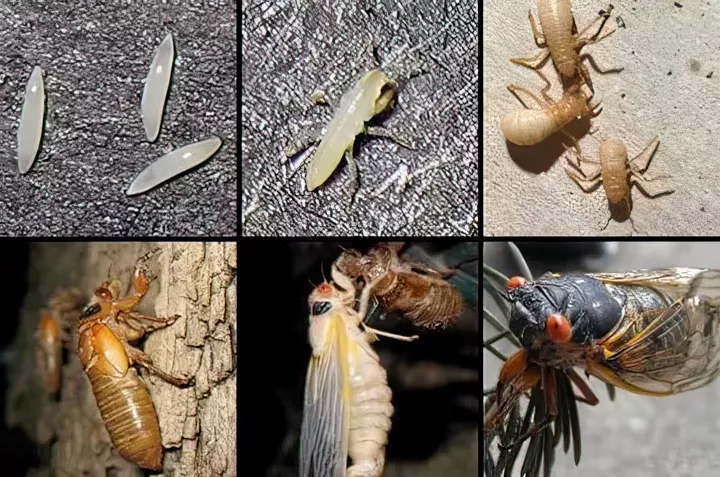
Anonymous wrote:Cicadas begin life as a rice-shaped egg, which the female deposits in a groove she makes in a tree limb, using her ovipositor. The groove provides shelter and exposes the tree fluids, which the young cicadas feed on. These grooves can kill small branches. When the branches die and the leaves turn brown, it is called flagging.

Once the cicada hatches from the egg it will begin to feed on the tree fluids. At this point, it looks like a termite or small white ant. Once the young cicada is ready, it crawls from the groove and falls to the ground where it will dig until it finds roots to feed on. It will typically start with smaller grass roots and work its way up to the roots of its host tree. The cicada will stay underground from 2 to 17 years depending on the species. Cicadas are active underground, tunneling, and feeding, and not sleeping or hibernating as commonly thought.

After the long 2 to 17 years, cicadas emerge from the ground as nymphs. Nymphs climb the nearest available vertical surface (usually a plant) and begin to shed their nymph exoskeleton. Free of their old skin, their wings will inflate with fluid (haemolymph) and their adult skin will harden (sclerotize). Once their new wings and body are ready, they can begin their brief adult life.

Adult cicadas also called imagoes, spend their time in trees looking for a mate. Males sing (or otherwise vibrate the air or their surroundings), females respond, mating begins, and the cycle of life begins again.


What can you do? Probably nothing. The biggest problem is not the Cicada's emerging but rather the new Cicadas feeding on plant juice and roots. My solution is to attract a lot of birds in the backyard by putting seeds and birdbaths. I am expecting them to make a meal of the Cicadas. Also putting some blue bird nests too. Hopefully we will see some bluebirds take full time residence in our backyard.


Thank you for posting this - it was more interesting than any WaPo or other article I've read about the cicadas!
Anonymous
So does all this extra bird food mean they'll leave my tomatoes alone this year??
Anonymous
Anonymous wrote:So does all this extra bird food mean they'll leave my tomatoes alone this year??


As long as they have access to water.

They nibble on tomatoes for water, not because it’s their diet of choice
Anonymous
Anonymous wrote:
Anonymous wrote:So does all this extra bird food mean they'll leave my tomatoes alone this year??


As long as they have access to water.

They nibble on tomatoes for water, not because it’s their diet of choice


For years I religiously got rid of any standing water in the yard in an effort to combat mosquitos, but last year started leaving out a dish of water for the birds and just changed the water frequently. They still ate all my tomateos! And never actually observed any birds utilizing the water. What gives? AM I doing it wrong? I used a shallow dish like what you put under a pot.
Anonymous
Anonymous wrote:
Anonymous wrote:
Anonymous wrote:So does all this extra bird food mean they'll leave my tomatoes alone this year??


As long as they have access to water.

They nibble on tomatoes for water, not because it’s their diet of choice


For years I religiously got rid of any standing water in the yard in an effort to combat mosquitos, but last year started leaving out a dish of water for the birds and just changed the water frequently. They still ate all my tomatoes! And never actually observed any birds utilizing the water. What gives? AM I doing it wrong? I used a shallow dish like what you put under a pot.


Yes, they do like fresh water, and even if you do not see them using it, a shallow dish is perfect.

I put the shallow bird bath close to the tree line, away from the garden. They visit early in the am. That's when they will eat your tomatoes too. If they still go for tomatoes, cover them, and place your water out. They will retrain to go to water. Squirrels are actually very smart animals.

https://www.intoyard.com/where-do-squirrels-get-water/
Anonymous
Anonymous wrote:
Anonymous wrote:
Anonymous wrote:
Anonymous wrote:So does all this extra bird food mean they'll leave my tomatoes alone this year??


As long as they have access to water.

They nibble on tomatoes for water, not because it’s their diet of choice


For years I religiously got rid of any standing water in the yard in an effort to combat mosquitos, but last year started leaving out a dish of water for the birds and just changed the water frequently. They still ate all my tomatoes! And never actually observed any birds utilizing the water. What gives? AM I doing it wrong? I used a shallow dish like what you put under a pot.


Yes, they do like fresh water, and even if you do not see them using it, a shallow dish is perfect.

I put the shallow bird bath close to the tree line, away from the garden. They visit early in the am. That's when they will eat your tomatoes too. If they still go for tomatoes, cover them, and place your water out. They will retrain to go to water. Squirrels are actually very smart animals.

https://www.intoyard.com/where-do-squirrels-get-water/


PP here- thanks! I have plans to update my garden netting game this year so maybe that with leaving out water will help. We'll see....
Anonymous
The birds in our yard have eaten most of the cicadas. Attract the birds and just delay planting for a year if you are incredibly concerned.

I don't pay much for plants, so I am not concerned. Am also looking upon this as a free tree trimming service offered by the cicadas.
Anonymous
I have cicadas all over my new landscaping. I thought they'd mostly affect trees. I guess nothing much can be done now. I didn't understand the advice here to delay planting and my landscaper said nothing about it. But now I get it. I'll have to check if the warranty on the plants covers insect damage. I see only one plant is looking stressed at this point. But they are all over the newly planted boxwoods. Maybe they won't try to lay eggs there and they are just hanging out?

Oh, and I've decided to keep my porch light off for the next few weeks. My front step is covered in their shells and live ones. I could see the trail of shells up the brick to the light fixtures. I just spent 15 minutes sweeping them off the porch and door.
post reply Forum Index » Lawn and Garden
Message Quick Reply
Go to: