
Has Europe really changed that much?

Anonymous
Anonymous wrote:I think it has changed in the tourist areas. There are just so many more people. The most popular sites are mobbed and even places that used to not be crowded are. But maybe I'm older than some of you. Even in the late 80's, people from the Eastern Bloc countries and China couldn't (or couldn't afford to) travel. The world's population has grown, and, at the same time, so has the number of people who can afford to travel. The cities just have a different feel than they used to. I remember going to Paris in the early Spring, and you could just walk into the Louvre. I went back recently at about the same time of year, and it wasn't as crowded as it would be in the summer, but there was a long line to get in. You could see from the rope lines they had set up that it would be nuts in the summer.

It's still worth going, but, for lack of a better way to say it, I no longer feel as though I'm getting a feel for the real local culture because the natives are so overwhelmed by the tourists. It's almost like these cities are becoming large theme parks. That's a bit overstated, but that's the way it feels. I just saw that, during peak tourist season, Venice is going to start segregating the tourists from the locals with rope lines, and limit the number of nonresidents that can come into the city. That's sad, but I get why they're doing it.


This is spot on. I just came back from London with my DC and while they loved it and kept asking me or waiting my response when people asked about our trip, I could not honestly answer “ great.” Although I tried to for them. I kept thinking how different it was and how massive the crowds since I went early 90s. I feel guilty almost because I don’t want to deprive others and and am certainly not better than any one else but it seems so touristy now. But I’m a tourist as well! Have no idea the answer but I’m not dying to go back.
Anonymous
Pp above. Also I should say not just London. It Paris, Rome, Amsterdam, etc. all the other major cities I’ve been to have changed.
Anonymous
A few changes to follow on the excellent posts on this thread:

Shorts - men now wear shorts in the cities when it's warm. Shorts used to be strictly beach/countryside attire in Europe.

Smoking - on my first trip to Europe in 1995, not only was there a smoking section on the plane, but every lobby, restaurant, bar, and train station was filled with a fog of cigarette smoke. Nowadays, smoking in Europe is pretty much relegated to the outdoors.

French attitude - pretty much a thing of the past, or relegated to the over 55 crowd. Younger French people are delightful and quite friendly for the most part.
Anonymous
Anonymous wrote:
Anonymous wrote:I've heard that Europe is not as great to travel to as it used to be. Is that really true?


I find it humbling to go to Europe and see that the standard of living is so much higher than the United States. There's nothing like taking Amtrak one week and a European train the next to see how ratty the United States has become.


Europe is a continent with a lot of diversity. Just wanted to let you know that.
Anonymous
I am the poster who wrote the long post on the previous page about the changes to Europe.

I should elaborate further and say that most of my comments are mainly addressed at the big cities, particularly places like London and Paris and Venice, which is where most tourists go. But if you are willing to venture off the beaten path, Europe is still a richly rewarding destination. How many people jump straight from Florence to Venice without stopping at Bologna? Or make the efforts to go to Ravenna? And places like Naples and Sicily are still very "authentic" and full of old character.

In France, the most "French" parts are all outside Paris these days. Try Strasbourg or Lyons, and get further into the provinces. Places like Normandy and Brittany still get their full of tourists but those are mainly European tourists and it's still enjoyable. The Dordogne is also lovely.

And venture further east! We took a trip to Romania several years ago on a whim, nothing more than the praises of one of our friends. And we were blown away by how wonderful it was. Transylvania is filled with old Austro-Hungarian cities and the countryside is dotted with historic Saxon villages with their fortified churches and wildfowl still wander the unpaved muddy lanes of the villages, and horse drawn wagons are still seen in the fields and on the roads, and people still manually stack hay into haystacks. We were looking at scenes literally last seen in Western Europe 150 years ago. And the painted monasteries of the Bukovina region were spectacular. Bucharest is still a period piece for both pre war and Soviet reasons. Poland and Hungary and Czech Republic (outside Prague, but even Prague itself) still retain a strongly local flavor. I have not been to Slovenia yet but have heard many wonderful things about it as well.
Anonymous
Anonymous wrote:I am the poster who wrote the long post on the previous page about the changes to Europe.

I should elaborate further and say that most of my comments are mainly addressed at the big cities, particularly places like London and Paris and Venice, which is where most tourists go. But if you are willing to venture off the beaten path, Europe is still a richly rewarding destination. How many people jump straight from Florence to Venice without stopping at Bologna? Or make the efforts to go to Ravenna? And places like Naples and Sicily are still very "authentic" and full of old character.

In France, the most "French" parts are all outside Paris these days. Try Strasbourg or Lyons, and get further into the provinces. Places like Normandy and Brittany still get their full of tourists but those are mainly European tourists and it's still enjoyable. The Dordogne is also lovely.

And venture further east! We took a trip to Romania several years ago on a whim, nothing more than the praises of one of our friends. And we were blown away by how wonderful it was. Transylvania is filled with old Austro-Hungarian cities and the countryside is dotted with historic Saxon villages with their fortified churches and wildfowl still wander the unpaved muddy lanes of the villages, and horse drawn wagons are still seen in the fields and on the roads, and people still manually stack hay into haystacks. We were looking at scenes literally last seen in Western Europe 150 years ago. And the painted monasteries of the Bukovina region were spectacular. Bucharest is still a period piece for both pre war and Soviet reasons. Poland and Hungary and Czech Republic (outside Prague, but even Prague itself) still retain a strongly local flavor. I have not been to Slovenia yet but have heard many wonderful things about it as well.


+1 This is spot on. London, Paris, Barcelona, Florence etc -- are all underweight of the "rise of the rest." The big brand classic hotels -- like Gritti Palace -- are taking business from the global wealthy.

But if you venture off the path a little bit, there is plenty of Europe left -- charm, culture, and history and great values.
Anonymous
Anonymous wrote:I am the poster who wrote the long post on the previous page about the changes to Europe.

I should elaborate further and say that most of my comments are mainly addressed at the big cities, particularly places like London and Paris and Venice, which is where most tourists go. But if you are willing to venture off the beaten path, Europe is still a richly rewarding destination. How many people jump straight from Florence to Venice without stopping at Bologna? Or make the efforts to go to Ravenna? And places like Naples and Sicily are still very "authentic" and full of old character.

In France, the most "French" parts are all outside Paris these days. Try Strasbourg or Lyons, and get further into the provinces. Places like Normandy and Brittany still get their full of tourists but those are mainly European tourists and it's still enjoyable. The Dordogne is also lovely.

And venture further east! We took a trip to Romania several years ago on a whim, nothing more than the praises of one of our friends. And we were blown away by how wonderful it was. Transylvania is filled with old Austro-Hungarian cities and the countryside is dotted with historic Saxon villages with their fortified churches and wildfowl still wander the unpaved muddy lanes of the villages, and horse drawn wagons are still seen in the fields and on the roads, and people still manually stack hay into haystacks. We were looking at scenes literally last seen in Western Europe 150 years ago. And the painted monasteries of the Bukovina region were spectacular. Bucharest is still a period piece for both pre war and Soviet reasons. Poland and Hungary and Czech Republic (outside Prague, but even Prague itself) still retain a strongly local flavor. I have not been to Slovenia yet but have heard many wonderful things about it as well.


I think this is generally true- there was a sort of blandness to the "main" parts of London that turned me off. Same way I feel going through the City Center development in downtown DC. But the beauty of the really big cities like London, Paris, Rome is that they are vibrant living cities, not just tourist cities. So you don't have to go very far outside of the tourist core to experience some of the interesting things that help make them great places. Going to eat in Brixton in London, hanging out by the Canal St.-Martin or walking along the Promenade Plantee in Paris. While these are popular places that draw a few tourists, they are not at all overrun by tourists.

Now Venice...amazingly beautiful, but it's all too much with too many people.
Anonymous
Anonymous wrote:
Anonymous wrote:I am the poster who wrote the long post on the previous page about the changes to Europe.

I should elaborate further and say that most of my comments are mainly addressed at the big cities, particularly places like London and Paris and Venice, which is where most tourists go. But if you are willing to venture off the beaten path, Europe is still a richly rewarding destination. How many people jump straight from Florence to Venice without stopping at Bologna? Or make the efforts to go to Ravenna? And places like Naples and Sicily are still very "authentic" and full of old character.

In France, the most "French" parts are all outside Paris these days. Try Strasbourg or Lyons, and get further into the provinces. Places like Normandy and Brittany still get their full of tourists but those are mainly European tourists and it's still enjoyable. The Dordogne is also lovely.

And venture further east! We took a trip to Romania several years ago on a whim, nothing more than the praises of one of our friends. And we were blown away by how wonderful it was. Transylvania is filled with old Austro-Hungarian cities and the countryside is dotted with historic Saxon villages with their fortified churches and wildfowl still wander the unpaved muddy lanes of the villages, and horse drawn wagons are still seen in the fields and on the roads, and people still manually stack hay into haystacks. We were looking at scenes literally last seen in Western Europe 150 years ago. And the painted monasteries of the Bukovina region were spectacular. Bucharest is still a period piece for both pre war and Soviet reasons. Poland and Hungary and Czech Republic (outside Prague, but even Prague itself) still retain a strongly local flavor. I have not been to Slovenia yet but have heard many wonderful things about it as well.


I think this is generally true- there was a sort of blandness to the "main" parts of London that turned me off. Same way I feel going through the City Center development in downtown DC. But the beauty of the really big cities like London, Paris, Rome is that they are vibrant living cities, not just tourist cities. So you don't have to go very far outside of the tourist core to experience some of the interesting things that help make them great places. Going to eat in Brixton in London, hanging out by the Canal St.-Martin or walking along the Promenade Plantee in Paris. While these are popular places that draw a few tourists, they are not at all overrun by tourists.

Now Venice...amazingly beautiful, but it's all too much with too many people.


The boutique hotels (non chain) can be a good deal even in the global capitals. I recommend Tablet Hotels for nice, fresh independent places.
Anonymous
Anonymous wrote:
Anonymous wrote:This is a topic that can very easily become too sensitive and controversial but I will be frank and speak as an experienced traveller who has been going to Europe since the early 1980s and has also lived in Europe on two different occasions, first as a child and then as an adult.

Has Europe changed? Yes. The themes touched above are real. I'll summarize some of the most obvious ones.

1. The tourist hordes have exploded, especially in the last 15 years. It's not just Americans but there are now huge numbers of Chinese and other Asians and Latinos travelling to Europe. I have nothing against the diversity of tourism, but I do remember when you could go to the Sistine Chapel and have the place to yourself and maybe a handful of other tourists. I was once totally alone in the chapel for about 10 minutes. I remember that clearly. But now all the major sites in all the major cities are packed, packed, packed. In the Louvre you can barely see the key artwork for the hordes of tourists. Most of them don't care about the art, they just want their d*mn photo of the Mona Lisa so everyone is holding up their phones and snapping away and it's now impossible to see the painting clearly.

2. Tourism used to be mainly in the peak seasons with minimal tourism in the off seasons. But now for the big destinations it's pretty much year round tourism. There's no longer an off season for Venice, for example.

3. The gulf between America and Europe has changed. In the 1980s the European lifestyle and environment was still different enough from the US that it felt very different. This was most easily obvious in food. In 1980s America if you wanted special French or Italian cheeses, even reggiano parmiggiano, you had to go to specialist shops (if your city had them!). Good bread in the US? Hah! Going to France or Italy was a revelation for the food on offer, all the fabulous pastry shops and restaurants and delis and cafes that offered food and coffee that made American culinary world so dreary and dull by comparison. But today? It's the same. In many cases it's even better in the US. America's dining scene is FABULOUS these days. You no longer need to go to Rome to get great coffee, or Paris for a great croissant or baguette. Actually, the coffee in Paris is terrible compared to America, the French coffee was never great but we didn't realize it in the 1980s and now we do.

4. The globalization of cities. I can go to certain kinds of neighborhoods in most of the big European cities and eat in the same ethnic restaurants, drink in the same hipster coffee shops, be surrounded by the same kinds of people as I can in certain neighborhoods in DC or New York or SF or Boston. As the world globalizes, the more homogeneous our cities and lifestyles have become, particularly for the educated professional classes that like to travel. I've been in coffee shops in Mumbai and Hong Kong that would be right at home in Brooklyn or London. That familiarity and the prevalence of it in the main European cities means Europe is no longer the exotic destination it was.

5. Demographic changes. This is the most controversial part. I am not passing moral judgement. But that has been a big demographic change in Europe in the last 20 years. Places like London, and even Paris, now have huge demographics they didn't have before. London is probably the most changed city in my lifetime. It really is no longer an English city for most practical purposes with the majority of Londoners now foreign born or children of foreign born. It's just different now both for good and bad reasons. And the same is happening to Paris. This is less of an issue in the smaller cities and in central Europe and Eastern Europe is barely touched by the waves of immigration.

6. Growing affluence. Key parts of Europe were always affluent but on the whole it's more affluent today than it was in the 1980s. So their cities have seen their own version of gentrification and that has changed the character of a lot of cities. The worst places are London and Paris, where the entire center is literally a rich man's playground with the tourists tolerated. The gentrification means so much local businesses and shops are pushed out to be replaced by the same upscale coffee shops and restaurants and fancy boutiques selling the same things you can easily find in the US, all frequented by the same kinds of people.

Despite all my observations, I still very much enjoy going to Europe. It's a wonderful place. I would never stop anyone from going there.


Fantastic post.


^^it really is fantastic...Particularly the part about gentrification.
One theory about why these places seem interchangeable is because of the modularity of the restaurant/retail sales packages. You can be standing in a pub in Cleveland and will be virtually the identical pub down to the foot railings as a pub in London or Ireland because they LITERALLY ship entire bars and restaurants all round the world in a modular package that is put together like an IKEA cabinet:

Mel McNally exports bars:
https://www.npr.org/sections/money/2017/04/12/523653040/episode-764-pub-in-a-box

"Now, he ships Irish pubs to every corner of the globe, in 40-foot long containers. And inside of those crates are the elements he's found that'll make an Irish pub "authentic:" knick-knacks, vinyl floors, and dark wood panels."

In the 80's McDonald's invaded native cultures around the world. Now shoe's on the other foot, I suppose.

Anonymous
Romania truly looks amazing...I found out that I have german ancestry from that region--I had no idea that an entire swath of Romania was occupied essentially by Germans for centuries (SHOCKER, I know) The architecture of the region is very cosy and hobbit village-like, setting aside the recreational Teutonic slaughter of locals.

Anonymous
Anonymous wrote:
Anonymous wrote:This is a topic that can very easily become too sensitive and controversial but I will be frank and speak as an experienced traveller who has been going to Europe since the early 1980s and has also lived in Europe on two different occasions, first as a child and then as an adult.

Has Europe changed? Yes. The themes touched above are real. I'll summarize some of the most obvious ones.

1. The tourist hordes have exploded, especially in the last 15 years. It's not just Americans but there are now huge numbers of Chinese and other Asians and Latinos travelling to Europe. I have nothing against the diversity of tourism, but I do remember when you could go to the Sistine Chapel and have the place to yourself and maybe a handful of other tourists. I was once totally alone in the chapel for about 10 minutes. I remember that clearly. But now all the major sites in all the major cities are packed, packed, packed. In the Louvre you can barely see the key artwork for the hordes of tourists. Most of them don't care about the art, they just want their d*mn photo of the Mona Lisa so everyone is holding up their phones and snapping away and it's now impossible to see the painting clearly.

2. Tourism used to be mainly in the peak seasons with minimal tourism in the off seasons. But now for the big destinations it's pretty much year round tourism. There's no longer an off season for Venice, for example.

3. The gulf between America and Europe has changed. In the 1980s the European lifestyle and environment was still different enough from the US that it felt very different. This was most easily obvious in food. In 1980s America if you wanted special French or Italian cheeses, even reggiano parmiggiano, you had to go to specialist shops (if your city had them!). Good bread in the US? Hah! Going to France or Italy was a revelation for the food on offer, all the fabulous pastry shops and restaurants and delis and cafes that offered food and coffee that made American culinary world so dreary and dull by comparison. But today? It's the same. In many cases it's even better in the US. America's dining scene is FABULOUS these days. You no longer need to go to Rome to get great coffee, or Paris for a great croissant or baguette. Actually, the coffee in Paris is terrible compared to America, the French coffee was never great but we didn't realize it in the 1980s and now we do.

4. The globalization of cities. I can go to certain kinds of neighborhoods in most of the big European cities and eat in the same ethnic restaurants, drink in the same hipster coffee shops, be surrounded by the same kinds of people as I can in certain neighborhoods in DC or New York or SF or Boston. As the world globalizes, the more homogeneous our cities and lifestyles have become, particularly for the educated professional classes that like to travel. I've been in coffee shops in Mumbai and Hong Kong that would be right at home in Brooklyn or London. That familiarity and the prevalence of it in the main European cities means Europe is no longer the exotic destination it was.

5. Demographic changes. This is the most controversial part. I am not passing moral judgement. But that has been a big demographic change in Europe in the last 20 years. Places like London, and even Paris, now have huge demographics they didn't have before. London is probably the most changed city in my lifetime. It really is no longer an English city for most practical purposes with the majority of Londoners now foreign born or children of foreign born. It's just different now both for good and bad reasons. And the same is happening to Paris. This is less of an issue in the smaller cities and in central Europe and Eastern Europe is barely touched by the waves of immigration.

6. Growing affluence. Key parts of Europe were always affluent but on the whole it's more affluent today than it was in the 1980s. So their cities have seen their own version of gentrification and that has changed the character of a lot of cities. The worst places are London and Paris, where the entire center is literally a rich man's playground with the tourists tolerated. The gentrification means so much local businesses and shops are pushed out to be replaced by the same upscale coffee shops and restaurants and fancy boutiques selling the same things you can easily find in the US, all frequented by the same kinds of people.

Despite all my observations, I still very much enjoy going to Europe. It's a wonderful place. I would never stop anyone from going there.


Thank you for this. I posted earlier about the numbers of tourists. I also agree about the globalization angle. I was in Rome last year, and I really didn't do any shopping. There was very little there that I couldn't buy here. Outside of the main tourist attractions, everywhere is starting to look very much the same.

I still love traveling in Europe, but after taking my dc to London, Rome and Paris, I really have no desire to go back again. I'll be trying to seek out the less-traveled destinations, if there are any left.


So true about being able to buy here anything you could carry home. It’s really the things you have to “consume” there that you can’t get here.
Anonymous
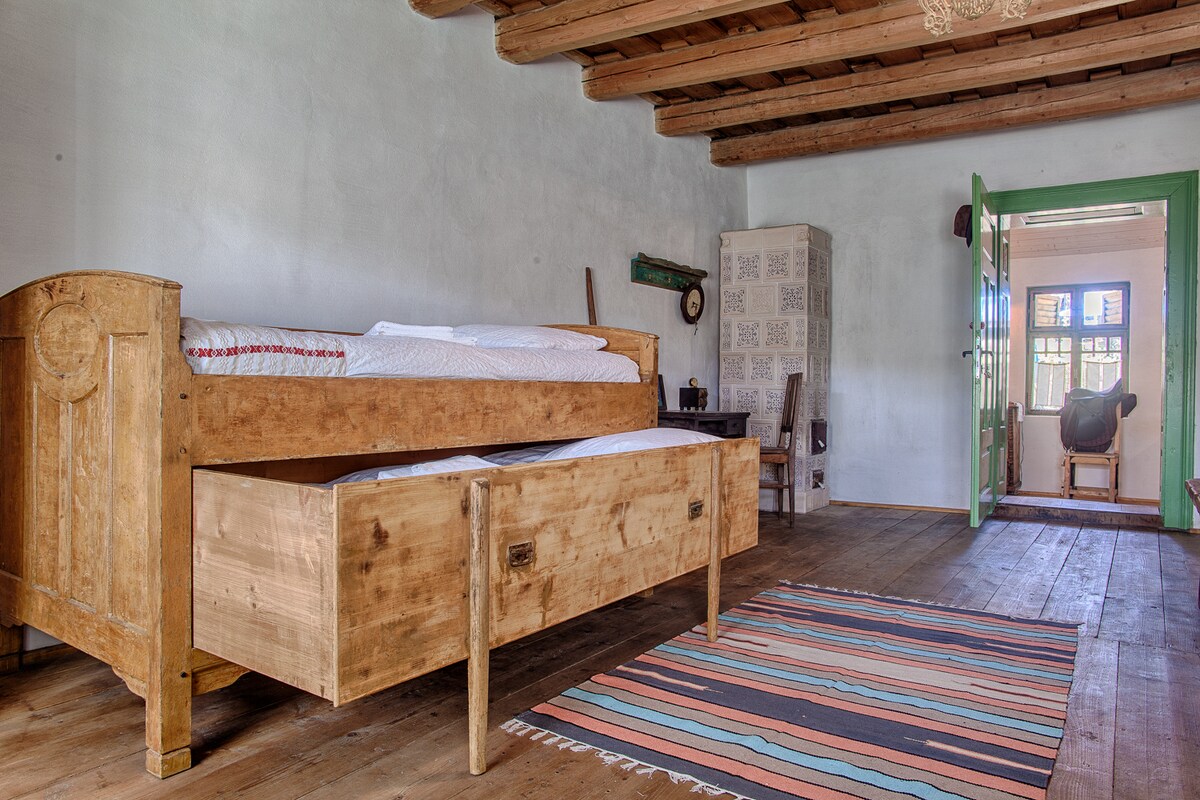
The Blue House of Viscri in Romania looks authentic AF:

https://www.airbnb.com/rooms/12583255?location=Romania&guests=1&s=EqZNFk6I
Anonymous
"So true about being able to buy here anything you could carry home. It’s really the things you have to “consume” there that you can’t get here."

That really is it, isn't it? It sounds insufferable to say but, you can't recreate the feeling of eating a thick slab of tartine bread slathered with Carmague salted butter while sitting near a medieval fortress on a windswept beach--in Cleveland, no matter how you try.
Anonymous
Anonymous wrote:"So true about being able to buy here anything you could carry home. It’s really the things you have to “consume” there that you can’t get here."

That really is it, isn't it? It sounds insufferable to say but, you can't recreate the feeling of eating a thick slab of tartine bread slathered with Carmague salted butter while sitting near a medieval fortress on a windswept beach--in Cleveland, no matter how you try.


The urban Europeans are getting lazy --- like Americans. Paris kitchens are heavily reliant today on manufactured foods -- unthinkable twenty years ago.

You need to get out in country side where folks are still doing the hard work of doing things the old ways.
Anonymous
Anonymous wrote:This is a topic that can very easily become too sensitive and controversial but I will be frank and speak as an experienced traveller who has been going to Europe since the early 1980s and has also lived in Europe on two different occasions, first as a child and then as an adult.

Has Europe changed? Yes. The themes touched above are real. I'll summarize some of the most obvious ones.

1. The tourist hordes have exploded, especially in the last 15 years. It's not just Americans but there are now huge numbers of Chinese and other Asians and Latinos travelling to Europe. I have nothing against the diversity of tourism, but I do remember when you could go to the Sistine Chapel and have the place to yourself and maybe a handful of other tourists. I was once totally alone in the chapel for about 10 minutes. I remember that clearly. But now all the major sites in all the major cities are packed, packed, packed. In the Louvre you can barely see the key artwork for the hordes of tourists. Most of them don't care about the art, they just want their d*mn photo of the Mona Lisa so everyone is holding up their phones and snapping away and it's now impossible to see the painting clearly.

2. Tourism used to be mainly in the peak seasons with minimal tourism in the off seasons. But now for the big destinations it's pretty much year round tourism. There's no longer an off season for Venice, for example.

3. The gulf between America and Europe has changed. In the 1980s the European lifestyle and environment was still different enough from the US that it felt very different. This was most easily obvious in food. In 1980s America if you wanted special French or Italian cheeses, even reggiano parmiggiano, you had to go to specialist shops (if your city had them!). Good bread in the US? Hah! Going to France or Italy was a revelation for the food on offer, all the fabulous pastry shops and restaurants and delis and cafes that offered food and coffee that made American culinary world so dreary and dull by comparison. But today? It's the same. In many cases it's even better in the US. America's dining scene is FABULOUS these days. You no longer need to go to Rome to get great coffee, or Paris for a great croissant or baguette. Actually, the coffee in Paris is terrible compared to America, the French coffee was never great but we didn't realize it in the 1980s and now we do.

4. The globalization of cities. I can go to certain kinds of neighborhoods in most of the big European cities and eat in the same ethnic restaurants, drink in the same hipster coffee shops, be surrounded by the same kinds of people as I can in certain neighborhoods in DC or New York or SF or Boston. As the world globalizes, the more homogeneous our cities and lifestyles have become, particularly for the educated professional classes that like to travel. I've been in coffee shops in Mumbai and Hong Kong that would be right at home in Brooklyn or London. That familiarity and the prevalence of it in the main European cities means Europe is no longer the exotic destination it was.

5. Demographic changes. This is the most controversial part. I am not passing moral judgement. But that has been a big demographic change in Europe in the last 20 years. Places like London, and even Paris, now have huge demographics they didn't have before. London is probably the most changed city in my lifetime. It really is no longer an English city for most practical purposes with the majority of Londoners now foreign born or children of foreign born. It's just different now both for good and bad reasons. And the same is happening to Paris. This is less of an issue in the smaller cities and in central Europe and Eastern Europe is barely touched by the waves of immigration.

6. Growing affluence. Key parts of Europe were always affluent but on the whole it's more affluent today than it was in the 1980s. So their cities have seen their own version of gentrification and that has changed the character of a lot of cities. The worst places are London and Paris, where the entire center is literally a rich man's playground with the tourists tolerated. The gentrification means so much local businesses and shops are pushed out to be replaced by the same upscale coffee shops and restaurants and fancy boutiques selling the same things you can easily find in the US, all frequented by the same kinds of people.

Despite all my observations, I still very much enjoy going to Europe. It's a wonderful place. I would never stop anyone from going there.


I don’t know, i dream of Tuscan pecorino. I have not found the equivalent of what I ate every day over there back in the US. Everything here has been aged for several months, whereas in Italy you can get fresh, semi-fresh, etc.
post reply Forum Index » Travel Discussion
Message Quick Reply
Go to: