
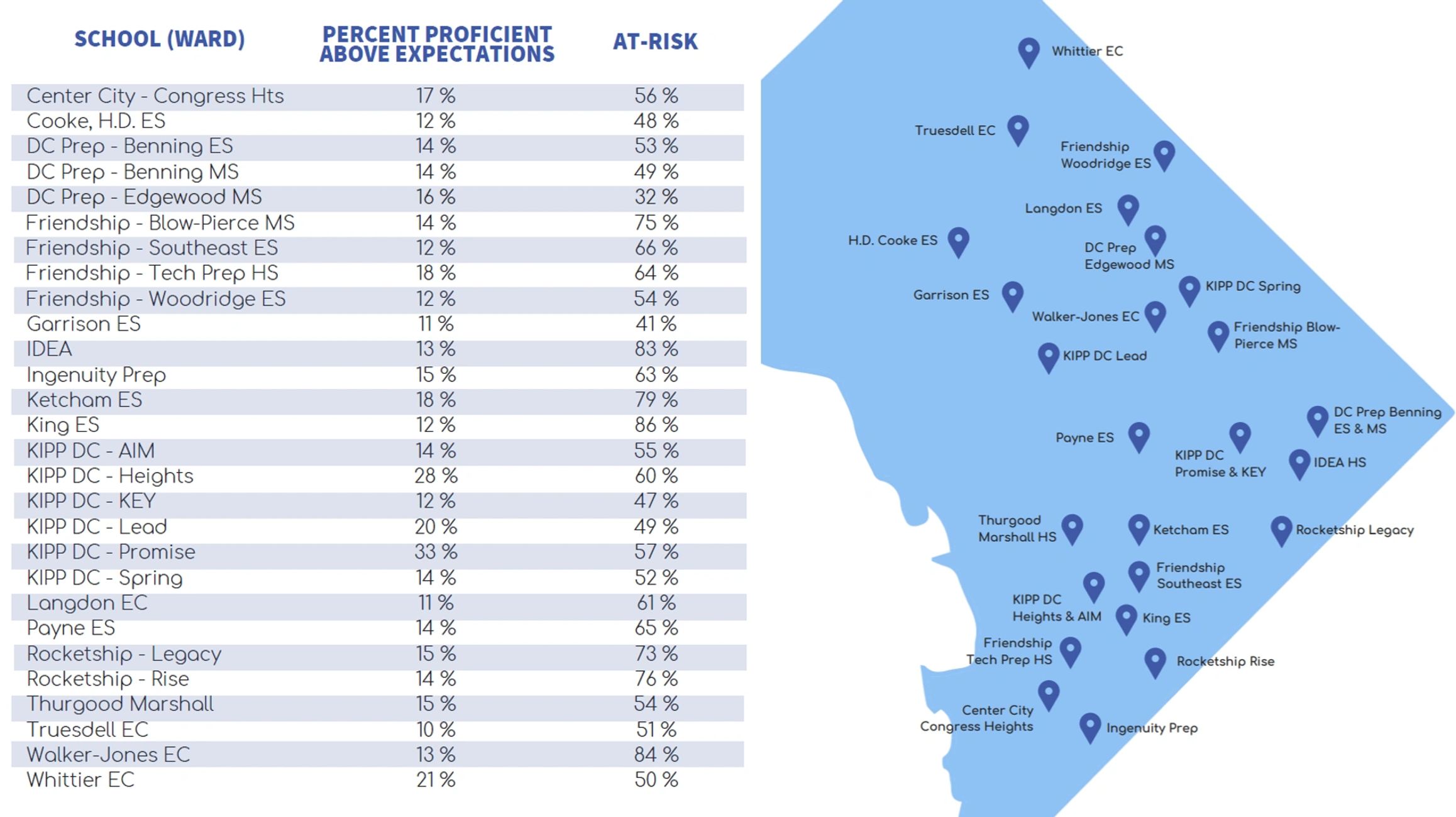
Schools Doing Best Educating At-risk students - 2019 version
![[Post New]](/jforum/templates/default/images/icon_minipost_new.gif)
Anonymous
I sure did, I studied it in great depth...but data analysis of strategies that were successful with at-risk students were pretty shallow 
|
Anonymous
| Yay for H.D. Cooke! |
Anonymous
|
The problems with charter schools are always the problems with charter schools. They COUNCIL KIDS OUT" and demand teachers pledge an unrealistic commitment and so they will almost ALWAYS fare better than most neighborhood schools.
|
Anonymous
Do you mean "counsel"? Kids are doing fine in my charter school as are the teachers. If I didn't want to be here, I'd leave. If we have good results, people like you say it's because the teachers are being unfairly treated not because we are good. The teachers in my school are GREAT and so are our results. Stop trying to diminish the work of charter teachers by suggesting the only reason there are results is because students are counseled out or because the teachers are treated unfairly. |