I'd like to get into gardening. Teach me how!

Anonymous
When you look for plants look for drought tolerant ones - that way once they're established you won't need to water much.

Also look for ground cover rather than grass, Fragers has some good ones that might grow in shade and that can be walked on without damaging them.

I've also found that roses love my crappy clay soil, and so I have several rose bushes that are just gorgeous.
Anonymous
Anonymous wrote:I just bought a house about 2 years ago, and my tips are:

1) wait a full year before you start taking things out and buying a lot of stuff. Take pictures of the yard at different seasons, see what gets light, what's already there, and what flowers. If you absolutely can't wait that long to get your hands in the dirt, buy some annuals to put around the walkway and door and maybe in pots. But see what you're working with before you decide to change anything.

2) go for walks around your new neighborhood and see what other people are growing so you know what works for the area. If you want a flower garden, make sure you think about what blooms when, so you don't have a beautiful yard in the spring and then nothing the rest of the year. Look for things blooming in your neighbors' yards that are pretty and do well in shade.


This is really good advice. I know it's hard but wait and watch first.
Anonymous
Anonymous wrote:I disagree with the poster that said DC doesn't have good weather for fruit trees. How do you explain the farms in MD and VA with similar weather? We are in the District and have an apricot and three apple trees and they do really well.


+1

My figs, persimmon and cherry trees are doing gangbusters. If I had more land I'd put in a native paw paw or two. You can't grow everything here, but there are plenty of fruit trees that do very well.
Anonymous
Look for native plants.
Plant fewer plants farther apart than you think they should.
Mulch.
Anonymous
Anonymous wrote:
Anonymous wrote:I'm a big fan of edible gardening. Put fruit trees in sunny spots. In a few years you will be thrilled you did!


We don't have a good climate for fruit trees in DC, too hot and humid. Will be hard to keep diseases away without spraying.


Plant a PawPaw!

Anonymous
Anonymous wrote:
Anonymous wrote:
Anonymous wrote:
Anonymous wrote:Figure out where the most sun is. Flowers usually need lots of sun.


Not necessarily. If you don't have a lot of sun, there are lovely flowering shrubs and understory trees that do great in shade, e.g.:

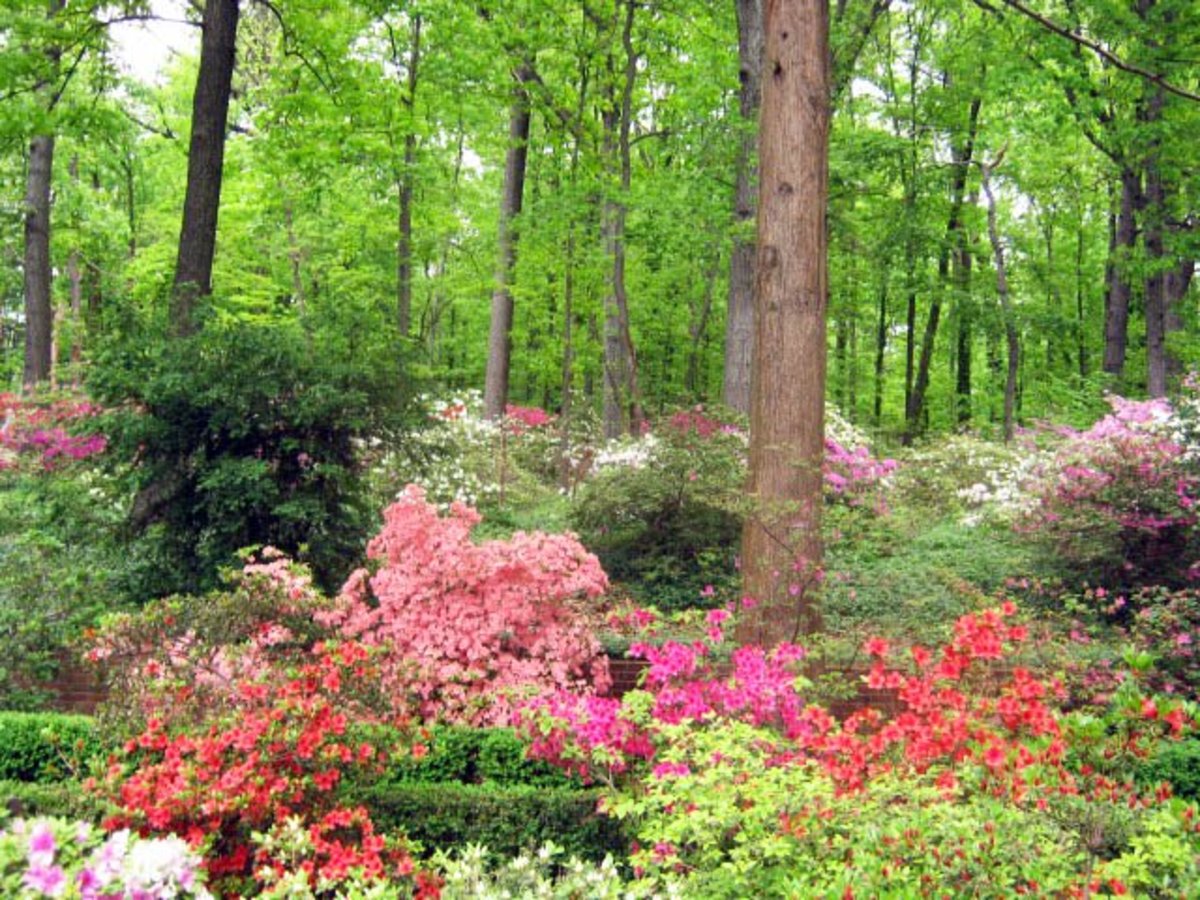
azaleas at the U.S. Arboretum Shade Garden:


Rhododendrons at Brookside Gardens:


See page 69 for Woodland plants:
https://www.nps.gov/plants/pubs/chesapeake/pdf/chesapeakenatives.pdf

Azaleas and rhodies look fabulous for exactly 2-3 weeks a year and ugly for the remainder.


Agree (especially about azaleas, which are also overplanted), but there are other flowering shrubs that tolerate shade, such as camellias and hydrangeas, or natives like sweetshrub.


Rhododendrons look great in winter:
https://c1.staticflickr.com/3/2591/3961996049_dd07081d1e_b.jpg
https://sally1029.files.wordpress.com/2010/01/p1040514.jpg

Azaleas too: http://www.highonhappiness.com/wp/wp-content/uploads/2013/11/112613-Diamonds-for-the-Azalea.jpg
Anonymous
Anonymous wrote:
Anonymous wrote:
Anonymous wrote:I'm a big fan of edible gardening. Put fruit trees in sunny spots. In a few years you will be thrilled you did!


We don't have a good climate for fruit trees in DC, too hot and humid. Will be hard to keep diseases away without spraying.


Plant a PawPaw!


Just be aware they attract raccoons...
Anonymous
Anonymous wrote:Look for native plants.
Plant fewer plants farther apart than you think they should.
Mulch.


Why? Plants like company, and you'll also have less weeds if you plant densely. You don't want to end up with isolated plants in a sea of mulch.

There was an interesting article recently in the NYT about this:

https://www.nytimes.com/2017/04/30/style/understanding-what-makes-plants-happy.html
Anonymous
Anonymous wrote:Look for native plants.
Plant fewer plants farther apart than you think they should.
Mulch.


Many native plants look like weeds.
Anonymous
Anonymous wrote:
Anonymous wrote:Look for native plants.
Plant fewer plants farther apart than you think they should.
Mulch.


Why? Plants like company, and you'll also have less weeds if you plant densely. You don't want to end up with isolated plants in a sea of mulch.

There was an interesting article recently in the NYT about this:

https://www.nytimes.com/2017/04/30/style/understanding-what-makes-plants-happy.html


Thanks for posting this. I am always confused by the conflicting advice--give plants room or pack them together to prevent weeds. I wish they had published a list of sociability numbers for various plants--they do give some tips, however. I just planted a garden in back and it does look like a sea of mulch!
Anonymous
Start with a container garden! They are easier to maintain. You can move them around if a certain spot isn't working.

Here are some things to consider:
1) Light - how much do you have? Fruit trees, most vegetables need a lot of sunlight. 6+ hours.
2) Animals - do you have deer, rabbit, etc? They like to eat certain plants and so it's a big factor in what you choose.
3) How much time do you have to maintain? Some plants need lots of pruning, fertilizing, etc. All will need constant watering the first season. Less so after.
Anonymous
Anonymous wrote:
Anonymous wrote:
Anonymous wrote:Look for native plants.
Plant fewer plants farther apart than you think they should.
Mulch.


Why? Plants like company, and you'll also have less weeds if you plant densely. You don't want to end up with isolated plants in a sea of mulch.

There was an interesting article recently in the NYT about this:

https://www.nytimes.com/2017/04/30/style/understanding-what-makes-plants-happy.html


Thanks for posting this. I am always confused by the conflicting advice--give plants room or pack them together to prevent weeds. I wish they had published a list of sociability numbers for various plants--they do give some tips, however. I just planted a garden in back and it does look like a sea of mulch!


The advice in the NYT piece is better for gardeners with experience and misleading to novice gardeners. You have to strike a balance between plants in isolation and plants at their full height. The photos in the NYT article show plants at different stages of maturity. Those gorgeous full gardens most definitely did NOT look like that when they were first planted--in fact, they probably looked a bit like small plants in a larger sea of mulch. The article doesn't talk about a lot of factors--including how large the plants will be at full size and how it can take to get there. So many novice gardeners make the mistake of planting large shrubs like azaleas or laurels right next to the house, for example. The picture above of the paw paw tree is a perfect example of a plant being too close to the house without regard for its full size.
Anonymous
Anonymous wrote:
Anonymous wrote:
Anonymous wrote:
Anonymous wrote:Look for native plants.
Plant fewer plants farther apart than you think they should.
Mulch.


Why? Plants like company, and you'll also have less weeds if you plant densely. You don't want to end up with isolated plants in a sea of mulch.

There was an interesting article recently in the NYT about this:

https://www.nytimes.com/2017/04/30/style/understanding-what-makes-plants-happy.html


Thanks for posting this. I am always confused by the conflicting advice--give plants room or pack them together to prevent weeds. I wish they had published a list of sociability numbers for various plants--they do give some tips, however. I just planted a garden in back and it does look like a sea of mulch!


The advice in the NYT piece is better for gardeners with experience and misleading to novice gardeners. You have to strike a balance between plants in isolation and plants at their full height. The photos in the NYT article show plants at different stages of maturity. Those gorgeous full gardens most definitely did NOT look like that when they were first planted--in fact, they probably looked a bit like small plants in a larger sea of mulch. The article doesn't talk about a lot of factors--including how large the plants will be at full size and how it can take to get there. So many novice gardeners make the mistake of planting large shrubs like azaleas or laurels right next to the house, for example. The picture above of the paw paw tree is a perfect example of a plant being too close to the house without regard for its full size.


PP here who posted the NYT article and I agree. Of course you need to consider mature size, especially with shrubs and trees. With perennials, you can more easily move things around if plants get too crowded after a few years (you might want to divide them anyway). I'm thinking of buying the book referenced in the article to get more insight into the topic.
Anonymous
Anonymous wrote:
Anonymous wrote:Look for native plants.
Plant fewer plants farther apart than you think they should.
Mulch.


Many native plants look like weeds.


And some are lovely--liatris, echinicea, kalmia, oakleaf hydrangea, redbud, clethra, columbine, Jacob's Ladder and on and on. I am going native as much as I can in my small garden, but will admit to not being able to resist having a dwarf hydrangea and will definitely plant a few peonies for flowers.

Natives tend to be much easier to care for; they do not need as much fussing as non-natives because they are adapted to the environment, provided you've planted properly minding the soil and light exposure. They tend to be better at supporting pollinators and need less watering.
Anonymous
Anonymous wrote:
Anonymous wrote:
Anonymous wrote:
Anonymous wrote:I'm a big fan of edible gardening. Put fruit trees in sunny spots. In a few years you will be thrilled you did!


We don't have a good climate for fruit trees in DC, too hot and humid. Will be hard to keep diseases away without spraying.


Plant a PawPaw!


Just be aware they attract raccoons...


The trash can attracts raccoons. You're not going to get an onslaught of raccoons from one tree.
post reply Forum Index » Lawn and Garden
Message Quick Reply
Go to: