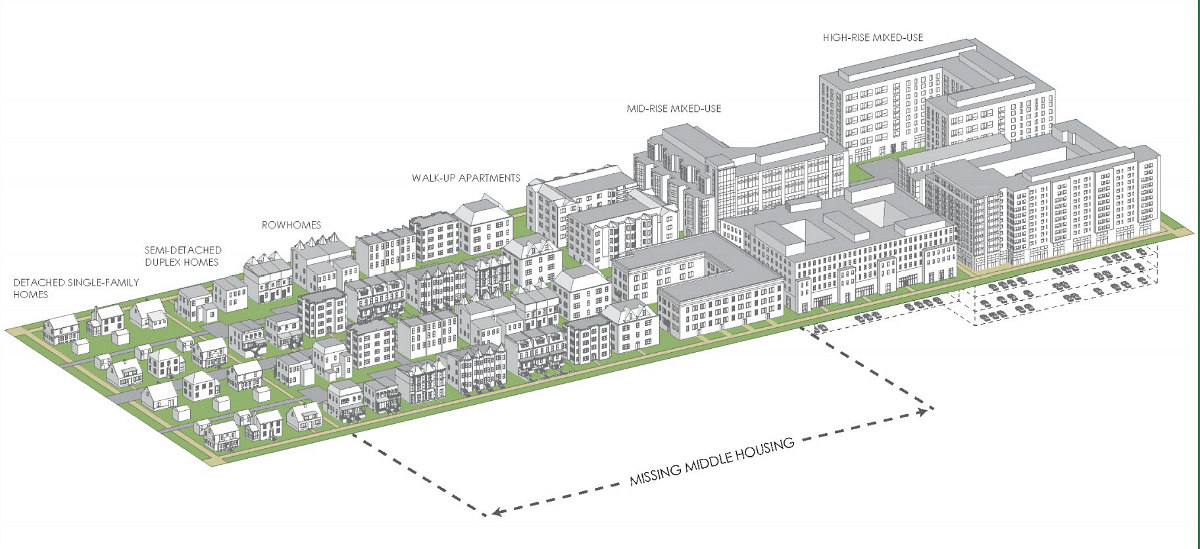
Soooo, how is high-density looking to everyone now?

Anonymous
Anonymous wrote:
Anonymous wrote:
Anonymous wrote:
Anonymous wrote:
Anonymous wrote:Turns out Democrats are huge fans of gentrification. SORRY POOR PEOPLE! No one is going to defend you from scumbag developers. Not in DC.


Are you referring to the defenseless poor people who live near Guapo's?


This is one of the more cynical and frankly disgraceful arguments the Density Bros. make.

They make a big to-do about wanting to build more in some rich white neighborhood like Spring Valley. Not because they think it will make a difference, or because they think it will even happen (it won't, on either count). But because it distracts from how their policies are forcing low-income minorities en masse to leave the city in order to make way for luxury condos for white people.

DC has the worst gentrification problem in the country, and more poor people here get pushed out than anywhere else.

And no one cares.

https://www.washingtonpost.com/local/in-the-district-gentrification-means-widespread-displacement-report-says/2019/04/26/950a0c00-6775-11e9-8985-4cf30147bdca_story.html?outputType=amp


Eh. Talk to the people who live in Spring Valley. They're the ones who are objecting.


The Density Bros likely don’t care much about Spring Valley. But they have a raging hard-on for Cleveland Park.


What an advocate for your cause you must be.
Anonymous
Anonymous wrote:
Anonymous wrote:
Anonymous wrote:Aren't the majority of houses in, say, RF-1 zoned rowhouse neighborhoods still single-family homes? I mean, sure there are some condo conversions and some basement apartments. But we're not talking about huge apartment buildings on residential streets here, because the height and setback limits of R-1 and R-2 zoning will still be in place. This just means that someone can decide to split their house into two units or maybe add an ADU. Which some people will do, and most people won't.

Scary! /s


Setback limits are modified under the plan as well. That was a key component even in the Comp Plan.

At the end of the day, under the new Single Family Zoning proposal in the District of Columbia, you can raze your SFH if it is within that 'walkable' distance to public transportation and build in its stead a taller (would depend on how far you were from the transit route. Taller if you were closer to the road, lower if you were at the half mile point) and closer to the sidewalk (covering a greater percentage of lots size) multi family dwelling in the middle of a SFH zoned neighborhood under the 'gentle density' plan. You would NOT get a highrise bout you would have one lot with one house with one family, now be converted to one lot with eight units (two units per floor for four stories). Would there be anything inherently 'wrong' with this as a one of? No, absolutely not. Would this happening as a concerted effort to increase density change the character of a neighborhood? Absolutely.


But it wouldn't change the character of neighborhoods particularly fast or dramatically, unless you think lots of homeowners are going to just suddenly sell their houses to developers to build eight-unit buildings on them. You'd have one or two eight-unit buildings every few blocks. That wouldn't change a thing in most of the neighborhoods you're talking about, including mine (Tenleytown).


Wait until the DC government starts raising tax assessments to reflect the new assumed value if the lot were fully developed. Once people start to see their property tax bills double, more will be forced to sell out.
Anonymous
Anonymous wrote:
Anonymous wrote:
Anonymous wrote:
Anonymous wrote:Aren't the majority of houses in, say, RF-1 zoned rowhouse neighborhoods still single-family homes? I mean, sure there are some condo conversions and some basement apartments. But we're not talking about huge apartment buildings on residential streets here, because the height and setback limits of R-1 and R-2 zoning will still be in place. This just means that someone can decide to split their house into two units or maybe add an ADU. Which some people will do, and most people won't.

Scary! /s


Setback limits are modified under the plan as well. That was a key component even in the Comp Plan.

At the end of the day, under the new Single Family Zoning proposal in the District of Columbia, you can raze your SFH if it is within that 'walkable' distance to public transportation and build in its stead a taller (would depend on how far you were from the transit route. Taller if you were closer to the road, lower if you were at the half mile point) and closer to the sidewalk (covering a greater percentage of lots size) multi family dwelling in the middle of a SFH zoned neighborhood under the 'gentle density' plan. You would NOT get a highrise bout you would have one lot with one house with one family, now be converted to one lot with eight units (two units per floor for four stories). Would there be anything inherently 'wrong' with this as a one of? No, absolutely not. Would this happening as a concerted effort to increase density change the character of a neighborhood? Absolutely.


But it wouldn't change the character of neighborhoods particularly fast or dramatically, unless you think lots of homeowners are going to just suddenly sell their houses to developers to build eight-unit buildings on them. You'd have one or two eight-unit buildings every few blocks. That wouldn't change a thing in most of the neighborhoods you're talking about, including mine (Tenleytown).


Wait until the DC government starts raising tax assessments to reflect the new assumed value if the lot were fully developed. Once people start to see their property tax bills double, more will be forced to sell out.


Well, if they’ve got the homestead deduction, then their bill can’t double in a year, even if the assessed value does.
Anonymous
Anonymous wrote:
Anonymous wrote:
Anonymous wrote:
Anonymous wrote:
Anonymous wrote:
Anonymous wrote:Are there many poor black people living in the single-family houses in Spring Valley?


Nice red herring.

Read the story:

"In the District, low-income residents are being pushed out of neighborhoods at some of the highest rates in the country, according to the Institute on Metropolitan Opportunity, which sought to track demographic and economic changes in neighborhoods in the 50 largest U.S. cities from 2000 to 2016....

In portions of the Kingman Park and Capitol Hill neighborhoods, nearly 75 percent of the low-income populations have vanished, census information shows. In the Navy Yard neighborhood, about 77 percent of residents were identified as low income in 2000. Sixteen years later, that population dropped to 21 percent.

Most of the people pushed out of these economic hot spots are black and low income, according to the data."

https://www.washingtonpost.com/local/in-the-district-gentrification-means-widespread-displacement-report-says/2019/04/26/950a0c00-6775-11e9-8985-4cf30147bdca_story.html?outputType=amp


It's not a red herring. One way to ease pressure on low-income neighborhoods would be to build housing in other neighborhoods (like, say, Spring Valley) that might attract some of the people who are buying in places like Kingman Park. Building new housing in upper NW will definitely not cause poor people to be pushed out of Ward 8.


It’s a base, some might say segregationist-affirming, political move by the mayor. Support her plan upzone and density west of the Park and then “outsiders” won’t seek to rent or purchase in NE or SE and thus mitigate gentrification.


I would not say that easing housing pressure on mostly black neighborhoods is "segregationist-affirming."


It’s basically saying Let’s build the heck out of places like Ward 3 so that newcomers/gentrifyers (code for new white residents) don’t move to traditional black neighborhoods and gentrify them any further.


Right, but trying to keep white people from moving to black neighborhoods and displacing existing residents is not “segregationist.”
Anonymous
Anonymous wrote:
Anonymous wrote:
Uh, last I checked, NE and SE were certainly holding up their end of the bargain of providing more housing in places like NoMA, Navy Yard, St. Elizabeth's, etc. In most of these places, they're butting up against the Height Act. So where exactly do you propose that people live?


Not in my backyard, obviously!

(I am not the PP you're responding to.)


So is Ward 3. In just two blocks of Wisconsin Ave, between Rodman and Upton Streets, there are 1500 new homes under construction or about to start (City Ridge and 4000 Wisconsin). These are among the largest current housing developments in the District. Add to these major projects the Lady Bird development in AU Park and various smaller projects up and down Wisconsin Ave., and the Ward is close to meeting the mayor’s ballyhooed housing goal by 2025.
Anonymous
Anonymous wrote:
Anonymous wrote:
Anonymous wrote:
Anonymous wrote:
Anonymous wrote:
Anonymous wrote:
Anonymous wrote:Are there many poor black people living in the single-family houses in Spring Valley?


Nice red herring.

Read the story:

"In the District, low-income residents are being pushed out of neighborhoods at some of the highest rates in the country, according to the Institute on Metropolitan Opportunity, which sought to track demographic and economic changes in neighborhoods in the 50 largest U.S. cities from 2000 to 2016....

In portions of the Kingman Park and Capitol Hill neighborhoods, nearly 75 percent of the low-income populations have vanished, census information shows. In the Navy Yard neighborhood, about 77 percent of residents were identified as low income in 2000. Sixteen years later, that population dropped to 21 percent.

Most of the people pushed out of these economic hot spots are black and low income, according to the data."

Sure it is. Interesting when the shoe is on the other foot.
https://www.washingtonpost.com/local/in-the-district-gentrification-means-widespread-displacement-report-says/2019/04/26/950a0c00-6775-11e9-8985-4cf30147bdca_story.html?outputType=amp


It's not a red herring. One way to ease pressure on low-income neighborhoods would be to build housing in other neighborhoods (like, say, Spring Valley) that might attract some of the people who are buying in places like Kingman Park. Building new housing in upper NW will definitely not cause poor people to be pushed out of Ward 8.


It’s a base, some might say segregationist-affirming, political move by the mayor. Support her plan upzone and density west of the Park and then “outsiders” won’t seek to rent or purchase in NE or SE and thus mitigate gentrification.


I would not say that easing housing pressure on mostly black neighborhoods is "segregationist-affirming."


It’s basically saying Let’s build the heck out of places like Ward 3 so that newcomers/gentrifyers (code for new white residents) don’t move to traditional black neighborhoods and gentrify them any further.


Right, but trying to keep white people from moving to black neighborhoods and displacing existing residents is not “segregationist.”
Anonymous
Anonymous wrote:
Anonymous wrote:
Anonymous wrote:
Anonymous wrote:
Anonymous wrote:
Anonymous wrote:
Anonymous wrote:
Anonymous wrote:Are there many poor black people living in the single-family houses in Spring Valley?


Nice red herring.

Read the story:

"In the District, low-income residents are being pushed out of neighborhoods at some of the highest rates in the country, according to the Institute on Metropolitan Opportunity, which sought to track demographic and economic changes in neighborhoods in the 50 largest U.S. cities from 2000 to 2016....

In portions of the Kingman Park and Capitol Hill neighborhoods, nearly 75 percent of the low-income populations have vanished, census information shows. In the Navy Yard neighborhood, about 77 percent of residents were identified as low income in 2000. Sixteen years later, that population dropped to 21 percent.

Most of the people pushed out of these economic hot spots are black and low income, according to the data."

Sure it is. Interesting when the shoe is on the other foot.
https://www.washingtonpost.com/local/in-the-district-gentrification-means-widespread-displacement-report-says/2019/04/26/950a0c00-6775-11e9-8985-4cf30147bdca_story.html?outputType=amp


It's not a red herring. One way to ease pressure on low-income neighborhoods would be to build housing in other neighborhoods (like, say, Spring Valley) that might attract some of the people who are buying in places like Kingman Park. Building new housing in upper NW will definitely not cause poor people to be pushed out of Ward 8.


It’s a base, some might say segregationist-affirming, political move by the mayor. Support her plan upzone and density west of the Park and then “outsiders” won’t seek to rent or purchase in NE or SE and thus mitigate gentrification.


I would not say that easing housing pressure on mostly black neighborhoods is "segregationist-affirming."


It’s basically saying Let’s build the heck out of places like Ward 3 so that newcomers/gentrifyers (code for new white residents) don’t move to traditional black neighborhoods and gentrify them any further.


Right, but trying to keep white people from moving to black neighborhoods and displacing existing residents is not “segregationist.”


Yes, it is. But it’s ironic when the shoe is on the other foot.
Anonymous
Anonymous wrote:
But it wouldn't change the character of neighborhoods particularly fast or dramatically, unless you think lots of homeowners are going to just suddenly sell their houses to developers to build eight-unit buildings on them. You'd have one or two eight-unit buildings every few blocks. That wouldn't change a thing in most of the neighborhoods you're talking about, including mine (Tenleytown).


I live in this area as well. My question would be this. When this scheme gets approved where I could literally knock my single family house down and build a multi family house in its stead, why would I not immediately sell to a developer? I would turn my modest investment into a windfall overnight. I could then re enter the market in the same area at a higher price point and still have made serious wealth. How would this not drive values up on Single Family Homes. And Why would I not sell my SFH to a developer instead of a private family?


Because moving sucks? Because you like your house? Because if everyone starts doing this in the numbers you’re suggesting, that would inflate prices at the level above yours and keep you from moving to a nicer house anyway? Even in fast-gentrifying neighborhoods, a lot of people who could sell their houses for enormous profits don’t. (And developers don’t pay a huge premium, anyway, because they have to then put money into redevelopment — they tend to pay cash, which speeds transactions, and they don’t care about repairs or finishes or whatever, but I’m not sure buying your house now worth $1.2 million for $1.9 million or whatever is going to fit their business model.)
Anonymous
Anonymous wrote:
Anonymous wrote:
Anonymous wrote:
Anonymous wrote:
Anonymous wrote:Aren't the majority of houses in, say, RF-1 zoned rowhouse neighborhoods still single-family homes? I mean, sure there are some condo conversions and some basement apartments. But we're not talking about huge apartment buildings on residential streets here, because the height and setback limits of R-1 and R-2 zoning will still be in place. This just means that someone can decide to split their house into two units or maybe add an ADU. Which some people will do, and most people won't.

Scary! /s


Setback limits are modified under the plan as well. That was a key component even in the Comp Plan.

At the end of the day, under the new Single Family Zoning proposal in the District of Columbia, you can raze your SFH if it is within that 'walkable' distance to public transportation and build in its stead a taller (would depend on how far you were from the transit route. Taller if you were closer to the road, lower if you were at the half mile point) and closer to the sidewalk (covering a greater percentage of lots size) multi family dwelling in the middle of a SFH zoned neighborhood under the 'gentle density' plan. You would NOT get a highrise bout you would have one lot with one house with one family, now be converted to one lot with eight units (two units per floor for four stories). Would there be anything inherently 'wrong' with this as a one of? No, absolutely not. Would this happening as a concerted effort to increase density change the character of a neighborhood? Absolutely.

The annual increase is capped but the assessments can still climb substantially in a relatively short time. I know.


But it wouldn't change the character of neighborhoods particularly fast or dramatically, unless you think lots of homeowners are going to just suddenly sell their houses to developers to build eight-unit buildings on them. You'd have one or two eight-unit buildings every few blocks. That wouldn't change a thing in most of the neighborhoods you're talking about, including mine (Tenleytown).


Wait until the DC government starts raising tax assessments to reflect the new assumed value if the lot were fully developed. Once people start to see their property tax bills double, more will be forced to sell out.


Well, if they’ve got the homestead deduction, then their bill can’t double in a year, even if the assessed value does.
Anonymous
Anonymous wrote:
Anonymous wrote:
Anonymous wrote:
Anonymous wrote:
Anonymous wrote:
Anonymous wrote:Aren't the majority of houses in, say, RF-1 zoned rowhouse neighborhoods still single-family homes? I mean, sure there are some condo conversions and some basement apartments. But we're not talking about huge apartment buildings on residential streets here, because the height and setback limits of R-1 and R-2 zoning will still be in place. This just means that someone can decide to split their house into two units or maybe add an ADU. Which some people will do, and most people won't.

Scary! /s


Setback limits are modified under the plan as well. That was a key component even in the Comp Plan.

At the end of the day, under the new Single Family Zoning proposal in the District of Columbia, you can raze your SFH if it is within that 'walkable' distance to public transportation and build in its stead a taller (would depend on how far you were from the transit route. Taller if you were closer to the road, lower if you were at the half mile point) and closer to the sidewalk (covering a greater percentage of lots size) multi family dwelling in the middle of a SFH zoned neighborhood under the 'gentle density' plan. You would NOT get a highrise bout you would have one lot with one house with one family, now be converted to one lot with eight units (two units per floor for four stories). Would there be anything inherently 'wrong' with this as a one of? No, absolutely not. Would this happening as a concerted effort to increase density change the character of a neighborhood? Absolutely.

The annual increase is capped but the assessments can still climb substantially in a relatively short time. I know.


But it wouldn't change the character of neighborhoods particularly fast or dramatically, unless you think lots of homeowners are going to just suddenly sell their houses to developers to build eight-unit buildings on them. You'd have one or two eight-unit buildings every few blocks. That wouldn't change a thing in most of the neighborhoods you're talking about, including mine (Tenleytown).


Wait until the DC government starts raising tax assessments to reflect the new assumed value if the lot were fully developed. Once people start to see their property tax bills double, more will be forced to sell out.


Well, if they’ve got the homestead deduction, then their bill can’t double in a year, even if the assessed value does.


The annual increase may be capped, but DC can still raise assessments very substantially in a few short years. I know.
Anonymous
Anonymous wrote:
Anonymous wrote:
Anonymous wrote:
Anonymous wrote:Aren't the majority of houses in, say, RF-1 zoned rowhouse neighborhoods still single-family homes? I mean, sure there are some condo conversions and some basement apartments. But we're not talking about huge apartment buildings on residential streets here, because the height and setback limits of R-1 and R-2 zoning will still be in place. This just means that someone can decide to split their house into two units or maybe add an ADU. Which some people will do, and most people won't.

Scary! /s


Setback limits are modified under the plan as well. That was a key component even in the Comp Plan.

At the end of the day, under the new Single Family Zoning proposal in the District of Columbia, you can raze your SFH if it is within that 'walkable' distance to public transportation and build in its stead a taller (would depend on how far you were from the transit route. Taller if you were closer to the road, lower if you were at the half mile point) and closer to the sidewalk (covering a greater percentage of lots size) multi family dwelling in the middle of a SFH zoned neighborhood under the 'gentle density' plan. You would NOT get a highrise bout you would have one lot with one house with one family, now be converted to one lot with eight units (two units per floor for four stories). Would there be anything inherently 'wrong' with this as a one of? No, absolutely not. Would this happening as a concerted effort to increase density change the character of a neighborhood? Absolutely.


But it wouldn't change the character of neighborhoods particularly fast or dramatically, unless you think lots of homeowners are going to just suddenly sell their houses to developers to build eight-unit buildings on them. You'd have one or two eight-unit buildings every few blocks. That wouldn't change a thing in most of the neighborhoods you're talking about, including mine (Tenleytown).


Wait until the DC government starts raising tax assessments to reflect the new assumed value if the lot were fully developed. Once people start to see their property tax bills double, more will be forced to sell out.


Thats a scary thought. Starting to sound a lot like eminent domain.
Anonymous
Anonymous wrote:
Anonymous wrote:
Anonymous wrote:
Anonymous wrote:
Anonymous wrote:Aren't the majority of houses in, say, RF-1 zoned rowhouse neighborhoods still single-family homes? I mean, sure there are some condo conversions and some basement apartments. But we're not talking about huge apartment buildings on residential streets here, because the height and setback limits of R-1 and R-2 zoning will still be in place. This just means that someone can decide to split their house into two units or maybe add an ADU. Which some people will do, and most people won't.

Scary! /s


Setback limits are modified under the plan as well. That was a key component even in the Comp Plan.

At the end of the day, under the new Single Family Zoning proposal in the District of Columbia, you can raze your SFH if it is within that 'walkable' distance to public transportation and build in its stead a taller (would depend on how far you were from the transit route. Taller if you were closer to the road, lower if you were at the half mile point) and closer to the sidewalk (covering a greater percentage of lots size) multi family dwelling in the middle of a SFH zoned neighborhood under the 'gentle density' plan. You would NOT get a highrise bout you would have one lot with one house with one family, now be converted to one lot with eight units (two units per floor for four stories). Would there be anything inherently 'wrong' with this as a one of? No, absolutely not. Would this happening as a concerted effort to increase density change the character of a neighborhood? Absolutely.


But it wouldn't change the character of neighborhoods particularly fast or dramatically, unless you think lots of homeowners are going to just suddenly sell their houses to developers to build eight-unit buildings on them. You'd have one or two eight-unit buildings every few blocks. That wouldn't change a thing in most of the neighborhoods you're talking about, including mine (Tenleytown).


Wait until the DC government starts raising tax assessments to reflect the new assumed value if the lot were fully developed. Once people start to see their property tax bills double, more will be forced to sell out.


Thats a scary thought. Starting to sound a lot like eminent domain.


No. More like “gentle eminent domain.”
Anonymous
Anonymous wrote:
Anonymous wrote:
Anonymous wrote:
Anonymous wrote:
Anonymous wrote:Aren't the majority of houses in, say, RF-1 zoned rowhouse neighborhoods still single-family homes? I mean, sure there are some condo conversions and some basement apartments. But we're not talking about huge apartment buildings on residential streets here, because the height and setback limits of R-1 and R-2 zoning will still be in place. This just means that someone can decide to split their house into two units or maybe add an ADU. Which some people will do, and most people won't.

Scary! /s


Setback limits are modified under the plan as well. That was a key component even in the Comp Plan.

At the end of the day, under the new Single Family Zoning proposal in the District of Columbia, you can raze your SFH if it is within that 'walkable' distance to public transportation and build in its stead a taller (would depend on how far you were from the transit route. Taller if you were closer to the road, lower if you were at the half mile point) and closer to the sidewalk (covering a greater percentage of lots size) multi family dwelling in the middle of a SFH zoned neighborhood under the 'gentle density' plan. You would NOT get a highrise bout you would have one lot with one house with one family, now be converted to one lot with eight units (two units per floor for four stories). Would there be anything inherently 'wrong' with this as a one of? No, absolutely not. Would this happening as a concerted effort to increase density change the character of a neighborhood? Absolutely.


But it wouldn't change the character of neighborhoods particularly fast or dramatically, unless you think lots of homeowners are going to just suddenly sell their houses to developers to build eight-unit buildings on them. You'd have one or two eight-unit buildings every few blocks. That wouldn't change a thing in most of the neighborhoods you're talking about, including mine (Tenleytown).


Wait until the DC government starts raising tax assessments to reflect the new assumed value if the lot were fully developed. Once people start to see their property tax bills double, more will be forced to sell out.


Thats a scary thought. Starting to sound a lot like eminent domain.


Raising tax assessments to keep up with rapid property value growth is, for the record, something that is already happening all over the city (in neighborhoods that weren't already expensive). But the homestead deduction caps the increase in your actual bill in any given year. No one is going to "be forced to sell out" in AU Park because of tax bills.

Eminent domain is something else entirely, but you know that.
Anonymous
Anonymous wrote:
Anonymous wrote:
Anonymous wrote:
Uh, last I checked, NE and SE were certainly holding up their end of the bargain of providing more housing in places like NoMA, Navy Yard, St. Elizabeth's, etc. In most of these places, they're butting up against the Height Act. So where exactly do you propose that people live?


Not in my backyard, obviously!

(I am not the PP you're responding to.)


So is Ward 3. In just two blocks of Wisconsin Ave, between Rodman and Upton Streets, there are 1500 new homes under construction or about to start (City Ridge and 4000 Wisconsin). These are among the largest current housing developments in the District. Add to these major projects the Lady Bird development in AU Park and various smaller projects up and down Wisconsin Ave., and the Ward is close to meeting the mayor’s ballyhooed housing goal by 2025.


So this is a great point but it turns out that these new development number (There are actually 2000 units if you include Ladybird on Mass) only count towards the Mayors number if they are low and moderate income housing (numbers that are determined by the Mayor). So of the 2000 units being built right now, builders are only required to declare 10% as low and moderate income housing. So to get the number that the Mayor wants for Ward 3 (2500 affordable housing units), Builders actually need to find places to build 25,000 units total of multi family housing. That will require 2,500 of which to be declared 'affordable'.
Anonymous
It seems rash and reckless to push this now in the midst of a global pandemic. Density is not desirable right now. The fact that the mayor is going full steam ahead on this suggests to me that she is in the pocket of the developers. Not a good look, especially during a time of crisis when leadership is so important.
post reply Forum Index » Metropolitan DC Local Politics
Message Quick Reply
Go to: