
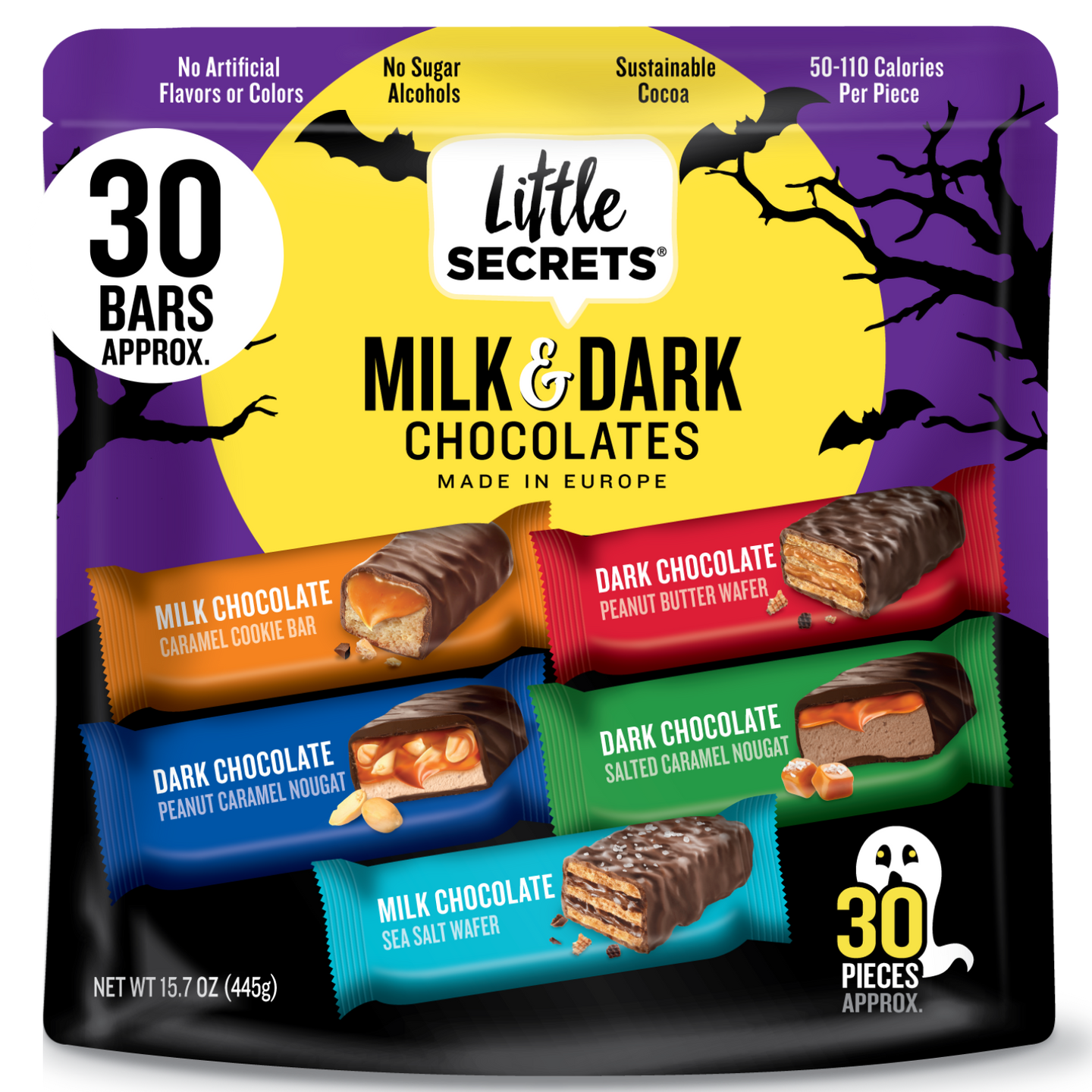
I found a clean version of Snickers, Milky Way and Kit Kats
![[Post New]](/jforum/templates/default/images/icon_minipost_new.gif)
Anonymous
It says no sugar alcohol in the photo. |
Anonymous
| I dont see why these are any "better." Let the kids have some normal candy, it won't affect them at all. |
Anonymous
The bad thing now is government is lax on ingredients labeling integrity, and they let the big corporations run amuck and do as they like, so much of the raw ingredients comes from China now and is very questionable. |

Anonymous
|
Thanks, OP.
One little “fix” I made when craving a peanut-chocolate candy is to scoop a spoonful of natural peanut butter (chunky is best) into a small bowl and sprinkle a handful of chocolate chips on top and microwave for 20 seconds or so. The PB and chips get slightly melty but not liquified and I eat it with a spoon and it almost tastes like an unformed reeses pb cup. |
Anonymous
Brilliant! And thank you, OP. Ignore the ignorance that’s been posted. |
Anonymous
| I am high risk for diabetes and my treat everyday after lunch is spoonfuls of peanut butter with maple syrup poured on top or tahini mixed with maple syrup. I know maple syrup is high in sugar but I need something and fruit alone won't cut it. |
Anonymous
| Why don’t you try date syrup instead of maple syrup? Fructose not sucrose |
Anonymous
I never thought of that, thanks will check it out. |
Anonymous
Right?! 😂 But to OP’s credit, it is nice to have alternatives for those who want something slightly less processed than what “big chocolate” offers. |
Anonymous
Meh, just stick with the originals. Don't you DARE hand that crap out on Halloween, OP. |
Anonymous
Leftists LOVE their conspiracy theories. |
Anonymous
That shit is $17. This is the most DCUM thing EVER. I can buy a bag of real candy at Giant for a quarter of that. |
Anonymous
| You could just pour a teaspoon of plain sugar down your throat. Wouldn't that be "clean"? |
Anonymous
I was at the shipping store yesterday and saw a woman send three bags of ordinary Halloween candy to her college kid for $21. She didn't flinch. I wondered why she didn't just order it with free shipping from Amazon or Walmart. I guess people are price insensitive. |
Anonymous
|
Many regulators, including the European Union, regulate under the precautionary principle. In essence, if it could cause harm they ban it. Or, if it has been shown to cause harm in quantities well above what is consumed, they ban it because they don’t know what amount is actually safe.
It’s not a particularly science based approach. So the fact that substances are banned in other countries isn’t a particularly useful fact. People certainly can choose to cut out certain substances but they shouldn’t be fooling themselves that it’s “healthier”. At best we don’t know. And much more likely, we do know that the quantity consumed doesn’t pose a risk. People will quickly point out the power of food manufacturers over the FDA and USDA and the profit motivations of those companies. Sure. But 1. They do sell their products in Europe with a different recipe, so they probably don’t fight every substance with the same degree of profit concern. And 2. The alternative products are often making a much higher profit margin and they are also pushing all sorts of narratives about the toxicity of their competition for profit motivations. All of this is why the best science based advice that exists is to limit/avoid ALL processed foods. The link to certain health conditions has been established. What hasn’t been established is the link to any single preservative, flavoring, dye, oil, or emulsifier. The link to cancer from processed food could be from something else entirely. No one, including internet research experts, actually knows. Contrary to the MAHA narrative, the fda will ban substances if conclusive scientific evidence of toxicity is established. |