
Who are the most important thinkers right now?
![[Post New]](/jforum/templates/default/images/icon_minipost_new.gif)
Anonymous
| Hillary Clinton |
Anonymous
| Judith Butler |
Anonymous
| I’m going to say Bill Maher and Al Gore. Both ahead of their time and called it( climate change for one and Donald trump for the other) ahead of their time. |
Anonymous
+1000 |
Anonymous
Bill Maher just beats dead horses. He’s turned into: 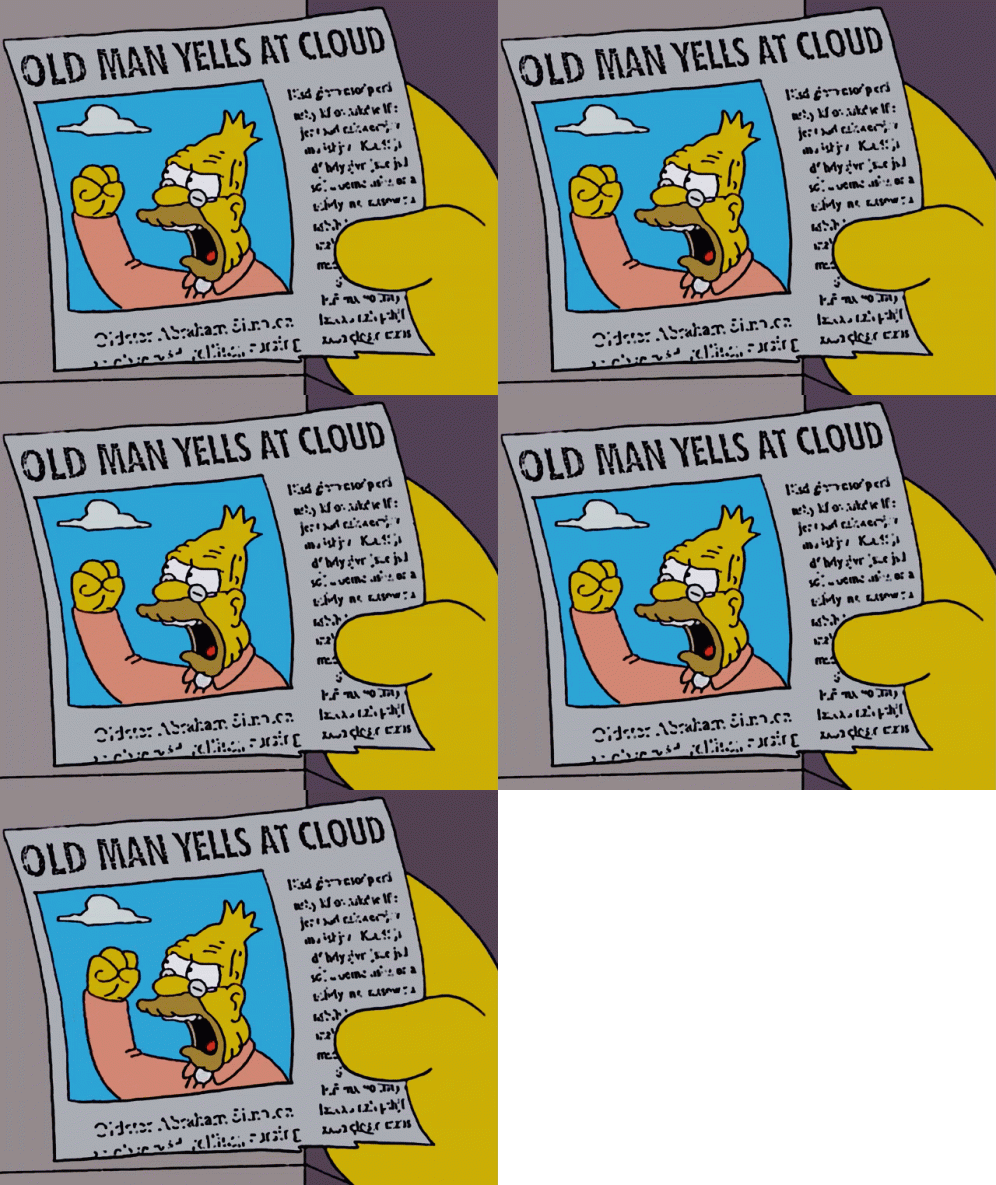
None of his rants are new or insightful anymore. I only applaud his atheism because he one of the only voices since Hitchens died. |
Anonymous
| Malcolm Gladwell |
Anonymous
Why did my dogs wake up all of a sudden just now? |
Anonymous
| OP are you looking for people who are well-known in popular culture or those who are influencing academics and scholars (and therefore whose ideas trickle down into academia and slowly into society) but who otherwise have no name recognition among the general populace? |
Anonymous
| Most of the people listed are popularizers. |
Anonymous
| Jelly Roll |
Anonymous
| Jordan Peterson |
Anonymous
| Professor Griff |
Anonymous
Lololo no, he’s an effing joke |
Anonymous
OP here. The latter. I would say the ideas of these people are consumed by and influence the people more known in general. For a crude example, it would be the people who initially conceived of modern monetary theory rather than the politicians who espouse it. |
Anonymous
|
It’s a tough task guessing who will be remembered in 100 years, because sometimes luck and other unpredictable factors play in just as much as importance of contribution or amount of fame in their lifetimes. I’ve read plenty of articles talking about how someone I’ve never heard of was a HUGE, widely popular intellectual of a their decade.
I don’t know politics or philosophy well enough to give examples, but I do read a lot. A few years ago, I stumbled into an Edna Ferber phase and tore through most of her novels. I had heard of a few titles — mostly because they become movies — but barely knew her name as an author. Turns out she was massively popular in the first half of the 20th century, won a Pulitzer, wrote some famous Broadway plays, and nearly all of her books were made into big-name movies. Meanwhile, The Great Gatsby was not a popular or critical success in its time and took off later partly because a group that sent books to WWII soldiers picked it as a nice, short novel they thought soldiers could easily carry around. Which do you think someone in the 1930s would have predicted to be popular today? |