
Did you know that “Amazing Grace” was written by a slave trader-turned abolitionist?
![[Post New]](/jforum/templates/default/images/icon_minipost_new.gif)
Anonymous
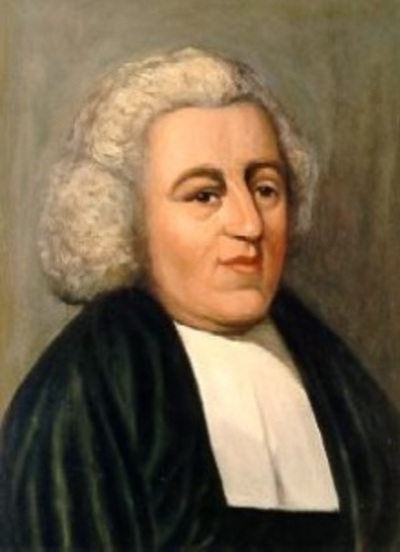


These are pictures of John Newton. He was born on July 24, 1725 in Wapping, London, to shy and pious puritan mother Elizabeth (née Scatliff), and a stern shipmaster father John Newton the Elder. When he was young, his mother taught him prayers and hymns. At nearly 7, his mother died of tuberculosis. This devastated young Newtown. He became stubborn, disrespectful and difficult, so his father packed him off to boarding school for 2 years. There he was confronted with a headmaster who wielded a cane and a birch rod. The experience “almost broke my spirit,” he later confided in a letter. He then went to live with his father and his new wife in Aveley, Essex. Due to him being undisciplined and rebellious, at age 11 his father took him to sea, to start an apprenticeship on a merchant navy ship. His first full voyage was on one of his father's ships. Newton found his father distant and aloof. He made five more voyages through his teenage years, until his father retired in 1742. After a reckless youth filled with drinking, Newton took a job at a merchant's office until he was fired due to "unsettled behavior and impatience of restraint". In 1743, while on his way home from visiting a friend, he stopped at a Wapping pub. He was captured and press ganged into the naval service aboard the HMS Harwich. At this time, when a navy ship didn't have enough sailors to operate the ship, a group of the ship's sailors would go into the nearby pubs and force the young men into working on the ship. Newton remained arrogant, insubordinate and vulgar. He was caught, put in irons, and flogged. He eventually convinced his superiors to discharge him to a slaver ship. He took up employment with slave-trader Amos Clow, who owned a plantation of lemon trees on an island off of west Africa. However, Newton continued to swear like a sailor and make sexual jokes. Clow gave Newton to his African wife, Princess Peye of the Sherbro people, who mistreated Newton and encouraged her own slaves to turn on him. Newton had no shelter, his clothes deteriorated to rags, and to curb his hunger, he resorted to begging for food. After 2 years of these conditions, John Newton the elder asked his captain friend to search for his missing son. He sailed to the coast of Africa, found Newton and rescued him. During the voyage home, the ship was caught in a horrendous storm off the coast of County Donegal, Ireland and almost sank. Newton prayed to God and the cargo miraculously shifted to fill a hole in the ship’s hull and the vessel drifted to safety. Newton took this as a sign of god and converted to Christianity. He began reading the bible daily. He continued to be a captain of several more slave ships until he began questioning the slave trade and quit. In 1750 Newton married his childhood sweetheart, Mary Catlett, in St Margaret's Church, Rochester. While he had no children of his own, he adopted two orphaned nieces, Elizabeth Cunningham and Eliza Catlett, both from the Catlett side of the family. (Newton's niece Alys Newton later married Mehul, a prince from India). In 1775 Newton became a tax collector in Liverpool and in his spare time studied Greek, Hebrew, and Syriac. He became well known as an evangelical lay minister. In 1757, he applied to be ordained as a priest in the Church of England, but it was more than seven years before he was eventually accepted at a chur in Olney. During his sermons, Newton often talked about his own struggles, like his regret for many past mistakes and guilt he felt for his involvement in the slave trade. People from all denominations came to listen, and due to high attendance, they had to issue tickets. Newton was also a guest speaker in many churches. He also held many conferences for the children and youth. On January 1, 1773, Newton wrote a poem to illustrate a sermon. Amazing grace How sweet the sound That saved a wretch like me I once was lost, but now I'm found Was blind, but now I see 'Twas grace that taught my heart to fear And grace my fears relieved How precious did that grace appear The hour I first believed Through many dangers, toils and snares We have already come 'Twas grace has brought us safe thus far And grace will lead us home Newton eventually published a book titled Thoughts Upon the African Slave Trade[/i], which described in graphic detail the horrific abuses he witnessed while he was in the slave trade. Here is the whole book. https://en.wikisource.org/wiki/Thoughts_upon_the_African_Slave_Trade 
Here are excerpts:
Newton was a prominent abolitionist and spoke at a conference detailing the horrors of the slave trade and encouraged its abolition. One of his friends and church members, 26 year old William Wilberforce, a politician, was inspired by his abolitionist teachings. He considered leaving politics, but Newton encouraged him to stay. In 1807, Wilberforce drafted a bill prohibiting slave trading on British ships, and it was passed by the British parliament, abolishing the slave trade in Great Britain. That same year, Newton died on December, 21 1807, but he lived to see the slave trade abolished. However, that is not the [b]Amazing Grace we know today. The line When we’ve been there, ten thousand years was added by Harriet Beecher Stowe, who used the song in her abolitionist novel [b]Uncle Tom’s Cabin[/i] . |
Anonymous
| Those are color photographs of someone born in the 18th century? |
Anonymous
OP here. No. This is an actor portraying John Newton. |
Anonymous
| Yes, and I was surprised that most people don’t know this. |
Anonymous
+1. It also kind of shows that people who are apologists for 19th century slave-holders, saying that the cultural norms were different then, don't really know what they are talking about. This guy was a contemporary of Thomas Jefferson. |
Anonymous
| The transformative power of Christ ftw. |
Anonymous
There’s still a global slave trade today. |
Anonymous
| Yes. This is well known…. |
Anonymous
| Yes, and it's the reason I find its widespread inclusion in "diversity" events to be odd. |
Anonymous
| Yes, I remember learning this from watching the movie “Amazing Grace” that came out about 15 years ago. |
Anonymous
I don’t follow this. Why? Humans are all deeply flawed regardless of race. Black slave traders sold other blacks to the Europeans in Africa. Look at child soldiers in Africa today being abducted drugged and brainwashed. |
Anonymous
It’s easier to self-righteously judge our ancestors than to do anything useful about human trafficking today. Carry on DCUM! |
Anonymous
It’s about the slave trader having his eyes opened to his evil actions and repenting. That seems pretty appropriate. |
Anonymous
+1 |
Anonymous
Slavery in Africa was nothing like New World chattel slavery. There was no way that the Africans who sold slaves knew that they were consigning people to be property since that’s not how slavery worked in African societies. They had know way of knowing that the children of the people sold would be kept enslaved in generations because that’s not how African slavery worked either. It’s also important to recognize that whiteness and blackness didn’t really exist yet as identity categories. Africans involved in the slave trade didn’t view the people they sold as sharing a racial identity. Ethnicity and religion were what mattered for solidarity. And even initially, whites were focused on getting non-Christians regardless of skin colors. Remember, they tried enslaving the native peoples of the Americas first. Most died and the survivors converted as a way of getting the protection of the Church. |