Anonymous
 01/23/2026 12:02
Subject: ECNL moving to school year part 2
01/23/2026 12:02
Subject: ECNL moving to school year part 2
Anonymous wrote:Who’s ready for SD surf to announce they are going to MLSN.
I’m pretty sure ECNL and MLSN will eventually be under the same competition pathway.

Anonymous
01/23/2026 10:18
Subject: ECNL moving to school year part 2
Who’s ready for SD surf to announce they are going to MLSN.
Anonymous
01/20/2026 21:05
Subject: ECNL moving to school year part 2
Anonymous
01/14/2026 22:40
Subject: ECNL moving to school year part 2
Anonymous wrote:How many times are you going to respond to yourself?
Seriously it gets old.
Old and obvious
Anonymous
01/14/2026 22:40
Subject: ECNL moving to school year part 2
How many times are you going to respond to yourself?
Seriously it gets old.
Seriously it gets old.
Anonymous
01/14/2026 22:27
Subject: ECNL moving to school year part 2
Anonymous wrote:Well, that would be a big a reason it wasn't in a peer reviewed journal and is a medium article / working paper.Anonymous wrote:Anonymous wrote:Anonymous wrote:Anonymous wrote:Anonymous wrote:Is your position that because the author didn't know that youth soccer went from SY to BY in 2016 that it didn't happen?Anonymous wrote:Anonymous wrote:That's a great chart in showing that a change in the 12 month age range can mitigate RAE but it might be the result of just layering SY and BY RAE on top of each other in the cumulative data. He should do a Fischer's transformation based on birth year on the two populations to test this. Considering he thought SY in 2023 was birthdate cutoff for these players who were up to what 40 years old, he didn't even think of it. It's why you do research on the subject you know with data you know.Anonymous wrote:You ask for a study and one is provided with American defined data.
Just accept reality.
Ahhh, but the author said nothing about that. Sounds more like your reinterpretation of the data.
No its because thats what the data says.
Your personal views don't matter.
So we should ignore actual rosters, US Soccer and multiple studies from actual academic organizations
But listen to a dude who came up with your madness chart
Or just read and review what the data says.
Which is that American pro players birth month is equally distributed though the year.
Heres the study.
https://medium.com/@giacorada/the-fascinating-birth-trend-among-professional-soccer-players-b2a48d015e7d
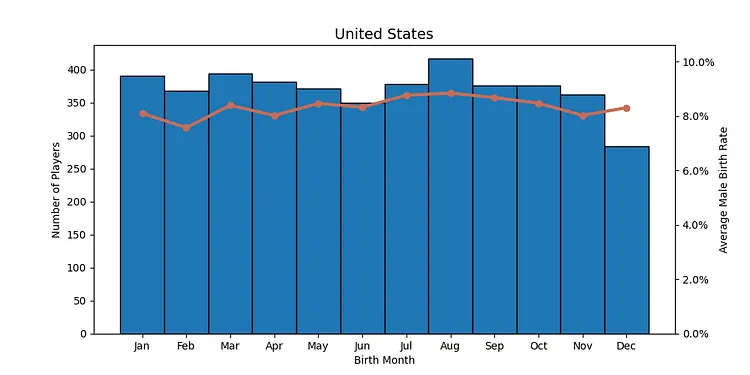
Say what you
Some guy in a basement by himself trying to show something counter to the known and proven fact
As said before, how does a list of Professional players birth months tell us about youth club team selections?
The author can't provide an explanation to his skewed data that makes sense, because it doesn't jive with data from all other studies and research and actual rosters that all show Q1 and Q2 are most represented
Anonymous
01/14/2026 22:11
Subject: ECNL moving to school year part 2
Anonymous wrote:Anonymous wrote:Anonymous wrote:Anonymous wrote:Anonymous wrote:Anonymous wrote:Is your position that because the author didn't know that youth soccer went from SY to BY in 2016 that it didn't happen?Anonymous wrote:Anonymous wrote:That's a great chart in showing that a change in the 12 month age range can mitigate RAE but it might be the result of just layering SY and BY RAE on top of each other in the cumulative data. He should do a Fischer's transformation based on birth year on the two populations to test this. Considering he thought SY in 2023 was birthdate cutoff for these players who were up to what 40 years old, he didn't even think of it. It's why you do research on the subject you know with data you know.Anonymous wrote:You ask for a study and one is provided with American defined data.
Just accept reality.
Ahhh, but the author said nothing about that. Sounds more like your reinterpretation of the data.
No its because thats what the data says.
Your personal views don't matter.
So we should ignore actual rosters, US Soccer and multiple studies from actual academic organizations
But listen to a dude who came up with your madness chart
Or just read and review what the data says.
Which is that American pro players birth month is equally distributed though the year.
Heres the study.
https://medium.com/@giacorada/the-fascinating-birth-trend-among-professional-soccer-players-b2a48d015e7d
The other thing is let's buy Aug. guy's interpretation that this shows our P2P system solved for RAE. USA, USA ... Guess what, we totally underindex on pro soccer players. Our system fails to produce enough that we're not even in the top 5 of nations -- all of which basically way overindex on pro players. So, let's keep doing what we're doing! USA! USA!
Most of those US players in the pro ranks for that study would have been developed in the older school year system, so large numbers of august birthdays makes sense.
Anonymous
01/14/2026 22:04
Subject: ECNL moving to school year part 2
Anonymous wrote:Nationality doesn't represent where you played youth ball, see Sergio Dest, etc. And the database doesn't have dual citizenship tags either. It is a database for video games.Anonymous wrote:Anonymous wrote:Yeah, nationality is not the same as country of origin. We are a melting pot. He doesn't make it clear if he took all Americans playing in the world as American's or all the pros in America. Big difference.Anonymous wrote:Anonymous wrote:Not true, go back to the database.Anonymous wrote:Anonymous wrote:Over half of the pro players in America's MLS are foreign, aka didn't play here as kids.Anonymous wrote:Anonymous wrote:Anonymous wrote:Anonymous wrote:Is your position that because the author didn't know that youth soccer went from SY to BY in 2016 that it didn't happen?Anonymous wrote:Anonymous wrote:That's a great chart in showing that a change in the 12 month age range can mitigate RAE but it might be the result of just layering SY and BY RAE on top of each other in the cumulative data. He should do a Fischer's transformation based on birth year on the two populations to test this. Considering he thought SY in 2023 was birthdate cutoff for these players who were up to what 40 years old, he didn't even think of it. It's why you do research on the subject you know with data you know.Anonymous wrote:You ask for a study and one is provided with American defined data.
Just accept reality.
Ahhh, but the author said nothing about that. Sounds more like your reinterpretation of the data.
No its because thats what the data says.
Your personal views don't matter.
So we should ignore actual rosters, US Soccer and multiple studies from actual academic organizations
But listen to a dude who came up with your madness chart
Or just read and review what the data says.
Which is that American pro players birth month is equally distributed though the year.
Sorry, that's not the best counter argument. The data takes country of origin (not where they play) and birth month. These are American players.
"For the purpose of this research, I collected player data from a Football Manager 2023 Kaggle dataset, a comprehensive source with details on over 150,000 players, including information such as age, weight, height, preferred foot, club team, nationality, and most importantly, their birth date."
I think nationality is basically citizenship in FM, because of trying to simulate national teams. How else would you define it, especially because that's how all the other countries do it?
I see your point. Still, such limitations don't seem to affect the other nations. Sure, we have our outliers like Dest but would that make the entire dataset no representative? Regardless, it's non peer-reviewed paper, so a worthy issue to raise, like the potential lack of consideration of the US switch from SY to BY. At least it seems like the data is in there from birthdate to try to figure that part out.
Anonymous
01/14/2026 21:56
Subject: ECNL moving to school year part 2
Nationality doesn't represent where you played youth ball, see Sergio Dest, etc. And the database doesn't have dual citizenship tags either. It is a database for video games.Anonymous wrote:Anonymous wrote:Yeah, nationality is not the same as country of origin. We are a melting pot. He doesn't make it clear if he took all Americans playing in the world as American's or all the pros in America. Big difference.Anonymous wrote:Anonymous wrote:Not true, go back to the database.Anonymous wrote:Anonymous wrote:Over half of the pro players in America's MLS are foreign, aka didn't play here as kids.Anonymous wrote:Anonymous wrote:Anonymous wrote:Anonymous wrote:Is your position that because the author didn't know that youth soccer went from SY to BY in 2016 that it didn't happen?Anonymous wrote:Anonymous wrote:That's a great chart in showing that a change in the 12 month age range can mitigate RAE but it might be the result of just layering SY and BY RAE on top of each other in the cumulative data. He should do a Fischer's transformation based on birth year on the two populations to test this. Considering he thought SY in 2023 was birthdate cutoff for these players who were up to what 40 years old, he didn't even think of it. It's why you do research on the subject you know with data you know.Anonymous wrote:You ask for a study and one is provided with American defined data.
Just accept reality.
Ahhh, but the author said nothing about that. Sounds more like your reinterpretation of the data.
No its because thats what the data says.
Your personal views don't matter.
So we should ignore actual rosters, US Soccer and multiple studies from actual academic organizations
But listen to a dude who came up with your madness chart
Or just read and review what the data says.
Which is that American pro players birth month is equally distributed though the year.
Sorry, that's not the best counter argument. The data takes country of origin (not where they play) and birth month. These are American players.
"For the purpose of this research, I collected player data from a Football Manager 2023 Kaggle dataset, a comprehensive source with details on over 150,000 players, including information such as age, weight, height, preferred foot, club team, nationality, and most importantly, their birth date."
I think nationality is basically citizenship in FM, because of trying to simulate national teams. How else would you define it, especially because that's how all the other countries do it?
Anonymous
01/14/2026 21:52
Subject: ECNL moving to school year part 2
Anonymous wrote:Yeah, nationality is not the same as country of origin. We are a melting pot. He doesn't make it clear if he took all Americans playing in the world as American's or all the pros in America. Big difference.Anonymous wrote:Anonymous wrote:Not true, go back to the database.Anonymous wrote:Anonymous wrote:Over half of the pro players in America's MLS are foreign, aka didn't play here as kids.Anonymous wrote:Anonymous wrote:Anonymous wrote:Anonymous wrote:Is your position that because the author didn't know that youth soccer went from SY to BY in 2016 that it didn't happen?Anonymous wrote:Anonymous wrote:That's a great chart in showing that a change in the 12 month age range can mitigate RAE but it might be the result of just layering SY and BY RAE on top of each other in the cumulative data. He should do a Fischer's transformation based on birth year on the two populations to test this. Considering he thought SY in 2023 was birthdate cutoff for these players who were up to what 40 years old, he didn't even think of it. It's why you do research on the subject you know with data you know.Anonymous wrote:You ask for a study and one is provided with American defined data.
Just accept reality.
Ahhh, but the author said nothing about that. Sounds more like your reinterpretation of the data.
No its because thats what the data says.
Your personal views don't matter.
So we should ignore actual rosters, US Soccer and multiple studies from actual academic organizations
But listen to a dude who came up with your madness chart
Or just read and review what the data says.
Which is that American pro players birth month is equally distributed though the year.
Sorry, that's not the best counter argument. The data takes country of origin (not where they play) and birth month. These are American players.
"For the purpose of this research, I collected player data from a Football Manager 2023 Kaggle dataset, a comprehensive source with details on over 150,000 players, including information such as age, weight, height, preferred foot, club team, nationality, and most importantly, their birth date."
I think nationality is basically citizenship in FM, because of trying to simulate national teams. How else would you define it, especially because that's how all the other countries do it?
Anonymous
01/14/2026 21:47
Subject: ECNL moving to school year part 2
Yeah, nationality is not the same as country of origin. We are a melting pot. He doesn't make it clear if he took all Americans playing in the world as American's or all the pros in America. Big difference.Anonymous wrote:Anonymous wrote:Not true, go back to the database.Anonymous wrote:Anonymous wrote:Over half of the pro players in America's MLS are foreign, aka didn't play here as kids.Anonymous wrote:Anonymous wrote:Anonymous wrote:Anonymous wrote:Is your position that because the author didn't know that youth soccer went from SY to BY in 2016 that it didn't happen?Anonymous wrote:Anonymous wrote:That's a great chart in showing that a change in the 12 month age range can mitigate RAE but it might be the result of just layering SY and BY RAE on top of each other in the cumulative data. He should do a Fischer's transformation based on birth year on the two populations to test this. Considering he thought SY in 2023 was birthdate cutoff for these players who were up to what 40 years old, he didn't even think of it. It's why you do research on the subject you know with data you know.Anonymous wrote:You ask for a study and one is provided with American defined data.
Just accept reality.
Ahhh, but the author said nothing about that. Sounds more like your reinterpretation of the data.
No its because thats what the data says.
Your personal views don't matter.
So we should ignore actual rosters, US Soccer and multiple studies from actual academic organizations
But listen to a dude who came up with your madness chart
Or just read and review what the data says.
Which is that American pro players birth month is equally distributed though the year.
Sorry, that's not the best counter argument. The data takes country of origin (not where they play) and birth month. These are American players.
"For the purpose of this research, I collected player data from a Football Manager 2023 Kaggle dataset, a comprehensive source with details on over 150,000 players, including information such as age, weight, height, preferred foot, club team, nationality, and most importantly, their birth date."
Anonymous
01/14/2026 21:47
Subject: ECNL moving to school year part 2
Such a loser
Anonymous
01/14/2026 21:44
Subject: ECNL moving to school year part 2
Anonymous wrote:Not true, go back to the database.Anonymous wrote:Anonymous wrote:Over half of the pro players in America's MLS are foreign, aka didn't play here as kids.Anonymous wrote:Anonymous wrote:Anonymous wrote:Anonymous wrote:Is your position that because the author didn't know that youth soccer went from SY to BY in 2016 that it didn't happen?Anonymous wrote:Anonymous wrote:That's a great chart in showing that a change in the 12 month age range can mitigate RAE but it might be the result of just layering SY and BY RAE on top of each other in the cumulative data. He should do a Fischer's transformation based on birth year on the two populations to test this. Considering he thought SY in 2023 was birthdate cutoff for these players who were up to what 40 years old, he didn't even think of it. It's why you do research on the subject you know with data you know.Anonymous wrote:You ask for a study and one is provided with American defined data.
Just accept reality.
Ahhh, but the author said nothing about that. Sounds more like your reinterpretation of the data.
No its because thats what the data says.
Your personal views don't matter.
So we should ignore actual rosters, US Soccer and multiple studies from actual academic organizations
But listen to a dude who came up with your madness chart
Or just read and review what the data says.
Which is that American pro players birth month is equally distributed though the year.
Sorry, that's not the best counter argument. The data takes country of origin (not where they play) and birth month. These are American players.
"For the purpose of this research, I collected player data from a Football Manager 2023 Kaggle dataset, a comprehensive source with details on over 150,000 players, including information such as age, weight, height, preferred foot, club team, nationality, and most importantly, their birth date."
Anonymous
01/14/2026 21:42
Subject: ECNL moving to school year part 2
Anonymous wrote:Anonymous wrote:Anonymous wrote:Anonymous wrote:Anonymous wrote:Is your position that because the author didn't know that youth soccer went from SY to BY in 2016 that it didn't happen?Anonymous wrote:Anonymous wrote:That's a great chart in showing that a change in the 12 month age range can mitigate RAE but it might be the result of just layering SY and BY RAE on top of each other in the cumulative data. He should do a Fischer's transformation based on birth year on the two populations to test this. Considering he thought SY in 2023 was birthdate cutoff for these players who were up to what 40 years old, he didn't even think of it. It's why you do research on the subject you know with data you know.Anonymous wrote:You ask for a study and one is provided with American defined data.
Just accept reality.
Ahhh, but the author said nothing about that. Sounds more like your reinterpretation of the data.
No its because thats what the data says.
Your personal views don't matter.
So we should ignore actual rosters, US Soccer and multiple studies from actual academic organizations
But listen to a dude who came up with your madness chart
Or just read and review what the data says.
Which is that American pro players birth month is equally distributed though the year.
Heres the study.
https://medium.com/@giacorada/the-fascinating-birth-trend-among-professional-soccer-players-b2a48d015e7d
The other thing is let's buy Aug. guy's interpretation that this shows our P2P system solved for RAE. USA, USA ... Guess what, we totally underindex on pro soccer players. Our system fails to produce enough that we're not even in the top 5 of nations -- all of which basically way overindex on pro players. So, let's keep doing what we're doing! USA! USA!
Anonymous
01/14/2026 21:41
Subject: ECNL moving to school year part 2
Not true, go back to the database.Anonymous wrote:Anonymous wrote:Over half of the pro players in America's MLS are foreign, aka didn't play here as kids.Anonymous wrote:Anonymous wrote:Anonymous wrote:Anonymous wrote:Is your position that because the author didn't know that youth soccer went from SY to BY in 2016 that it didn't happen?Anonymous wrote:Anonymous wrote:That's a great chart in showing that a change in the 12 month age range can mitigate RAE but it might be the result of just layering SY and BY RAE on top of each other in the cumulative data. He should do a Fischer's transformation based on birth year on the two populations to test this. Considering he thought SY in 2023 was birthdate cutoff for these players who were up to what 40 years old, he didn't even think of it. It's why you do research on the subject you know with data you know.Anonymous wrote:You ask for a study and one is provided with American defined data.
Just accept reality.
Ahhh, but the author said nothing about that. Sounds more like your reinterpretation of the data.
No its because thats what the data says.
Your personal views don't matter.
So we should ignore actual rosters, US Soccer and multiple studies from actual academic organizations
But listen to a dude who came up with your madness chart
Or just read and review what the data says.
Which is that American pro players birth month is equally distributed though the year.
Sorry, that's not the best counter argument. The data takes country of origin (not where they play) and birth month. These are American players.