Anonymous
 10/11/2021 20:13
Subject: Bad Art Friend
10/11/2021 20:13
Subject: Bad Art Friend
Anonymous wrote:So what is the line between just being terrible and plagiarizing?
Funny you ask that. I am one of the published authors who posted above and i just so happened to be turning in a MS this week and I ran this by my editor — what would you think if i included a verbatim private FB post in my book, and didn’t tell the original author? Would that be cool.
She laughed hard, and then said, “But seriously, no. Don’t do that.”
No legit author in their right mind is confused about this.

Anonymous
10/11/2021 20:09
Subject: Bad Art Friend
Anonymous wrote:I'm on Dorland's side in this, also, and think the group texts were unbelievably mean, but I'm not sure the way he wrote the story is due to deceptiveness. He sifted through a lot of material, and presumably had live interviews that we didn't have here. Where he came out in the story isn't necessarily where we would come out. That doesn't mean he was trying to hoodwink us. Remember too that there was a Boston Globe exposee of the whole thing earlier and nobody seemed to have a problem with what Larson did there (though presumably they didn't expose the group texts.)
Anyway, ymmv.
Consider also that while he can relate to - and write about with true understanding - writing culture, how writers treat each other, what is plagiarism, ambition and success — he’s also a dude writing about a woman being mean-girled, and THAT is the piece of this story that so many of us, as women, have lived and are recoiling the most over.
Anonymous
10/11/2021 20:00
Subject: Bad Art Friend
I'm on Dorland's side in this, also, and think the group texts were unbelievably mean, but I'm not sure the way he wrote the story is due to deceptiveness. He sifted through a lot of material, and presumably had live interviews that we didn't have here. Where he came out in the story isn't necessarily where we would come out. That doesn't mean he was trying to hoodwink us. Remember too that there was a Boston Globe exposee of the whole thing earlier and nobody seemed to have a problem with what Larson did there (though presumably they didn't expose the group texts.)
Anyway, ymmv.
Anyway, ymmv.
Anonymous
10/11/2021 19:50
Subject: Bad Art Friend
Anonymous wrote:I don't know the Corker letter proves what people say it proves. If I were a writer trying to get someone to talk to me, or a detective trying to get a murderer to talk to me, I would try to see the story from their point of view and explain as well as I could how I found their POV relatable. Even if maybe I didn't, completely. Corker had already been working on the story for a while with material only provided from Dorland, so he had to know that Larsen would need a reason to be persuaded about how he wasn't already biased against her. So he gave her that.
I don't feel one way or the other about who Corker really sided with or what he was trying to do when he wrote the article. But the only way he was going to get Larsen to talk to him is if her persuaded her that her point of view would be represented in the story, and that he was a good person to articulate what the POV was.
Coupled with the fact that he left out relevant information about Larson and seemed to paint Dawn in a particularly bad light I think it’s damning.
Anonymous
10/11/2021 19:37
Subject: Re:Bad Art Friend
Anonymous wrote:I think one of the things that bothers me deeply about this whole mess, and other similar stories like the Isabel Fall story, are that they seem like a confirmation of sorts of what I have suspected MFA programs and writer groups to be like, and what it is like trying to make it as a new writer. (Of course, the cruelty itself is the worst thing, but that's been covered by many others, so I won't rehash here.) I have been writing for years, I've had positive feedback and encouragement to go further with writing, and I would love to dive in and get an MFA and really learn about the craft of writing. I want to become better. However, I've always held back, because I've been worried about exactly this sort of thing. I'm a quiet person who isn't very sophisticated when it comes to navigating treacherous social waters like this. I'm neurodivergent; this is beyond my literal social abilities. The idea of trying to hang with groups like GrubStreet in order to become a better writer is completely intimidating. I am not worried about my ability to learn and improve my actual writing in an MFA program, but I know I could not excel at the social climbing and general nastiness that seems to be part and parcel of the programs and the writers groups.
Because, let's face it, Celeste Ng, Sonya Larson, NK Jemisin, Roxane Gay, Chip Cheek, Calvin Hennick, and the other writers at the center of inexplicably cruel destructions of budding writers like this, well, nothing will happen to them for what they've done. Their victims won't recover, but they'll be just fine. Isabel Fall is literally destroyed as a person. Dawn Dorland will never publish even if she wanted to, unless it is a predatory "tell all" contract, but probably not even that since what else is there to say? Meanwhile literary gatekeepers like Helen Rosner are out there defending the indefensible, so you know where the publishers stand.
I want to learn to be a better writer, but at what cost? Does improving your writing mean losing your ethics? Does it mean you have to be willing to savage people behind their backs? To turn into someone who delights in mindless social destruction? Is it even worth trying if you know you don't have the social skills to navigate such treacherous interpersonal waters? I don't know, but the whole story saddens me on an additional personal level because I know one thing for sure: I'll never fit into that world. I can't. And it seems that's the price of admission for learning to be a better writer.
It is not the best time for art.
There is a lot of emphasis on only presenting the correct narratives, on having sensitivity readers, on only crossing boundaries that are allowed to be crossed. This makes a world that is stifling and insular and awful.
I am a little more removed from the NYC publishing scene than I was once, but I am not sorry for that. I found a group of like-minded writers online, and many of us have parlayed our shared efforts into real careers writing fiction, writing scripts, writing games, and just writing. One thing the last two decades have taught me is you write because you love it, because you want to know what happens, and because you have something to say. But it is a strange thing interacting with other writers. I have a friend who lives nearby now. When we were kids we wrote novels together. We tried to start a Sunday afternoon writing group a few years back... but we were just in such different places, we had such different opinions... it didn't work. I'm not even sure we are friends anymore. It is very hard to find a writer's community. It involves trust, and maybe it also involves distance. There is a competitive edge that's hard to shake. There is an ugly part in all of us that isn't sure of ourselves, but knows we thing what someone else wrote is bad. Sometimes it's even hard to separate that feeling from their perceived success--or lack thereof. Things are subjective: sometimes you look at a piece of writing that is beautifully executed and it leaves you cold. Other times, you do something like read "The Goldfinch" and wonder wtf was going on with the last third of the novel. It's all a mess, and short stories... I mean, they're lovely, but who really reads them as a genre besides aspiring mfa students? Or aspiring science fiction and fantasy writers...
It is hard. It is painstaking. And at the end of the day you have to be doing it for the love of it or that will show in the work itself.
Anonymous
10/11/2021 19:35
Subject: Bad Art Friend
Anonymous wrote:Anonymous wrote:I don't know the Corker letter proves what people say it proves. If I were a writer trying to get someone to talk to me, or a detective trying to get a murderer to talk to me, I would try to see the story from their point of view and explain as well as I could how I found their POV relatable. Even if maybe I didn't, completely. Corker had already been working on the story for a while with material only provided from Dorland, so he had to know that Larsen would need a reason to be persuaded about how he wasn't already biased against her. So he gave her that.
I don't feel one way or the other about who Corker really sided with or what he was trying to do when he wrote the article. But the only way he was going to get Larsen to talk to him is if her persuaded her that her point of view would be represented in the story, and that he was a good person to articulate what the POV was.
Hmm, disagree. Journalists are supposed to be neutral, and he should have gone into the story without an agenda - yet he stated it. Therefore anything he found that refuted that he couldn't well use because then she could (rightfully) claim he'd duped her. There's absolutely no reason he couldn't have said: "Hey Sonia, Dawn pitched us about your legal entanglements. I'm going to write a feature about it for the NYTimes. I would love to have your input to get the full story and represent both sides...." Then, tack on the line he actually wrote "As I hope you'll see from my other work, I do not come into stories as a judge and jury." Honestly, if she didn't participate, he could have written the story about Dawn, but that wasn't his angle. He even said he wanted people to "experience it" what she (only Sonia) went through.
Nah, sorry - this email is not a biased smoking gun. Even serious print journalists say these things to get an interview. They write buttered-up letters to convicted killers in prison asking for interviews for goodness sake, with letters raising concerns about the cops/the lawyers/the anything. Koekler had to get Larson to open the door to him.
Anonymous
10/11/2021 19:32
Subject: Bad Art Friend
Anonymous wrote:Anonymous wrote:Here they are, in all their Chunkster glory. So glad they named names so I can know who to avoid buying books by in the future.
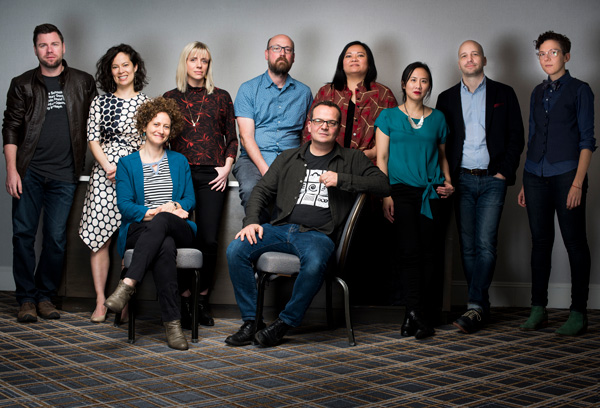
The Chunky Monkeys. Back row (l. to r.): Calvin Hennick, Sonya Larson, Whitney Scharer, Chip Cheek, Grace Talusan, Celeste Ng, Christopher Castellani, and Alexandria Marzano-Lesnevich. Front row: Becky Tuch (l.) and Adam Stumacher. Not pictured, co-founder Jennifer De Leon.
https://www.publishersweekly.com/pw/by-topic/industry-news/publisher-news/article/80887-two-boston-writing-groups-produce-12-books.html
Wait, that's Sonya Larson!? I would have 10000% assumed she was White
Yup. It’s hard to keep track of exactly which white woman is weaponizing what.
Anonymous
10/11/2021 19:31
Subject: Bad Art Friend
Anonymous wrote:Anonymous wrote:I don't know the Corker letter proves what people say it proves. If I were a writer trying to get someone to talk to me, or a detective trying to get a murderer to talk to me, I would try to see the story from their point of view and explain as well as I could how I found their POV relatable. Even if maybe I didn't, completely. Corker had already been working on the story for a while with material only provided from Dorland, so he had to know that Larsen would need a reason to be persuaded about how he wasn't already biased against her. So he gave her that.
I don't feel one way or the other about who Corker really sided with or what he was trying to do when he wrote the article. But the only way he was going to get Larsen to talk to him is if her persuaded her that her point of view would be represented in the story, and that he was a good person to articulate what the POV was.
Hmm, disagree. Journalists are supposed to be neutral, and he should have gone into the story without an agenda - yet he stated it. Therefore anything he found that refuted that he couldn't well use because then she could (rightfully) claim he'd duped her. There's absolutely no reason he couldn't have said: "Hey Sonia, Dawn pitched us about your legal entanglements. I'm going to write a feature about it for the NYTimes. I would love to have your input to get the full story and represent both sides...." Then, tack on the line he actually wrote "As I hope you'll see from my other work, I do not come into stories as a judge and jury." Honestly, if she didn't participate, he could have written the story about Dawn, but that wasn't his angle. He even said he wanted people to "experience it" what she (only Sonia) went through.
Eh, no, because that's not how he wrote it, is it? If he were really going to write it from the perspective of what Sonya went through, he would have shown from the beginning how she took Dawn's Facebook post and used it in her story thinking it was harmless because Art, and joked around with the monkeys via text. He clearly didn't provide Sonya's viewpoint throughout -- which is why we do not identify with her. But he did explain that he wanted to portray what she went through in her fight for authorship of her story, which he legitimately did attempt to explain.
I'm not a journalist (and suspect that you aren't either), but I do note that this is in New York Magazine and not the New York Times news pages and that this is more of a deep dive by way of think piece and less of a Watergate expose. I think there is probably some leeway to writers in how they reach out to members of the public to get them to participate in their stories, but writers/journalists please correct me if I'm wrong.
Anonymous
10/11/2021 19:30
Subject: Re:Bad Art Friend
Anonymous wrote:I think one reason I feel so upset and bothered by this is that I know what happens to you, mentally and emotionally, when you get ganged up on in this kind of way. When it happened to me, I became depressed, self-loathing to a disturbing degree. I started self-harming, my husband worried that I would do something terrible. If I hadn't been a mom, I would have worried too -- caring what happened to my kids and needing to protect them from the situation got me through.
The Vox piece upthread about Isabel Fall brought all that back. Getting rejected and humiliated in this way (and I wasn't dealing with a Twitter mob of thousands, just a small group of friends and professional acquaintances upon whom I'd based a huge part of my sense of belonging in the world) is life changing. I do worry for Dawn, and part of what makes me so angry is that people don't seem to understand that no matter how annoying someone is, they don't deserve to want to die because of it. Like you don't have to punish socially awkward people for being socially awkward -- it punishes itself! You can just leave people like this alone and move on with your life instead of giving into your perverse need to crap all over them until they hate themselves as much as you hate them.
Anyway.
I get you, PP.
I'm the PP who wants to learn about writing and when I read the Isabel Fall story, it really bothered me. I still think about her a lot, and hope she is maybe some day okay, some day feels safe again. I'm socially awkward (neurodiverse, woohoo lack of social skills) and I relate so hard to being the vulnerable awkward one on the margins, who doesn't say the right things, and can't navigate the unspoken rules. I have spent a lot of my life teaching myself scripts and rules that I need to use to get by, but these situations don't have social scripts you can teach yourself. I'm sure I'm probably too wrapped up in all of this, but it hits deeply, bringing up years of trying to figure out just how people manage to be in-group, something that has been an endless mystery since childhood.
Anonymous
10/11/2021 19:27
Subject: Re:Bad Art Friend
Anonymous wrote:Anonymous wrote:I think one reason I feel so upset and bothered by this is that I know what happens to you, mentally and emotionally, when you get ganged up on in this kind of way. When it happened to me, I became depressed, self-loathing to a disturbing degree. I started self-harming, my husband worried that I would do something terrible. If I hadn't been a mom, I would have worried too -- caring what happened to my kids and needing to protect them from the situation got me through.
The Vox piece upthread about Isabel Fall brought all that back. Getting rejected and humiliated in this way (and I wasn't dealing with a Twitter mob of thousands, just a small group of friends and professional acquaintances upon whom I'd based a huge part of my sense of belonging in the world) is life changing. I do worry for Dawn, and part of what makes me so angry is that people don't seem to understand that no matter how annoying someone is, they don't deserve to want to die because of it. Like you don't have to punish socially awkward people for being socially awkward -- it punishes itself! You can just leave people like this alone and move on with your life instead of giving into your perverse need to crap all over them until they hate themselves as much as you hate them.
Anyway.
I feel like this is one reason I have always consciously/subconsciously avoided group friendship scenarios. Too scary to contemplate being turned on by a whole group, and I think I always sensed that I would end up ostracized if I tried to enter a group. I am very happy with the close 1:1 friendships I have, happy to meet my friends' friends every so often. But getting enmeshed in a "friendship group" ... shudder.
I was ostracized and shamed by a peer group as an adult and it is 100 percent what had me reading this thread and rooting for Dorland. I don’t care about boring Boston short story literati; I totally care about what it is like to be wrongly ganged up on, and to have the gang exposed as the lying cheap frauds that they are — well, that’s what everyone in my shoes, or Dorland’s shoes, has been waiting for. For someone else to see the lie and call it out.
Anonymous
10/11/2021 19:20
Subject: Re:Bad Art Friend
Anonymous wrote:I think one reason I feel so upset and bothered by this is that I know what happens to you, mentally and emotionally, when you get ganged up on in this kind of way. When it happened to me, I became depressed, self-loathing to a disturbing degree. I started self-harming, my husband worried that I would do something terrible. If I hadn't been a mom, I would have worried too -- caring what happened to my kids and needing to protect them from the situation got me through.
The Vox piece upthread about Isabel Fall brought all that back. Getting rejected and humiliated in this way (and I wasn't dealing with a Twitter mob of thousands, just a small group of friends and professional acquaintances upon whom I'd based a huge part of my sense of belonging in the world) is life changing. I do worry for Dawn, and part of what makes me so angry is that people don't seem to understand that no matter how annoying someone is, they don't deserve to want to die because of it. Like you don't have to punish socially awkward people for being socially awkward -- it punishes itself! You can just leave people like this alone and move on with your life instead of giving into your perverse need to crap all over them until they hate themselves as much as you hate them.
Anyway.
I feel like this is one reason I have always consciously/subconsciously avoided group friendship scenarios. Too scary to contemplate being turned on by a whole group, and I think I always sensed that I would end up ostracized if I tried to enter a group. I am very happy with the close 1:1 friendships I have, happy to meet my friends' friends every so often. But getting enmeshed in a "friendship group" ... shudder.
Anonymous
10/11/2021 19:18
Subject: Bad Art Friend
Anonymous wrote:Here they are, in all their Chunkster glory. So glad they named names so I can know who to avoid buying books by in the future.
The Chunky Monkeys. Back row (l. to r.): Calvin Hennick, Sonya Larson, Whitney Scharer, Chip Cheek, Grace Talusan, Celeste Ng, Christopher Castellani, and Alexandria Marzano-Lesnevich. Front row: Becky Tuch (l.) and Adam Stumacher. Not pictured, co-founder Jennifer De Leon.
https://www.publishersweekly.com/pw/by-topic/industry-news/publisher-news/article/80887-two-boston-writing-groups-produce-12-books.html
Wait, that's Sonya Larson!? I would have 10000% assumed she was White
Anonymous
10/11/2021 19:12
Subject: Bad Art Friend
Anonymous wrote:I don't know the Corker letter proves what people say it proves. If I were a writer trying to get someone to talk to me, or a detective trying to get a murderer to talk to me, I would try to see the story from their point of view and explain as well as I could how I found their POV relatable. Even if maybe I didn't, completely. Corker had already been working on the story for a while with material only provided from Dorland, so he had to know that Larsen would need a reason to be persuaded about how he wasn't already biased against her. So he gave her that.
I don't feel one way or the other about who Corker really sided with or what he was trying to do when he wrote the article. But the only way he was going to get Larsen to talk to him is if her persuaded her that her point of view would be represented in the story, and that he was a good person to articulate what the POV was.
Hmm, disagree. Journalists are supposed to be neutral, and he should have gone into the story without an agenda - yet he stated it. Therefore anything he found that refuted that he couldn't well use because then she could (rightfully) claim he'd duped her. There's absolutely no reason he couldn't have said: "Hey Sonia, Dawn pitched us about your legal entanglements. I'm going to write a feature about it for the NYTimes. I would love to have your input to get the full story and represent both sides...." Then, tack on the line he actually wrote "As I hope you'll see from my other work, I do not come into stories as a judge and jury." Honestly, if she didn't participate, he could have written the story about Dawn, but that wasn't his angle. He even said he wanted people to "experience it" what she (only Sonia) went through.
Anonymous
10/11/2021 18:58
Subject: Bad Art Friend
I don't know the Corker letter proves what people say it proves. If I were a writer trying to get someone to talk to me, or a detective trying to get a murderer to talk to me, I would try to see the story from their point of view and explain as well as I could how I found their POV relatable. Even if maybe I didn't, completely. Corker had already been working on the story for a while with material only provided from Dorland, so he had to know that Larsen would need a reason to be persuaded about how he wasn't already biased against her. So he gave her that.
I don't feel one way or the other about who Corker really sided with or what he was trying to do when he wrote the article. But the only way he was going to get Larsen to talk to him is if her persuaded her that her point of view would be represented in the story, and that he was a good person to articulate what the POV was.
I don't feel one way or the other about who Corker really sided with or what he was trying to do when he wrote the article. But the only way he was going to get Larsen to talk to him is if her persuaded her that her point of view would be represented in the story, and that he was a good person to articulate what the POV was.
Anonymous
10/11/2021 18:54
Subject: Re:Bad Art Friend
I think one reason I feel so upset and bothered by this is that I know what happens to you, mentally and emotionally, when you get ganged up on in this kind of way. When it happened to me, I became depressed, self-loathing to a disturbing degree. I started self-harming, my husband worried that I would do something terrible. If I hadn't been a mom, I would have worried too -- caring what happened to my kids and needing to protect them from the situation got me through.
The Vox piece upthread about Isabel Fall brought all that back. Getting rejected and humiliated in this way (and I wasn't dealing with a Twitter mob of thousands, just a small group of friends and professional acquaintances upon whom I'd based a huge part of my sense of belonging in the world) is life changing. I do worry for Dawn, and part of what makes me so angry is that people don't seem to understand that no matter how annoying someone is, they don't deserve to want to die because of it. Like you don't have to punish socially awkward people for being socially awkward -- it punishes itself! You can just leave people like this alone and move on with your life instead of giving into your perverse need to crap all over them until they hate themselves as much as you hate them.
Anyway.
The Vox piece upthread about Isabel Fall brought all that back. Getting rejected and humiliated in this way (and I wasn't dealing with a Twitter mob of thousands, just a small group of friends and professional acquaintances upon whom I'd based a huge part of my sense of belonging in the world) is life changing. I do worry for Dawn, and part of what makes me so angry is that people don't seem to understand that no matter how annoying someone is, they don't deserve to want to die because of it. Like you don't have to punish socially awkward people for being socially awkward -- it punishes itself! You can just leave people like this alone and move on with your life instead of giving into your perverse need to crap all over them until they hate themselves as much as you hate them.
Anyway.