Anonymous
 12/30/2015 21:56
Subject: Re:France bans models that are "excessively thin"
12/30/2015 21:56
Subject: Re:France bans models that are "excessively thin"
Anonymous wrote:Anonymous wrote:Anonymous wrote:Anonymous wrote:Anonymous wrote:Anonymous wrote:The BMI requirmen under the EU law is 18
honestly that is high for a minimum. i had a bmi of 17.5 in high school and now i'm just under 18 in my 40s. i don't diet, never been anorexic - just naturally thin, but there are plenty of women thinner than me, especially in france.
Teens have a lower normal range for BMI, so your 17.5 is not that unusual. And at a BMI of 18 you could work in the industry. There is a big difference between 17 and 18, basically the last ten pounds of fat you have left.
There are plenty of thinner women, and a bunch of them have eating disorders.
That's my point. I wasn't and am not that unusual so the minimum is set too high. Many models are teens and I would think a bmi minimum of 18 would have many of them overeating to reach it if they're naturally thin. That's not healthy either.
Teenagers need not be models. Why should they be?
Did you read the thread (off topic) about finding a "credible" children's modeling agency? Parents see ka ching and instantly whore off their kids.
There're age-appropriate jobs (I think we can all agree that Seventeen and Teen Vogue fashion spreads should be modeled by teens!) and there're completely inappropriate jobs. I wouldn't allow my children to model, but recognize that a need exists. But why are clothes intended for adult women - perhaps 1-3% of whom will keep a truly teenaged-shaped body well into adulthood - designed and fitted with 15 year olds in mind? And why is their natural body fat level - unnatural to many normal, healthy-weight adult women - the enforced standard on the runway?

Anonymous
12/30/2015 08:36
Subject: Re:France bans models that are "excessively thin"
Anonymous wrote:Anonymous wrote:Anonymous wrote:Anonymous wrote:Anonymous wrote:The BMI requirmen under the EU law is 18
honestly that is high for a minimum. i had a bmi of 17.5 in high school and now i'm just under 18 in my 40s. i don't diet, never been anorexic - just naturally thin, but there are plenty of women thinner than me, especially in france.
Teens have a lower normal range for BMI, so your 17.5 is not that unusual. And at a BMI of 18 you could work in the industry. There is a big difference between 17 and 18, basically the last ten pounds of fat you have left.
There are plenty of thinner women, and a bunch of them have eating disorders.
That's my point. I wasn't and am not that unusual so the minimum is set too high. Many models are teens and I would think a bmi minimum of 18 would have many of them overeating to reach it if they're naturally thin. That's not healthy either.
Teenagers need not be models. Why should they be?
Did you read the thread (off topic) about finding a "credible" children's modeling agency? Parents see ka ching and instantly whore off their kids.
Anonymous
12/29/2015 21:49
Subject: Re:France bans models that are "excessively thin"
Who is the designer who put the skeletal Ms. Reston on the catwalk?
I want to boycott him or her forever for such callous disregard of human life.
I want to boycott him or her forever for such callous disregard of human life.
Anonymous
12/29/2015 21:30
Subject: France bans models that are "excessively thin"
Anonymous wrote:Anonymous wrote:I can't believe anyone is terribly inconvenienced by being asked to add five pounds in order to go on a catwalk.
For the adult models? Probably very little problem in adding five pounds. They're naturally thin and all, but they still work at looking amazing. A "problem" with this is that many of the models are still basically children - which the industry collectively loves. So it's not just an unattainably thin body, but the teenaged shape we tend to lose somewhere around our early twenties.
I can't understand the wisdom of modeling adult clothing on childrens' bodies.
Anonymous
12/29/2015 21:17
Subject: Re:France bans models that are "excessively thin"
Anonymous wrote:Anonymous wrote:Anonymous wrote:Anonymous wrote:The BMI requirmen under the EU law is 18
honestly that is high for a minimum. i had a bmi of 17.5 in high school and now i'm just under 18 in my 40s. i don't diet, never been anorexic - just naturally thin, but there are plenty of women thinner than me, especially in france.
Teens have a lower normal range for BMI, so your 17.5 is not that unusual. And at a BMI of 18 you could work in the industry. There is a big difference between 17 and 18, basically the last ten pounds of fat you have left.
There are plenty of thinner women, and a bunch of them have eating disorders.
That's my point. I wasn't and am not that unusual so the minimum is set too high. Many models are teens and I would think a bmi minimum of 18 would have many of them overeating to reach it if they're naturally thin. That's not healthy either.
Teenagers need not be models. Why should they be?
Anonymous
12/29/2015 21:15
Subject: France bans models that are "excessively thin"
Anonymous wrote:I can't believe anyone is terribly inconvenienced by being asked to add five pounds in order to go on a catwalk.
For the adult models? Probably very little problem in adding five pounds. They're naturally thin and all, but they still work at looking amazing. A "problem" with this is that many of the models are still basically children - which the industry collectively loves. So it's not just an unattainably thin body, but the teenaged shape we tend to lose somewhere around our early twenties.
Anonymous
12/29/2015 19:25
Subject: France bans models that are "excessively thin"
I can't believe anyone is terribly inconvenienced by being asked to add five pounds in order to go on a catwalk.
Anonymous
12/29/2015 14:44
Subject: Re:France bans models that are "excessively thin"
Anonymous wrote:Anonymous wrote:The BMI requirmen under the EU law is 18
honestly that is high for a minimum. i had a bmi of 17.5 in high school and now i'm just under 18 in my 40s. i don't diet, never been anorexic - just naturally thin, but there are plenty of women thinner than me, especially in france.
The article said there is no minimum. Models just need a doctor's note saying they are healthy enough to handle the profession.
Anonymous
12/29/2015 14:04
Subject: Re:France bans models that are "excessively thin"
Isn't this an example of a collective action problem? All those who use models know that they are promoting ill health by hiring too skinny models, but thinness is everywhere acclaimed and if one moves unilaterally it will be at a disadvantage.
If government stepped in and forbade use of models under a certain BMI no one would be at a disadvantage. But the federal government has no authority here unless one can make an interstate commerce case. That leaves this in the hands of industry groups, but they are faced with the problem of how to make cheating more painful than it is worth.
If government stepped in and forbade use of models under a certain BMI no one would be at a disadvantage. But the federal government has no authority here unless one can make an interstate commerce case. That leaves this in the hands of industry groups, but they are faced with the problem of how to make cheating more painful than it is worth.
Anonymous
12/29/2015 11:04
Subject: France bans models that are "excessively thin"
Anonymous wrote:Anonymous wrote:Anonymous wrote:I've always been naturally very thin (and tall) so this amuses me. I wonder what BMI they have set. Hopefully something reasonable like 17%.
Are you being purposely obtuse?
17% BMI is at the low/normal range. Anorexia is another story, genius.
Let me share a visual so that you can "get" the point.
She looks healthier than this:

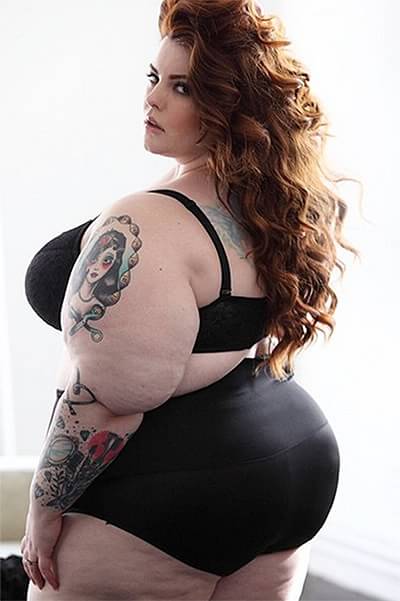
So much for what you know. Anna Carolina Reston died at 21 of kidney failure. The plus-sized model above is still alive at 30.
Anonymous
12/28/2015 19:45
Subject: France bans models that are "excessively thin"
Anonymous wrote:Anonymous wrote:Anonymous wrote:Anonymous wrote:I've always been naturally very thin (and tall) so this amuses me. I wonder what BMI they have set. Hopefully something reasonable like 17%.
Are you being purposely obtuse?
17% BMI is at the low/normal range. Anorexia is another story, genius.
Let me share a visual so that you can "get" the point.
She looks healthier than this:
They are both unhealthy. However the anorexic's heart will give out first.
Betcha the big girl's a whole lot more fun in bed than the skinny one.
Anonymous
12/28/2015 19:43
Subject: France bans models that are "excessively thin"
This point about companies versus government keeps getting brought up but without a coherent point to be made.
The difference between an company imposing something on the public vs. government imposing something on the public = perception and ideology as opposed to reality.
Anonymous wrote:Anonymous wrote:Anonymous wrote:Jockeys have had minimum weights since forever. No outrage.
Why do people like you not understand the difference between a standard imposed by private industry/organizations versus government laws?
Ah, yes.
Standards imposed by industry = good
Standards imposed by government = evil
Because industry can do no wrong, but government is evil, so say the Gods of Libertarianism
Never mind that, unlike government, industry is unelected and unaccountable to the public, never mind that all that evil government regulation out there is in response to industry abuses.
The difference between an company imposing something on the public vs. government imposing something on the public = perception and ideology as opposed to reality.
Anonymous
12/28/2015 17:29
Subject: France bans models that are "excessively thin"
Anonymous wrote:Anonymous wrote:Anonymous wrote:Anonymous wrote:Anonymous wrote:Anonymous wrote:Anonymous wrote:Anonymous wrote:Anonymous wrote:I've always been naturally very thin (and tall) so this amuses me. I wonder what BMI they have set. Hopefully something reasonable like 17%.
Are you being purposely obtuse?
17% BMI is at the low/normal range. Anorexia is another story, genius.
Let me share a visual so that you can "get" the point.
So why limit it to modeling? Why not pass a law imposing jail time on anyone that falls below a BMI of 18? Also I don't think anorexia is a bigger problem than obesity. About 10,000 times as many people die from obesity-related desires. Any-skinny laws like these are passed by jealous, fat legislators.
Because we can't outlaw personal behavior. But we cannot event an industry from forcing people to starve in order to get a job.
You can't do either in the U.S. The EU law would unconditional in the U.S. under the first amendment.
No, the us airline industry had weight requirements for flight attendants up until 1990. The army has them. Certain sports have them. It's not unconstitutional because weight is not a protected class. Unless weight is used to discriminate against a certain protected class of individuals, if it relates to the job you can do it as a company. And certainly governments do it.
Again, you don't seem to realize the difference between private industries making rules and the government making rules. Equal protections does not govern what private organizations and companies can do.
Uh did you even read my post? The army is government. And state racing commissions, which are part of government, legislate jockey weights.
That's for the safety of the horses. And the military is a special case. Remember that it's perfectly legal for the military to ban women from combat, gays from service, trannies from service etc. (in some cases they have voluntarily life's those restrictions, but the point is that the military is a special case).
No it's not, you liar. The weight limit is a lowest allowable amount, for the safety of the jockey. And of course the military is always a special case. And the airline industry is private industry. An all of the state commission rules for weight in boxing, when you can rehydrate and how, are for what? Oh the safety of the spectators? And FAA mandatory medical screenings for pilots with a BMI of 40?
Yes, yes, everything must be a special case, except for models.
Anonymous
12/28/2015 16:01
Subject: France bans models that are "excessively thin"
Anonymous wrote:Anonymous wrote:Anonymous wrote:Anonymous wrote:Anonymous wrote:Anonymous wrote:Anonymous wrote:Anonymous wrote:I've always been naturally very thin (and tall) so this amuses me. I wonder what BMI they have set. Hopefully something reasonable like 17%.
Are you being purposely obtuse?
17% BMI is at the low/normal range. Anorexia is another story, genius.
Let me share a visual so that you can "get" the point.
So why limit it to modeling? Why not pass a law imposing jail time on anyone that falls below a BMI of 18? Also I don't think anorexia is a bigger problem than obesity. About 10,000 times as many people die from obesity-related desires. Any-skinny laws like these are passed by jealous, fat legislators.
Because we can't outlaw personal behavior. But we cannot event an industry from forcing people to starve in order to get a job.
You can't do either in the U.S. The EU law would unconditional in the U.S. under the first amendment.
No, the us airline industry had weight requirements for flight attendants up until 1990. The army has them. Certain sports have them. It's not unconstitutional because weight is not a protected class. Unless weight is used to discriminate against a certain protected class of individuals, if it relates to the job you can do it as a company. And certainly governments do it.
Again, you don't seem to realize the difference between private industries making rules and the government making rules. Equal protections does not govern what private organizations and companies can do.
Uh did you even read my post? The army is government. And state racing commissions, which are part of government, legislate jockey weights.
That's for the safety of the horses. And the military is a special case. Remember that it's perfectly legal for the military to ban women from combat, gays from service, trannies from service etc. (in some cases they have voluntarily life's those restrictions, but the point is that the military is a special case).
Anonymous
12/28/2015 15:00
Subject: France bans models that are "excessively thin"
Anonymous wrote:Anonymous wrote:Anonymous wrote:Anonymous wrote:Anonymous wrote:Anonymous wrote:Anonymous wrote:I've always been naturally very thin (and tall) so this amuses me. I wonder what BMI they have set. Hopefully something reasonable like 17%.
Are you being purposely obtuse?
17% BMI is at the low/normal range. Anorexia is another story, genius.
Let me share a visual so that you can "get" the point.
So why limit it to modeling? Why not pass a law imposing jail time on anyone that falls below a BMI of 18? Also I don't think anorexia is a bigger problem than obesity. About 10,000 times as many people die from obesity-related desires. Any-skinny laws like these are passed by jealous, fat legislators.
Because we can't outlaw personal behavior. But we cannot event an industry from forcing people to starve in order to get a job.
You can't do either in the U.S. The EU law would unconditional in the U.S. under the first amendment.
No, the us airline industry had weight requirements for flight attendants up until 1990. The army has them. Certain sports have them. It's not unconstitutional because weight is not a protected class. Unless weight is used to discriminate against a certain protected class of individuals, if it relates to the job you can do it as a company. And certainly governments do it.
Again, you don't seem to realize the difference between private industries making rules and the government making rules. Equal protections does not govern what private organizations and companies can do.
Uh did you even read my post? The army is government. And state racing commissions, which are part of government, legislate jockey weights.