Anonymous
 01/12/2026 00:24
Subject: Trapped/Re-aging Families, How are you having the conversation?
01/12/2026 00:24
Subject: Trapped/Re-aging Families, How are you having the conversation?
Anonymous wrote:Anonymous wrote:Anonymous wrote:Anonymous wrote:They didn't extrapolate reasons. A data scientist would take offense at that suggestion.Anonymous wrote:Anonymous wrote:Anonymous wrote:Anonymous wrote:Anonymous wrote:I really like this chart because shows that if you want you boy to play soccer professionally, you want them to be born in the oldest months of the age group when they were kids, Aug for SY and Jan for BY and you don't want them to be the youngest, Jun/July for SY and Dec for BY.Anonymous wrote:Anonymous wrote:Do you have any research indicating that RAE is a myth and the academics that have spent their lives studying it are wrong and you are right?Anonymous wrote:Anonymous wrote:If the clubs evaluated players more on skill and less on size and speed for wins, RAE wouldn't be an issue. RAE is caused by coaches gunning for wins. RAE is huge.Anonymous wrote:Anonymous wrote:Teams on their FAQ were very clear that you can't play down, and that they are trying to get the clubs to SY by playing everyone on age. And the whole point of RAE, the older part of the age group feels like winners, gets motivated and doubles down on playing soccer. Sports teams are always musical chairs.Anonymous wrote:Anonymous wrote:Of course you can't play down but it is an interesting point. Technically everybody is taking someone else's spot whatever age group they play. But there would have to be a point where because that one kid is playing, the club can put together another team. So sometimes one kid playing lets 9 or so other kids play that wouldn't have been able to. Keep playing to save those 9 or so kids.Anonymous wrote:Anonymous wrote:Hopefully kids can play on teams at some point where they are dominate to gain confidence, and other times where they are average to below average to humble them into working to get better, regardless of grade. Switching teams and trying out are skills to be learned regardless of playing on age or up.Anonymous wrote:Anonymous wrote:The relative age effect literature shows the advantages of being the oldest in an age group when young and it decreasing as the kids get older but overall having a cumulative effect so in theory if you switch age groups after the bulk of puberty it wouldn't matter because at that point there isn't as much difference between the age groups as when the kids are really young. But every kid is different and you know yours best, best of luck with yours.Anonymous wrote:Anonymous wrote:Clubs mostly said no playing up, college coaches said they don't need you to play up. Case by case. No hard and fast rules. No judgement.Anonymous wrote:Anonymous wrote:Anonymous wrote:I'm getting lost on what the argument is?
Is one side saying there is no way to play college if not playing on grade? Or is that argument that you can get recruited but exposure will be significantly limited?
And is the other side saying there is absolutely no negative impact to playing with the lower grade? Or is that argument that you can do that when young and then adjust later?
We'll be changing from BY to SY this fall. In SY 8/1-7/31 because different school districts start at different times there is a potential for the youngest in the grade (August September birthdays) to play on a club team thats a grade down from them I. school. As an example they would be the only 6th grade player on a team of 5th grade players.
This causes issues when players are looking to get recruited and play in college because 90% of recruiting occurs in players Sophmore year (official offers occur Junior year). If you're and Aug birthday Sophmore playing on a team with freshman you will get ignored / immediately discounted by college recruiters. To address the issue Aug/Sept birthdays just need to play up on a team with players their grade in school.
Theres several other issues playing down a grade creates. But college recruitment is the big one.
If the Aug or Sept birthday player isn’t good enough to play up with their grade year, then he isn’t good enough to get recruited with his grade year. Not that hard to understand!
I agree with this, however, would a player playing on age end up being at a disadvantage when they end up having to mix with their grade at showcases or when they play on grade/year their freshman year in college? Is there any literature/research that addresses this point?
This makes sense in terms of comparing physical abilities between players. I do wonder about the influence of the level of competition of a player playing with a lower grade and have to then start mixing with higher grades during their later years. Although one can argue a player playing with a lower grade could get more touches on the ball which would also have a positive impact on their development.
Nope, you're not going to steal some other kids opportunity by playing down.
Not to be a jerk because it seems like you're just starting to figure this stuff out.
But, there literally are parents and club owners that want Aug/Sept players to play down. It makes the parents with lower level players feel like winners and club owners make more money from an extra year of club.
When you call it out they get crazy just like you see here. They hate when parents take control and say enough of the nonsense.
There is no point in rae. No matter how you slice the bread there will always be winners and losers.
The problem with rae is it gives the losers something to grab onto and potentially use to leverage hurt feelings onto an A team roster spot.
Rae is a figment of loser parents imagination. Its the perfect excuse that can be used for anthing.
Yes I do
https://medium.com/@giacorada/the-fascinating-birth-trend-among-professional-soccer-players-b2a48d015e7d
Thank you.
Meme guy should re-read your response. It's a good theory.
Its your theory and not what the author indicated or relayed.
Just you trying to manipulate reality.
No, I'm not the dude who said this: "I really like this chart because shows that if you want you boy to play soccer professionally, you want them to be born in the oldest months of the age group when they were kids, Aug for SY and Jan for BY and you don't want them to be the youngest, Jun/July for SY and Dec for BY."
I just think that's a plausible interpretation. I don't think the author's is completely off base about pay-to-play. I think he might adjust this theory to address the SY/BY change.
Sorry you think you are jousting with 1 person. You are not.
Im not jousting with anyone.
The author showed using data that other countries were front end loaded with BY.
They also showed that America isnt front end loaded with birthdays evenly distributed (mostly) the entire year. They extrapolated that the reason for this was P2P clubs prioritizing $$$ over talent. Which allowed younger players to hang around longer and eventually evenly distribute across the entire year.
If you want to play a guessing game its interesting that America is distributed evenly across the whole year with all the pro players from other countries participating in MLS..
read the article
"back to our hypothesis of a strong influence from youth development programs, I’d like to offer an ulterior explanation: financial impact.
Unlike most European and South American countries, the US youth development structure is based on a “Pay-to-Play” model, which relies heavily on financial compensation from the players. In other words, it is a LOT more expensive to play for a youth team in the US than most other countries. The large yearly financial costs can deter many children from joining youth teams. "
Keep reading
Unlike most European and South American countries, the US youth development structure is based on a “Pay-to-Play” model, which relies heavily on financial compensation from the players. In other words, it is a LOT more expensive to play for a youth team in the US than most other countries. The large yearly financial costs can deter many children from joining youth teams. So, while the US also uses the calendar year to determine age groups for youth players, the inevitably smaller pool of children willing/able to pay for youth soccer may cause the more balanced distribution we have witnessed above"
No clue what. you're trying to relay
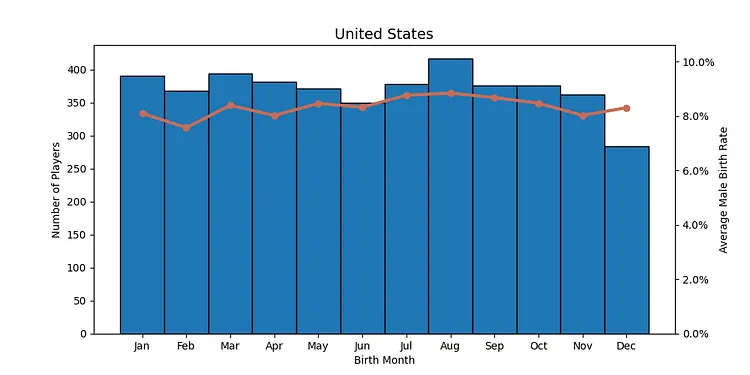
This might be more helpful ... He said "may"
So, while the US also uses the calendar year to determine age groups for youth players, the inevitably smaller pool of children willing/able to pay for youth soccer may cause the more balanced distribution we have witnessed above"
He also called for more research on this specifically.
Financial Impact: Investigate the impact of financial stability, particularly in the US, on becoming a professional soccer player. Utilize features such as income of families, location, etc. to determine if financial limitations contribute to the observed birth trends.

Anonymous
01/12/2026 00:21
Subject: Trapped/Re-aging Families, How are you having the conversation?
Degrees aren't for leaning on, like a stool while working at the mall, there for waving like a flag at a victory day parade, baby!Anonymous wrote:Anonymous wrote:So much here in such a short response. Yes, academics like talking about their work, it's a main reason why they did the work, so they can talk about it and carve it out as their space. 2nd, you don't seem to know what a published article is. And finally, you don't know me so making any assumptions about my CV or h-index would be ridiculous.Anonymous wrote:Anonymous wrote:I agree, I'm sure he would enjoy talking about it. He only had a few other unrelated data type papers so he is into the subject expert stuff except of course data presentation.Anonymous wrote:Anonymous wrote:I'm sure the dude who find incredibly fascinating that a group of randos is parsing his chart like it is the map to a treasure chest.Anonymous wrote:Anonymous wrote:In his defense, he is a data scientist, his goal is to use a few charts to show lines going up and down to show what is happening. He isn't pupporting to understand why something is happening, he is merely speculating which he freely admits. Causation isn't in his occupation.Anonymous wrote:Anonymous wrote:Anonymous wrote:Anonymous wrote:Hahahaha maybe you should read the papers so its not so easy to make you look stupid.
"So, while the US also uses the calendar year to determine age groups for youth players, the inevitably smaller pool of children willing/able to pay for youth soccer may cause the more balanced distribution we have witnessed above"
the above sentence is why the paper needed to be peer reviewed, because it suggests the author was unaware of the age registration change.
Im surprised you didnt slip rae into that excuse somehow.
It's a fascinating set of data but more needs to be done to understand why the numbers are they way they are. The author provides a theory BUT at best he doesn't address the SY/BY switch. That's a potential flaw in his reasoning and he should have at least discussed it, especially if aware, like he did with other possible reasons for the numbers.
More than fair. We're lucky he looked at it and it showed some interesting trends that confirmed a lot of other studies but raised new questions. and in a way, we're crowdsourcing some review, although I'm not sure I could say I'm a peer.
Most scientists appreciate questions and a shared desire to seek knowledge regardless of result. You create a hypothesis and test it and then see if others can repeat it. That's the peer review process and science in general.
So this is your new angle? Pathetic.
Don't like the results attack the author
I know for a fact that he has 2 more published articles than you do. Such a loser.
I'm 99% sure that you're a pompous know it all. Leaning back on a degree for validation. would go hand in hand.
Anonymous
01/12/2026 00:19
Subject: Trapped/Re-aging Families, How are you having the conversation?
Anonymous wrote:He offered he didn't extrapolate. Words matter.Anonymous wrote:Anonymous wrote:They didn't extrapolate reasons. A data scientist would take offense at that suggestion.Anonymous wrote:Anonymous wrote:Anonymous wrote:Anonymous wrote:Anonymous wrote:I really like this chart because shows that if you want you boy to play soccer professionally, you want them to be born in the oldest months of the age group when they were kids, Aug for SY and Jan for BY and you don't want them to be the youngest, Jun/July for SY and Dec for BY.Anonymous wrote:Anonymous wrote:Do you have any research indicating that RAE is a myth and the academics that have spent their lives studying it are wrong and you are right?Anonymous wrote:Anonymous wrote:If the clubs evaluated players more on skill and less on size and speed for wins, RAE wouldn't be an issue. RAE is caused by coaches gunning for wins. RAE is huge.Anonymous wrote:Anonymous wrote:Teams on their FAQ were very clear that you can't play down, and that they are trying to get the clubs to SY by playing everyone on age. And the whole point of RAE, the older part of the age group feels like winners, gets motivated and doubles down on playing soccer. Sports teams are always musical chairs.Anonymous wrote:Anonymous wrote:Of course you can't play down but it is an interesting point. Technically everybody is taking someone else's spot whatever age group they play. But there would have to be a point where because that one kid is playing, the club can put together another team. So sometimes one kid playing lets 9 or so other kids play that wouldn't have been able to. Keep playing to save those 9 or so kids.Anonymous wrote:Anonymous wrote:Hopefully kids can play on teams at some point where they are dominate to gain confidence, and other times where they are average to below average to humble them into working to get better, regardless of grade. Switching teams and trying out are skills to be learned regardless of playing on age or up.Anonymous wrote:Anonymous wrote:The relative age effect literature shows the advantages of being the oldest in an age group when young and it decreasing as the kids get older but overall having a cumulative effect so in theory if you switch age groups after the bulk of puberty it wouldn't matter because at that point there isn't as much difference between the age groups as when the kids are really young. But every kid is different and you know yours best, best of luck with yours.Anonymous wrote:Anonymous wrote:Clubs mostly said no playing up, college coaches said they don't need you to play up. Case by case. No hard and fast rules. No judgement.Anonymous wrote:Anonymous wrote:Anonymous wrote:I'm getting lost on what the argument is?
Is one side saying there is no way to play college if not playing on grade? Or is that argument that you can get recruited but exposure will be significantly limited?
And is the other side saying there is absolutely no negative impact to playing with the lower grade? Or is that argument that you can do that when young and then adjust later?
We'll be changing from BY to SY this fall. In SY 8/1-7/31 because different school districts start at different times there is a potential for the youngest in the grade (August September birthdays) to play on a club team thats a grade down from them I. school. As an example they would be the only 6th grade player on a team of 5th grade players.
This causes issues when players are looking to get recruited and play in college because 90% of recruiting occurs in players Sophmore year (official offers occur Junior year). If you're and Aug birthday Sophmore playing on a team with freshman you will get ignored / immediately discounted by college recruiters. To address the issue Aug/Sept birthdays just need to play up on a team with players their grade in school.
Theres several other issues playing down a grade creates. But college recruitment is the big one.
If the Aug or Sept birthday player isn’t good enough to play up with their grade year, then he isn’t good enough to get recruited with his grade year. Not that hard to understand!
I agree with this, however, would a player playing on age end up being at a disadvantage when they end up having to mix with their grade at showcases or when they play on grade/year their freshman year in college? Is there any literature/research that addresses this point?
This makes sense in terms of comparing physical abilities between players. I do wonder about the influence of the level of competition of a player playing with a lower grade and have to then start mixing with higher grades during their later years. Although one can argue a player playing with a lower grade could get more touches on the ball which would also have a positive impact on their development.
Nope, you're not going to steal some other kids opportunity by playing down.
Not to be a jerk because it seems like you're just starting to figure this stuff out.
But, there literally are parents and club owners that want Aug/Sept players to play down. It makes the parents with lower level players feel like winners and club owners make more money from an extra year of club.
When you call it out they get crazy just like you see here. They hate when parents take control and say enough of the nonsense.
There is no point in rae. No matter how you slice the bread there will always be winners and losers.
The problem with rae is it gives the losers something to grab onto and potentially use to leverage hurt feelings onto an A team roster spot.
Rae is a figment of loser parents imagination. Its the perfect excuse that can be used for anthing.
Yes I do
https://medium.com/@giacorada/the-fascinating-birth-trend-among-professional-soccer-players-b2a48d015e7d
Thank you.
Meme guy should re-read your response. It's a good theory.
Its your theory and not what the author indicated or relayed.
Just you trying to manipulate reality.
No, I'm not the dude who said this: "I really like this chart because shows that if you want you boy to play soccer professionally, you want them to be born in the oldest months of the age group when they were kids, Aug for SY and Jan for BY and you don't want them to be the youngest, Jun/July for SY and Dec for BY."
I just think that's a plausible interpretation. I don't think the author's is completely off base about pay-to-play. I think he might adjust this theory to address the SY/BY change.
Sorry you think you are jousting with 1 person. You are not.
Im not jousting with anyone.
The author showed using data that other countries were front end loaded with BY.
They also showed that America isnt front end loaded with birthdays evenly distributed (mostly) the entire year. They extrapolated that the reason for this was P2P clubs prioritizing $$$ over talent. Which allowed younger players to hang around longer and eventually evenly distribute across the entire year.
If you want to play a guessing game its interesting that America is distributed evenly across the whole year with all the pro players from other countries participating in MLS..
read the article
"back to our hypothesis of a strong influence from youth development programs, I’d like to offer an ulterior explanation: financial impact.
Unlike most European and South American countries, the US youth development structure is based on a “Pay-to-Play” model, which relies heavily on financial compensation from the players. In other words, it is a LOT more expensive to play for a youth team in the US than most other countries. The large yearly financial costs can deter many children from joining youth teams. "
Yes, it's the author's best guess at that moment. He's pretty much inviting for others to question/offer other theories.
Anonymous
01/12/2026 00:18
Subject: Trapped/Re-aging Families, How are you having the conversation?
Anonymous wrote:He offered he didn't extrapolate. Words matter.Anonymous wrote:Anonymous wrote:They didn't extrapolate reasons. A data scientist would take offense at that suggestion.Anonymous wrote:Anonymous wrote:Anonymous wrote:Anonymous wrote:Anonymous wrote:I really like this chart because shows that if you want you boy to play soccer professionally, you want them to be born in the oldest months of the age group when they were kids, Aug for SY and Jan for BY and you don't want them to be the youngest, Jun/July for SY and Dec for BY.Anonymous wrote:Anonymous wrote:Do you have any research indicating that RAE is a myth and the academics that have spent their lives studying it are wrong and you are right?Anonymous wrote:Anonymous wrote:If the clubs evaluated players more on skill and less on size and speed for wins, RAE wouldn't be an issue. RAE is caused by coaches gunning for wins. RAE is huge.Anonymous wrote:Anonymous wrote:Teams on their FAQ were very clear that you can't play down, and that they are trying to get the clubs to SY by playing everyone on age. And the whole point of RAE, the older part of the age group feels like winners, gets motivated and doubles down on playing soccer. Sports teams are always musical chairs.Anonymous wrote:Anonymous wrote:Of course you can't play down but it is an interesting point. Technically everybody is taking someone else's spot whatever age group they play. But there would have to be a point where because that one kid is playing, the club can put together another team. So sometimes one kid playing lets 9 or so other kids play that wouldn't have been able to. Keep playing to save those 9 or so kids.Anonymous wrote:Anonymous wrote:Hopefully kids can play on teams at some point where they are dominate to gain confidence, and other times where they are average to below average to humble them into working to get better, regardless of grade. Switching teams and trying out are skills to be learned regardless of playing on age or up.Anonymous wrote:Anonymous wrote:The relative age effect literature shows the advantages of being the oldest in an age group when young and it decreasing as the kids get older but overall having a cumulative effect so in theory if you switch age groups after the bulk of puberty it wouldn't matter because at that point there isn't as much difference between the age groups as when the kids are really young. But every kid is different and you know yours best, best of luck with yours.Anonymous wrote:Anonymous wrote:Clubs mostly said no playing up, college coaches said they don't need you to play up. Case by case. No hard and fast rules. No judgement.Anonymous wrote:Anonymous wrote:Anonymous wrote:I'm getting lost on what the argument is?
Is one side saying there is no way to play college if not playing on grade? Or is that argument that you can get recruited but exposure will be significantly limited?
And is the other side saying there is absolutely no negative impact to playing with the lower grade? Or is that argument that you can do that when young and then adjust later?
We'll be changing from BY to SY this fall. In SY 8/1-7/31 because different school districts start at different times there is a potential for the youngest in the grade (August September birthdays) to play on a club team thats a grade down from them I. school. As an example they would be the only 6th grade player on a team of 5th grade players.
This causes issues when players are looking to get recruited and play in college because 90% of recruiting occurs in players Sophmore year (official offers occur Junior year). If you're and Aug birthday Sophmore playing on a team with freshman you will get ignored / immediately discounted by college recruiters. To address the issue Aug/Sept birthdays just need to play up on a team with players their grade in school.
Theres several other issues playing down a grade creates. But college recruitment is the big one.
If the Aug or Sept birthday player isn’t good enough to play up with their grade year, then he isn’t good enough to get recruited with his grade year. Not that hard to understand!
I agree with this, however, would a player playing on age end up being at a disadvantage when they end up having to mix with their grade at showcases or when they play on grade/year their freshman year in college? Is there any literature/research that addresses this point?
This makes sense in terms of comparing physical abilities between players. I do wonder about the influence of the level of competition of a player playing with a lower grade and have to then start mixing with higher grades during their later years. Although one can argue a player playing with a lower grade could get more touches on the ball which would also have a positive impact on their development.
Nope, you're not going to steal some other kids opportunity by playing down.
Not to be a jerk because it seems like you're just starting to figure this stuff out.
But, there literally are parents and club owners that want Aug/Sept players to play down. It makes the parents with lower level players feel like winners and club owners make more money from an extra year of club.
When you call it out they get crazy just like you see here. They hate when parents take control and say enough of the nonsense.
There is no point in rae. No matter how you slice the bread there will always be winners and losers.
The problem with rae is it gives the losers something to grab onto and potentially use to leverage hurt feelings onto an A team roster spot.
Rae is a figment of loser parents imagination. Its the perfect excuse that can be used for anthing.
Yes I do
https://medium.com/@giacorada/the-fascinating-birth-trend-among-professional-soccer-players-b2a48d015e7d
Thank you.
Meme guy should re-read your response. It's a good theory.
Its your theory and not what the author indicated or relayed.
Just you trying to manipulate reality.
No, I'm not the dude who said this: "I really like this chart because shows that if you want you boy to play soccer professionally, you want them to be born in the oldest months of the age group when they were kids, Aug for SY and Jan for BY and you don't want them to be the youngest, Jun/July for SY and Dec for BY."
I just think that's a plausible interpretation. I don't think the author's is completely off base about pay-to-play. I think he might adjust this theory to address the SY/BY change.
Sorry you think you are jousting with 1 person. You are not.
Im not jousting with anyone.
The author showed using data that other countries were front end loaded with BY.
They also showed that America isnt front end loaded with birthdays evenly distributed (mostly) the entire year. They extrapolated that the reason for this was P2P clubs prioritizing $$$ over talent. Which allowed younger players to hang around longer and eventually evenly distribute across the entire year.
If you want to play a guessing game its interesting that America is distributed evenly across the whole year with all the pro players from other countries participating in MLS..
read the article
"back to our hypothesis of a strong influence from youth development programs, I’d like to offer an ulterior explanation: financial impact.
Unlike most European and South American countries, the US youth development structure is based on a “Pay-to-Play” model, which relies heavily on financial compensation from the players. In other words, it is a LOT more expensive to play for a youth team in the US than most other countries. The large yearly financial costs can deter many children from joining youth teams. "
Whatever he didnt blame RAE
Anonymous
01/12/2026 00:17
Subject: Trapped/Re-aging Families, How are you having the conversation?
He offered he didn't extrapolate. Words matter.Anonymous wrote:Anonymous wrote:They didn't extrapolate reasons. A data scientist would take offense at that suggestion.Anonymous wrote:Anonymous wrote:Anonymous wrote:Anonymous wrote:Anonymous wrote:I really like this chart because shows that if you want you boy to play soccer professionally, you want them to be born in the oldest months of the age group when they were kids, Aug for SY and Jan for BY and you don't want them to be the youngest, Jun/July for SY and Dec for BY.Anonymous wrote:Anonymous wrote:Do you have any research indicating that RAE is a myth and the academics that have spent their lives studying it are wrong and you are right?Anonymous wrote:Anonymous wrote:If the clubs evaluated players more on skill and less on size and speed for wins, RAE wouldn't be an issue. RAE is caused by coaches gunning for wins. RAE is huge.Anonymous wrote:Anonymous wrote:Teams on their FAQ were very clear that you can't play down, and that they are trying to get the clubs to SY by playing everyone on age. And the whole point of RAE, the older part of the age group feels like winners, gets motivated and doubles down on playing soccer. Sports teams are always musical chairs.Anonymous wrote:Anonymous wrote:Of course you can't play down but it is an interesting point. Technically everybody is taking someone else's spot whatever age group they play. But there would have to be a point where because that one kid is playing, the club can put together another team. So sometimes one kid playing lets 9 or so other kids play that wouldn't have been able to. Keep playing to save those 9 or so kids.Anonymous wrote:Anonymous wrote:Hopefully kids can play on teams at some point where they are dominate to gain confidence, and other times where they are average to below average to humble them into working to get better, regardless of grade. Switching teams and trying out are skills to be learned regardless of playing on age or up.Anonymous wrote:Anonymous wrote:The relative age effect literature shows the advantages of being the oldest in an age group when young and it decreasing as the kids get older but overall having a cumulative effect so in theory if you switch age groups after the bulk of puberty it wouldn't matter because at that point there isn't as much difference between the age groups as when the kids are really young. But every kid is different and you know yours best, best of luck with yours.Anonymous wrote:Anonymous wrote:Clubs mostly said no playing up, college coaches said they don't need you to play up. Case by case. No hard and fast rules. No judgement.Anonymous wrote:Anonymous wrote:Anonymous wrote:I'm getting lost on what the argument is?
Is one side saying there is no way to play college if not playing on grade? Or is that argument that you can get recruited but exposure will be significantly limited?
And is the other side saying there is absolutely no negative impact to playing with the lower grade? Or is that argument that you can do that when young and then adjust later?
We'll be changing from BY to SY this fall. In SY 8/1-7/31 because different school districts start at different times there is a potential for the youngest in the grade (August September birthdays) to play on a club team thats a grade down from them I. school. As an example they would be the only 6th grade player on a team of 5th grade players.
This causes issues when players are looking to get recruited and play in college because 90% of recruiting occurs in players Sophmore year (official offers occur Junior year). If you're and Aug birthday Sophmore playing on a team with freshman you will get ignored / immediately discounted by college recruiters. To address the issue Aug/Sept birthdays just need to play up on a team with players their grade in school.
Theres several other issues playing down a grade creates. But college recruitment is the big one.
If the Aug or Sept birthday player isn’t good enough to play up with their grade year, then he isn’t good enough to get recruited with his grade year. Not that hard to understand!
I agree with this, however, would a player playing on age end up being at a disadvantage when they end up having to mix with their grade at showcases or when they play on grade/year their freshman year in college? Is there any literature/research that addresses this point?
This makes sense in terms of comparing physical abilities between players. I do wonder about the influence of the level of competition of a player playing with a lower grade and have to then start mixing with higher grades during their later years. Although one can argue a player playing with a lower grade could get more touches on the ball which would also have a positive impact on their development.
Nope, you're not going to steal some other kids opportunity by playing down.
Not to be a jerk because it seems like you're just starting to figure this stuff out.
But, there literally are parents and club owners that want Aug/Sept players to play down. It makes the parents with lower level players feel like winners and club owners make more money from an extra year of club.
When you call it out they get crazy just like you see here. They hate when parents take control and say enough of the nonsense.
There is no point in rae. No matter how you slice the bread there will always be winners and losers.
The problem with rae is it gives the losers something to grab onto and potentially use to leverage hurt feelings onto an A team roster spot.
Rae is a figment of loser parents imagination. Its the perfect excuse that can be used for anthing.
Yes I do
https://medium.com/@giacorada/the-fascinating-birth-trend-among-professional-soccer-players-b2a48d015e7d
Thank you.
Meme guy should re-read your response. It's a good theory.
Its your theory and not what the author indicated or relayed.
Just you trying to manipulate reality.
No, I'm not the dude who said this: "I really like this chart because shows that if you want you boy to play soccer professionally, you want them to be born in the oldest months of the age group when they were kids, Aug for SY and Jan for BY and you don't want them to be the youngest, Jun/July for SY and Dec for BY."
I just think that's a plausible interpretation. I don't think the author's is completely off base about pay-to-play. I think he might adjust this theory to address the SY/BY change.
Sorry you think you are jousting with 1 person. You are not.
Im not jousting with anyone.
The author showed using data that other countries were front end loaded with BY.
They also showed that America isnt front end loaded with birthdays evenly distributed (mostly) the entire year. They extrapolated that the reason for this was P2P clubs prioritizing $$$ over talent. Which allowed younger players to hang around longer and eventually evenly distribute across the entire year.
If you want to play a guessing game its interesting that America is distributed evenly across the whole year with all the pro players from other countries participating in MLS..
read the article
"back to our hypothesis of a strong influence from youth development programs, I’d like to offer an ulterior explanation: financial impact.
Unlike most European and South American countries, the US youth development structure is based on a “Pay-to-Play” model, which relies heavily on financial compensation from the players. In other words, it is a LOT more expensive to play for a youth team in the US than most other countries. The large yearly financial costs can deter many children from joining youth teams. "
Anonymous
01/12/2026 00:16
Subject: Trapped/Re-aging Families, How are you having the conversation?
Anonymous wrote:Anonymous wrote:Anonymous wrote:Anonymous wrote:Anonymous wrote:Anonymous wrote:Anonymous wrote:Anonymous wrote:I really like this chart because shows that if you want you boy to play soccer professionally, you want them to be born in the oldest months of the age group when they were kids, Aug for SY and Jan for BY and you don't want them to be the youngest, Jun/July for SY and Dec for BY.Anonymous wrote:Anonymous wrote:Do you have any research indicating that RAE is a myth and the academics that have spent their lives studying it are wrong and you are right?Anonymous wrote:Anonymous wrote:If the clubs evaluated players more on skill and less on size and speed for wins, RAE wouldn't be an issue. RAE is caused by coaches gunning for wins. RAE is huge.Anonymous wrote:Anonymous wrote:Teams on their FAQ were very clear that you can't play down, and that they are trying to get the clubs to SY by playing everyone on age. And the whole point of RAE, the older part of the age group feels like winners, gets motivated and doubles down on playing soccer. Sports teams are always musical chairs.Anonymous wrote:Anonymous wrote:Of course you can't play down but it is an interesting point. Technically everybody is taking someone else's spot whatever age group they play. But there would have to be a point where because that one kid is playing, the club can put together another team. So sometimes one kid playing lets 9 or so other kids play that wouldn't have been able to. Keep playing to save those 9 or so kids.Anonymous wrote:Anonymous wrote:Hopefully kids can play on teams at some point where they are dominate to gain confidence, and other times where they are average to below average to humble them into working to get better, regardless of grade. Switching teams and trying out are skills to be learned regardless of playing on age or up.Anonymous wrote:Anonymous wrote:The relative age effect literature shows the advantages of being the oldest in an age group when young and it decreasing as the kids get older but overall having a cumulative effect so in theory if you switch age groups after the bulk of puberty it wouldn't matter because at that point there isn't as much difference between the age groups as when the kids are really young. But every kid is different and you know yours best, best of luck with yours.Anonymous wrote:Anonymous wrote:Clubs mostly said no playing up, college coaches said they don't need you to play up. Case by case. No hard and fast rules. No judgement.Anonymous wrote:Anonymous wrote:Anonymous wrote:I'm getting lost on what the argument is?
Is one side saying there is no way to play college if not playing on grade? Or is that argument that you can get recruited but exposure will be significantly limited?
And is the other side saying there is absolutely no negative impact to playing with the lower grade? Or is that argument that you can do that when young and then adjust later?
We'll be changing from BY to SY this fall. In SY 8/1-7/31 because different school districts start at different times there is a potential for the youngest in the grade (August September birthdays) to play on a club team thats a grade down from them I. school. As an example they would be the only 6th grade player on a team of 5th grade players.
This causes issues when players are looking to get recruited and play in college because 90% of recruiting occurs in players Sophmore year (official offers occur Junior year). If you're and Aug birthday Sophmore playing on a team with freshman you will get ignored / immediately discounted by college recruiters. To address the issue Aug/Sept birthdays just need to play up on a team with players their grade in school.
Theres several other issues playing down a grade creates. But college recruitment is the big one.
If the Aug or Sept birthday player isn’t good enough to play up with their grade year, then he isn’t good enough to get recruited with his grade year. Not that hard to understand!
I agree with this, however, would a player playing on age end up being at a disadvantage when they end up having to mix with their grade at showcases or when they play on grade/year their freshman year in college? Is there any literature/research that addresses this point?
This makes sense in terms of comparing physical abilities between players. I do wonder about the influence of the level of competition of a player playing with a lower grade and have to then start mixing with higher grades during their later years. Although one can argue a player playing with a lower grade could get more touches on the ball which would also have a positive impact on their development.
Nope, you're not going to steal some other kids opportunity by playing down.
Not to be a jerk because it seems like you're just starting to figure this stuff out.
But, there literally are parents and club owners that want Aug/Sept players to play down. It makes the parents with lower level players feel like winners and club owners make more money from an extra year of club.
When you call it out they get crazy just like you see here. They hate when parents take control and say enough of the nonsense.
There is no point in rae. No matter how you slice the bread there will always be winners and losers.
The problem with rae is it gives the losers something to grab onto and potentially use to leverage hurt feelings onto an A team roster spot.
Rae is a figment of loser parents imagination. Its the perfect excuse that can be used for anthing.
Yes I do
https://medium.com/@giacorada/the-fascinating-birth-trend-among-professional-soccer-players-b2a48d015e7d
Thank you.
Meme guy should re-read your response. It's a good theory.
Its your theory and not what the author indicated or relayed.
Just you trying to manipulate reality.
No, I'm not the dude who said this: "I really like this chart because shows that if you want you boy to play soccer professionally, you want them to be born in the oldest months of the age group when they were kids, Aug for SY and Jan for BY and you don't want them to be the youngest, Jun/July for SY and Dec for BY."
I just think that's a plausible interpretation. I don't think the author's is completely off base about pay-to-play. I think he might adjust this theory to address the SY/BY change.
Sorry you think you are jousting with 1 person. You are not.
Im not jousting with anyone.
The author showed using data that other countries were front end loaded with BY.
They also showed that America isnt front end loaded with birthdays evenly distributed (mostly) the entire year. They extrapolated that the reason for this was P2P clubs prioritizing $$$ over talent. Which allowed younger players to hang around longer and eventually evenly distribute across the entire year.
If you want to play a guessing game its interesting that America is distributed evenly across the whole year with all the pro players from other countries participating in MLS..
Yes, what he theorized is interesting but I'd buy it more if he had addressed how America has had both BY and SY. Instead, he noted how America is BY without addressing that it used to be SY fairly recently which just might affect the data set a lot. And when you look at the lowest months they just happen to be the lowest of the BY and SY systems.
Of course you would. Whatever you can think of to support your faulty hypothesis. Doing the actual work would hard.
You're doing the same because you want to argue that RAE doesn't apply in the US because of pay-to-play, so you don't want to consider flaws in his argument. You're emotionally tied to it.
I do think rae is trash
But the author thinks America is distributed evenly because of P2P and $$$ influencing who makes it to the highest levels.
Anonymous
01/12/2026 00:16
Subject: Trapped/Re-aging Families, How are you having the conversation?
He made an oversight in not knowing that the players mostly played when the youth leagues were SY. Kind of a big deal.Anonymous wrote:Anonymous wrote:Anonymous wrote:Anonymous wrote:They didn't extrapolate reasons. A data scientist would take offense at that suggestion.Anonymous wrote:Anonymous wrote:Anonymous wrote:Anonymous wrote:Anonymous wrote:I really like this chart because shows that if you want you boy to play soccer professionally, you want them to be born in the oldest months of the age group when they were kids, Aug for SY and Jan for BY and you don't want them to be the youngest, Jun/July for SY and Dec for BY.Anonymous wrote:Anonymous wrote:Do you have any research indicating that RAE is a myth and the academics that have spent their lives studying it are wrong and you are right?Anonymous wrote:Anonymous wrote:If the clubs evaluated players more on skill and less on size and speed for wins, RAE wouldn't be an issue. RAE is caused by coaches gunning for wins. RAE is huge.Anonymous wrote:Anonymous wrote:Teams on their FAQ were very clear that you can't play down, and that they are trying to get the clubs to SY by playing everyone on age. And the whole point of RAE, the older part of the age group feels like winners, gets motivated and doubles down on playing soccer. Sports teams are always musical chairs.Anonymous wrote:Anonymous wrote:Of course you can't play down but it is an interesting point. Technically everybody is taking someone else's spot whatever age group they play. But there would have to be a point where because that one kid is playing, the club can put together another team. So sometimes one kid playing lets 9 or so other kids play that wouldn't have been able to. Keep playing to save those 9 or so kids.Anonymous wrote:Anonymous wrote:Hopefully kids can play on teams at some point where they are dominate to gain confidence, and other times where they are average to below average to humble them into working to get better, regardless of grade. Switching teams and trying out are skills to be learned regardless of playing on age or up.Anonymous wrote:Anonymous wrote:The relative age effect literature shows the advantages of being the oldest in an age group when young and it decreasing as the kids get older but overall having a cumulative effect so in theory if you switch age groups after the bulk of puberty it wouldn't matter because at that point there isn't as much difference between the age groups as when the kids are really young. But every kid is different and you know yours best, best of luck with yours.Anonymous wrote:Anonymous wrote:Clubs mostly said no playing up, college coaches said they don't need you to play up. Case by case. No hard and fast rules. No judgement.Anonymous wrote:Anonymous wrote:Anonymous wrote:I'm getting lost on what the argument is?
Is one side saying there is no way to play college if not playing on grade? Or is that argument that you can get recruited but exposure will be significantly limited?
And is the other side saying there is absolutely no negative impact to playing with the lower grade? Or is that argument that you can do that when young and then adjust later?
We'll be changing from BY to SY this fall. In SY 8/1-7/31 because different school districts start at different times there is a potential for the youngest in the grade (August September birthdays) to play on a club team thats a grade down from them I. school. As an example they would be the only 6th grade player on a team of 5th grade players.
This causes issues when players are looking to get recruited and play in college because 90% of recruiting occurs in players Sophmore year (official offers occur Junior year). If you're and Aug birthday Sophmore playing on a team with freshman you will get ignored / immediately discounted by college recruiters. To address the issue Aug/Sept birthdays just need to play up on a team with players their grade in school.
Theres several other issues playing down a grade creates. But college recruitment is the big one.
If the Aug or Sept birthday player isn’t good enough to play up with their grade year, then he isn’t good enough to get recruited with his grade year. Not that hard to understand!
I agree with this, however, would a player playing on age end up being at a disadvantage when they end up having to mix with their grade at showcases or when they play on grade/year their freshman year in college? Is there any literature/research that addresses this point?
This makes sense in terms of comparing physical abilities between players. I do wonder about the influence of the level of competition of a player playing with a lower grade and have to then start mixing with higher grades during their later years. Although one can argue a player playing with a lower grade could get more touches on the ball which would also have a positive impact on their development.
Nope, you're not going to steal some other kids opportunity by playing down.
Not to be a jerk because it seems like you're just starting to figure this stuff out.
But, there literally are parents and club owners that want Aug/Sept players to play down. It makes the parents with lower level players feel like winners and club owners make more money from an extra year of club.
When you call it out they get crazy just like you see here. They hate when parents take control and say enough of the nonsense.
There is no point in rae. No matter how you slice the bread there will always be winners and losers.
The problem with rae is it gives the losers something to grab onto and potentially use to leverage hurt feelings onto an A team roster spot.
Rae is a figment of loser parents imagination. Its the perfect excuse that can be used for anthing.
Yes I do
https://medium.com/@giacorada/the-fascinating-birth-trend-among-professional-soccer-players-b2a48d015e7d
Thank you.
Meme guy should re-read your response. It's a good theory.
Its your theory and not what the author indicated or relayed.
Just you trying to manipulate reality.
No, I'm not the dude who said this: "I really like this chart because shows that if you want you boy to play soccer professionally, you want them to be born in the oldest months of the age group when they were kids, Aug for SY and Jan for BY and you don't want them to be the youngest, Jun/July for SY and Dec for BY."
I just think that's a plausible interpretation. I don't think the author's is completely off base about pay-to-play. I think he might adjust this theory to address the SY/BY change.
Sorry you think you are jousting with 1 person. You are not.
Im not jousting with anyone.
The author showed using data that other countries were front end loaded with BY.
They also showed that America isnt front end loaded with birthdays evenly distributed (mostly) the entire year. They extrapolated that the reason for this was P2P clubs prioritizing $$$ over talent. Which allowed younger players to hang around longer and eventually evenly distribute across the entire year.
If you want to play a guessing game its interesting that America is distributed evenly across the whole year with all the pro players from other countries participating in MLS..
read the article
"back to our hypothesis of a strong influence from youth development programs, I’d like to offer an ulterior explanation: financial impact.
Unlike most European and South American countries, the US youth development structure is based on a “Pay-to-Play” model, which relies heavily on financial compensation from the players. In other words, it is a LOT more expensive to play for a youth team in the US than most other countries. The large yearly financial costs can deter many children from joining youth teams. "
Keep reading
Unlike most European and South American countries, the US youth development structure is based on a “Pay-to-Play” model, which relies heavily on financial compensation from the players. In other words, it is a LOT more expensive to play for a youth team in the US than most other countries. The large yearly financial costs can deter many children from joining youth teams. So, while the US also uses the calendar year to determine age groups for youth players, the inevitably smaller pool of children willing/able to pay for youth soccer may cause the more balanced distribution we have witnessed above"
No clue what. you're trying to relay
Anonymous
01/12/2026 00:16
Subject: Trapped/Re-aging Families, How are you having the conversation?
Anonymous wrote:Anonymous wrote:Anonymous wrote:Anonymous wrote:They didn't extrapolate reasons. A data scientist would take offense at that suggestion.Anonymous wrote:Anonymous wrote:Anonymous wrote:Anonymous wrote:Anonymous wrote:I really like this chart because shows that if you want you boy to play soccer professionally, you want them to be born in the oldest months of the age group when they were kids, Aug for SY and Jan for BY and you don't want them to be the youngest, Jun/July for SY and Dec for BY.Anonymous wrote:Anonymous wrote:Do you have any research indicating that RAE is a myth and the academics that have spent their lives studying it are wrong and you are right?Anonymous wrote:Anonymous wrote:If the clubs evaluated players more on skill and less on size and speed for wins, RAE wouldn't be an issue. RAE is caused by coaches gunning for wins. RAE is huge.Anonymous wrote:Anonymous wrote:Teams on their FAQ were very clear that you can't play down, and that they are trying to get the clubs to SY by playing everyone on age. And the whole point of RAE, the older part of the age group feels like winners, gets motivated and doubles down on playing soccer. Sports teams are always musical chairs.Anonymous wrote:Anonymous wrote:Of course you can't play down but it is an interesting point. Technically everybody is taking someone else's spot whatever age group they play. But there would have to be a point where because that one kid is playing, the club can put together another team. So sometimes one kid playing lets 9 or so other kids play that wouldn't have been able to. Keep playing to save those 9 or so kids.Anonymous wrote:Anonymous wrote:Hopefully kids can play on teams at some point where they are dominate to gain confidence, and other times where they are average to below average to humble them into working to get better, regardless of grade. Switching teams and trying out are skills to be learned regardless of playing on age or up.Anonymous wrote:Anonymous wrote:The relative age effect literature shows the advantages of being the oldest in an age group when young and it decreasing as the kids get older but overall having a cumulative effect so in theory if you switch age groups after the bulk of puberty it wouldn't matter because at that point there isn't as much difference between the age groups as when the kids are really young. But every kid is different and you know yours best, best of luck with yours.Anonymous wrote:Anonymous wrote:Clubs mostly said no playing up, college coaches said they don't need you to play up. Case by case. No hard and fast rules. No judgement.Anonymous wrote:Anonymous wrote:Anonymous wrote:I'm getting lost on what the argument is?
Is one side saying there is no way to play college if not playing on grade? Or is that argument that you can get recruited but exposure will be significantly limited?
And is the other side saying there is absolutely no negative impact to playing with the lower grade? Or is that argument that you can do that when young and then adjust later?
We'll be changing from BY to SY this fall. In SY 8/1-7/31 because different school districts start at different times there is a potential for the youngest in the grade (August September birthdays) to play on a club team thats a grade down from them I. school. As an example they would be the only 6th grade player on a team of 5th grade players.
This causes issues when players are looking to get recruited and play in college because 90% of recruiting occurs in players Sophmore year (official offers occur Junior year). If you're and Aug birthday Sophmore playing on a team with freshman you will get ignored / immediately discounted by college recruiters. To address the issue Aug/Sept birthdays just need to play up on a team with players their grade in school.
Theres several other issues playing down a grade creates. But college recruitment is the big one.
If the Aug or Sept birthday player isn’t good enough to play up with their grade year, then he isn’t good enough to get recruited with his grade year. Not that hard to understand!
I agree with this, however, would a player playing on age end up being at a disadvantage when they end up having to mix with their grade at showcases or when they play on grade/year their freshman year in college? Is there any literature/research that addresses this point?
This makes sense in terms of comparing physical abilities between players. I do wonder about the influence of the level of competition of a player playing with a lower grade and have to then start mixing with higher grades during their later years. Although one can argue a player playing with a lower grade could get more touches on the ball which would also have a positive impact on their development.
Nope, you're not going to steal some other kids opportunity by playing down.
Not to be a jerk because it seems like you're just starting to figure this stuff out.
But, there literally are parents and club owners that want Aug/Sept players to play down. It makes the parents with lower level players feel like winners and club owners make more money from an extra year of club.
When you call it out they get crazy just like you see here. They hate when parents take control and say enough of the nonsense.
There is no point in rae. No matter how you slice the bread there will always be winners and losers.
The problem with rae is it gives the losers something to grab onto and potentially use to leverage hurt feelings onto an A team roster spot.
Rae is a figment of loser parents imagination. Its the perfect excuse that can be used for anthing.
Yes I do
https://medium.com/@giacorada/the-fascinating-birth-trend-among-professional-soccer-players-b2a48d015e7d
Thank you.
Meme guy should re-read your response. It's a good theory.
Its your theory and not what the author indicated or relayed.
Just you trying to manipulate reality.
No, I'm not the dude who said this: "I really like this chart because shows that if you want you boy to play soccer professionally, you want them to be born in the oldest months of the age group when they were kids, Aug for SY and Jan for BY and you don't want them to be the youngest, Jun/July for SY and Dec for BY."
I just think that's a plausible interpretation. I don't think the author's is completely off base about pay-to-play. I think he might adjust this theory to address the SY/BY change.
Sorry you think you are jousting with 1 person. You are not.
Im not jousting with anyone.
The author showed using data that other countries were front end loaded with BY.
They also showed that America isnt front end loaded with birthdays evenly distributed (mostly) the entire year. They extrapolated that the reason for this was P2P clubs prioritizing $$$ over talent. Which allowed younger players to hang around longer and eventually evenly distribute across the entire year.
If you want to play a guessing game its interesting that America is distributed evenly across the whole year with all the pro players from other countries participating in MLS..
read the article
"back to our hypothesis of a strong influence from youth development programs, I’d like to offer an ulterior explanation: financial impact.
Unlike most European and South American countries, the US youth development structure is based on a “Pay-to-Play” model, which relies heavily on financial compensation from the players. In other words, it is a LOT more expensive to play for a youth team in the US than most other countries. The large yearly financial costs can deter many children from joining youth teams. "
Keep reading
Unlike most European and South American countries, the US youth development structure is based on a “Pay-to-Play” model, which relies heavily on financial compensation from the players. In other words, it is a LOT more expensive to play for a youth team in the US than most other countries. The large yearly financial costs can deter many children from joining youth teams. So, while the US also uses the calendar year to determine age groups for youth players, the inevitably smaller pool of children willing/able to pay for youth soccer may cause the more balanced distribution we have witnessed above"
No clue what. you're trying to relay
It's what he said about the US age registration system -- which was more complicated than just BY for those players. It's a potential flaw that should be explored.
Anonymous
01/12/2026 00:14
Subject: Trapped/Re-aging Families, How are you having the conversation?
Anonymous wrote:Anonymous wrote:Anonymous wrote:Anonymous wrote:They didn't extrapolate reasons. A data scientist would take offense at that suggestion.Anonymous wrote:Anonymous wrote:Anonymous wrote:Anonymous wrote:Anonymous wrote:I really like this chart because shows that if you want you boy to play soccer professionally, you want them to be born in the oldest months of the age group when they were kids, Aug for SY and Jan for BY and you don't want them to be the youngest, Jun/July for SY and Dec for BY.Anonymous wrote:Anonymous wrote:Do you have any research indicating that RAE is a myth and the academics that have spent their lives studying it are wrong and you are right?Anonymous wrote:Anonymous wrote:If the clubs evaluated players more on skill and less on size and speed for wins, RAE wouldn't be an issue. RAE is caused by coaches gunning for wins. RAE is huge.Anonymous wrote:Anonymous wrote:Teams on their FAQ were very clear that you can't play down, and that they are trying to get the clubs to SY by playing everyone on age. And the whole point of RAE, the older part of the age group feels like winners, gets motivated and doubles down on playing soccer. Sports teams are always musical chairs.Anonymous wrote:Anonymous wrote:Of course you can't play down but it is an interesting point. Technically everybody is taking someone else's spot whatever age group they play. But there would have to be a point where because that one kid is playing, the club can put together another team. So sometimes one kid playing lets 9 or so other kids play that wouldn't have been able to. Keep playing to save those 9 or so kids.Anonymous wrote:Anonymous wrote:Hopefully kids can play on teams at some point where they are dominate to gain confidence, and other times where they are average to below average to humble them into working to get better, regardless of grade. Switching teams and trying out are skills to be learned regardless of playing on age or up.Anonymous wrote:Anonymous wrote:The relative age effect literature shows the advantages of being the oldest in an age group when young and it decreasing as the kids get older but overall having a cumulative effect so in theory if you switch age groups after the bulk of puberty it wouldn't matter because at that point there isn't as much difference between the age groups as when the kids are really young. But every kid is different and you know yours best, best of luck with yours.Anonymous wrote:Anonymous wrote:Clubs mostly said no playing up, college coaches said they don't need you to play up. Case by case. No hard and fast rules. No judgement.Anonymous wrote:Anonymous wrote:Anonymous wrote:I'm getting lost on what the argument is?
Is one side saying there is no way to play college if not playing on grade? Or is that argument that you can get recruited but exposure will be significantly limited?
And is the other side saying there is absolutely no negative impact to playing with the lower grade? Or is that argument that you can do that when young and then adjust later?
We'll be changing from BY to SY this fall. In SY 8/1-7/31 because different school districts start at different times there is a potential for the youngest in the grade (August September birthdays) to play on a club team thats a grade down from them I. school. As an example they would be the only 6th grade player on a team of 5th grade players.
This causes issues when players are looking to get recruited and play in college because 90% of recruiting occurs in players Sophmore year (official offers occur Junior year). If you're and Aug birthday Sophmore playing on a team with freshman you will get ignored / immediately discounted by college recruiters. To address the issue Aug/Sept birthdays just need to play up on a team with players their grade in school.
Theres several other issues playing down a grade creates. But college recruitment is the big one.
If the Aug or Sept birthday player isn’t good enough to play up with their grade year, then he isn’t good enough to get recruited with his grade year. Not that hard to understand!
I agree with this, however, would a player playing on age end up being at a disadvantage when they end up having to mix with their grade at showcases or when they play on grade/year their freshman year in college? Is there any literature/research that addresses this point?
This makes sense in terms of comparing physical abilities between players. I do wonder about the influence of the level of competition of a player playing with a lower grade and have to then start mixing with higher grades during their later years. Although one can argue a player playing with a lower grade could get more touches on the ball which would also have a positive impact on their development.
Nope, you're not going to steal some other kids opportunity by playing down.
Not to be a jerk because it seems like you're just starting to figure this stuff out.
But, there literally are parents and club owners that want Aug/Sept players to play down. It makes the parents with lower level players feel like winners and club owners make more money from an extra year of club.
When you call it out they get crazy just like you see here. They hate when parents take control and say enough of the nonsense.
There is no point in rae. No matter how you slice the bread there will always be winners and losers.
The problem with rae is it gives the losers something to grab onto and potentially use to leverage hurt feelings onto an A team roster spot.
Rae is a figment of loser parents imagination. Its the perfect excuse that can be used for anthing.
Yes I do
https://medium.com/@giacorada/the-fascinating-birth-trend-among-professional-soccer-players-b2a48d015e7d
Thank you.
Meme guy should re-read your response. It's a good theory.
Its your theory and not what the author indicated or relayed.
Just you trying to manipulate reality.
No, I'm not the dude who said this: "I really like this chart because shows that if you want you boy to play soccer professionally, you want them to be born in the oldest months of the age group when they were kids, Aug for SY and Jan for BY and you don't want them to be the youngest, Jun/July for SY and Dec for BY."
I just think that's a plausible interpretation. I don't think the author's is completely off base about pay-to-play. I think he might adjust this theory to address the SY/BY change.
Sorry you think you are jousting with 1 person. You are not.
Im not jousting with anyone.
The author showed using data that other countries were front end loaded with BY.
They also showed that America isnt front end loaded with birthdays evenly distributed (mostly) the entire year. They extrapolated that the reason for this was P2P clubs prioritizing $$$ over talent. Which allowed younger players to hang around longer and eventually evenly distribute across the entire year.
If you want to play a guessing game its interesting that America is distributed evenly across the whole year with all the pro players from other countries participating in MLS..
read the article
"back to our hypothesis of a strong influence from youth development programs, I’d like to offer an ulterior explanation: financial impact.
Unlike most European and South American countries, the US youth development structure is based on a “Pay-to-Play” model, which relies heavily on financial compensation from the players. In other words, it is a LOT more expensive to play for a youth team in the US than most other countries. The large yearly financial costs can deter many children from joining youth teams. "
Keep reading
Unlike most European and South American countries, the US youth development structure is based on a “Pay-to-Play” model, which relies heavily on financial compensation from the players. In other words, it is a LOT more expensive to play for a youth team in the US than most other countries. The large yearly financial costs can deter many children from joining youth teams. So, while the US also uses the calendar year to determine age groups for youth players, the inevitably smaller pool of children willing/able to pay for youth soccer may cause the more balanced distribution we have witnessed above"
No clue what. you're trying to relay
All the bold part does is prove that the author believes $$$ is the reason America is different than all other countries.
Anonymous
01/12/2026 00:12
Subject: Trapped/Re-aging Families, How are you having the conversation?
Anonymous wrote:Anonymous wrote:Anonymous wrote:Anonymous wrote:Anonymous wrote:Anonymous wrote:Anonymous wrote:I really like this chart because shows that if you want you boy to play soccer professionally, you want them to be born in the oldest months of the age group when they were kids, Aug for SY and Jan for BY and you don't want them to be the youngest, Jun/July for SY and Dec for BY.Anonymous wrote:Anonymous wrote:Do you have any research indicating that RAE is a myth and the academics that have spent their lives studying it are wrong and you are right?Anonymous wrote:Anonymous wrote:If the clubs evaluated players more on skill and less on size and speed for wins, RAE wouldn't be an issue. RAE is caused by coaches gunning for wins. RAE is huge.Anonymous wrote:Anonymous wrote:Teams on their FAQ were very clear that you can't play down, and that they are trying to get the clubs to SY by playing everyone on age. And the whole point of RAE, the older part of the age group feels like winners, gets motivated and doubles down on playing soccer. Sports teams are always musical chairs.Anonymous wrote:Anonymous wrote:Of course you can't play down but it is an interesting point. Technically everybody is taking someone else's spot whatever age group they play. But there would have to be a point where because that one kid is playing, the club can put together another team. So sometimes one kid playing lets 9 or so other kids play that wouldn't have been able to. Keep playing to save those 9 or so kids.Anonymous wrote:Anonymous wrote:Hopefully kids can play on teams at some point where they are dominate to gain confidence, and other times where they are average to below average to humble them into working to get better, regardless of grade. Switching teams and trying out are skills to be learned regardless of playing on age or up.Anonymous wrote:Anonymous wrote:The relative age effect literature shows the advantages of being the oldest in an age group when young and it decreasing as the kids get older but overall having a cumulative effect so in theory if you switch age groups after the bulk of puberty it wouldn't matter because at that point there isn't as much difference between the age groups as when the kids are really young. But every kid is different and you know yours best, best of luck with yours.Anonymous wrote:Anonymous wrote:Clubs mostly said no playing up, college coaches said they don't need you to play up. Case by case. No hard and fast rules. No judgement.Anonymous wrote:Anonymous wrote:Anonymous wrote:I'm getting lost on what the argument is?
Is one side saying there is no way to play college if not playing on grade? Or is that argument that you can get recruited but exposure will be significantly limited?
And is the other side saying there is absolutely no negative impact to playing with the lower grade? Or is that argument that you can do that when young and then adjust later?
We'll be changing from BY to SY this fall. In SY 8/1-7/31 because different school districts start at different times there is a potential for the youngest in the grade (August September birthdays) to play on a club team thats a grade down from them I. school. As an example they would be the only 6th grade player on a team of 5th grade players.
This causes issues when players are looking to get recruited and play in college because 90% of recruiting occurs in players Sophmore year (official offers occur Junior year). If you're and Aug birthday Sophmore playing on a team with freshman you will get ignored / immediately discounted by college recruiters. To address the issue Aug/Sept birthdays just need to play up on a team with players their grade in school.
Theres several other issues playing down a grade creates. But college recruitment is the big one.
If the Aug or Sept birthday player isn’t good enough to play up with their grade year, then he isn’t good enough to get recruited with his grade year. Not that hard to understand!
I agree with this, however, would a player playing on age end up being at a disadvantage when they end up having to mix with their grade at showcases or when they play on grade/year their freshman year in college? Is there any literature/research that addresses this point?
This makes sense in terms of comparing physical abilities between players. I do wonder about the influence of the level of competition of a player playing with a lower grade and have to then start mixing with higher grades during their later years. Although one can argue a player playing with a lower grade could get more touches on the ball which would also have a positive impact on their development.
Nope, you're not going to steal some other kids opportunity by playing down.
Not to be a jerk because it seems like you're just starting to figure this stuff out.
But, there literally are parents and club owners that want Aug/Sept players to play down. It makes the parents with lower level players feel like winners and club owners make more money from an extra year of club.
When you call it out they get crazy just like you see here. They hate when parents take control and say enough of the nonsense.
There is no point in rae. No matter how you slice the bread there will always be winners and losers.
The problem with rae is it gives the losers something to grab onto and potentially use to leverage hurt feelings onto an A team roster spot.
Rae is a figment of loser parents imagination. Its the perfect excuse that can be used for anthing.
Yes I do
https://medium.com/@giacorada/the-fascinating-birth-trend-among-professional-soccer-players-b2a48d015e7d
Thank you.
Meme guy should re-read your response. It's a good theory.
Its your theory and not what the author indicated or relayed.
Just you trying to manipulate reality.
No, I'm not the dude who said this: "I really like this chart because shows that if you want you boy to play soccer professionally, you want them to be born in the oldest months of the age group when they were kids, Aug for SY and Jan for BY and you don't want them to be the youngest, Jun/July for SY and Dec for BY."
I just think that's a plausible interpretation. I don't think the author's is completely off base about pay-to-play. I think he might adjust this theory to address the SY/BY change.
Sorry you think you are jousting with 1 person. You are not.
Im not jousting with anyone.
The author showed using data that other countries were front end loaded with BY.
They also showed that America isnt front end loaded with birthdays evenly distributed (mostly) the entire year. They extrapolated that the reason for this was P2P clubs prioritizing $$$ over talent. Which allowed younger players to hang around longer and eventually evenly distribute across the entire year.
If you want to play a guessing game its interesting that America is distributed evenly across the whole year with all the pro players from other countries participating in MLS..
Yes, what he theorized is interesting but I'd buy it more if he had addressed how America has had both BY and SY. Instead, he noted how America is BY without addressing that it used to be SY fairly recently which just might affect the data set a lot. And when you look at the lowest months they just happen to be the lowest of the BY and SY systems.
Of course you would. Whatever you can think of to support your faulty hypothesis. Doing the actual work would hard.
You're doing the same because you want to argue that RAE doesn't apply in the US because of pay-to-play, so you don't want to consider flaws in his argument. You're emotionally tied to it.
Anonymous
01/12/2026 00:11
Subject: Trapped/Re-aging Families, How are you having the conversation?
Anonymous wrote:Anonymous wrote:Anonymous wrote:They didn't extrapolate reasons. A data scientist would take offense at that suggestion.Anonymous wrote:Anonymous wrote:Anonymous wrote:Anonymous wrote:Anonymous wrote:I really like this chart because shows that if you want you boy to play soccer professionally, you want them to be born in the oldest months of the age group when they were kids, Aug for SY and Jan for BY and you don't want them to be the youngest, Jun/July for SY and Dec for BY.Anonymous wrote:Anonymous wrote:Do you have any research indicating that RAE is a myth and the academics that have spent their lives studying it are wrong and you are right?Anonymous wrote:Anonymous wrote:If the clubs evaluated players more on skill and less on size and speed for wins, RAE wouldn't be an issue. RAE is caused by coaches gunning for wins. RAE is huge.Anonymous wrote:Anonymous wrote:Teams on their FAQ were very clear that you can't play down, and that they are trying to get the clubs to SY by playing everyone on age. And the whole point of RAE, the older part of the age group feels like winners, gets motivated and doubles down on playing soccer. Sports teams are always musical chairs.Anonymous wrote:Anonymous wrote:Of course you can't play down but it is an interesting point. Technically everybody is taking someone else's spot whatever age group they play. But there would have to be a point where because that one kid is playing, the club can put together another team. So sometimes one kid playing lets 9 or so other kids play that wouldn't have been able to. Keep playing to save those 9 or so kids.Anonymous wrote:Anonymous wrote:Hopefully kids can play on teams at some point where they are dominate to gain confidence, and other times where they are average to below average to humble them into working to get better, regardless of grade. Switching teams and trying out are skills to be learned regardless of playing on age or up.Anonymous wrote:Anonymous wrote:The relative age effect literature shows the advantages of being the oldest in an age group when young and it decreasing as the kids get older but overall having a cumulative effect so in theory if you switch age groups after the bulk of puberty it wouldn't matter because at that point there isn't as much difference between the age groups as when the kids are really young. But every kid is different and you know yours best, best of luck with yours.Anonymous wrote:Anonymous wrote:Clubs mostly said no playing up, college coaches said they don't need you to play up. Case by case. No hard and fast rules. No judgement.Anonymous wrote:Anonymous wrote:Anonymous wrote:I'm getting lost on what the argument is?
Is one side saying there is no way to play college if not playing on grade? Or is that argument that you can get recruited but exposure will be significantly limited?
And is the other side saying there is absolutely no negative impact to playing with the lower grade? Or is that argument that you can do that when young and then adjust later?
We'll be changing from BY to SY this fall. In SY 8/1-7/31 because different school districts start at different times there is a potential for the youngest in the grade (August September birthdays) to play on a club team thats a grade down from them I. school. As an example they would be the only 6th grade player on a team of 5th grade players.
This causes issues when players are looking to get recruited and play in college because 90% of recruiting occurs in players Sophmore year (official offers occur Junior year). If you're and Aug birthday Sophmore playing on a team with freshman you will get ignored / immediately discounted by college recruiters. To address the issue Aug/Sept birthdays just need to play up on a team with players their grade in school.
Theres several other issues playing down a grade creates. But college recruitment is the big one.
If the Aug or Sept birthday player isn’t good enough to play up with their grade year, then he isn’t good enough to get recruited with his grade year. Not that hard to understand!
I agree with this, however, would a player playing on age end up being at a disadvantage when they end up having to mix with their grade at showcases or when they play on grade/year their freshman year in college? Is there any literature/research that addresses this point?
This makes sense in terms of comparing physical abilities between players. I do wonder about the influence of the level of competition of a player playing with a lower grade and have to then start mixing with higher grades during their later years. Although one can argue a player playing with a lower grade could get more touches on the ball which would also have a positive impact on their development.
Nope, you're not going to steal some other kids opportunity by playing down.
Not to be a jerk because it seems like you're just starting to figure this stuff out.
But, there literally are parents and club owners that want Aug/Sept players to play down. It makes the parents with lower level players feel like winners and club owners make more money from an extra year of club.
When you call it out they get crazy just like you see here. They hate when parents take control and say enough of the nonsense.
There is no point in rae. No matter how you slice the bread there will always be winners and losers.
The problem with rae is it gives the losers something to grab onto and potentially use to leverage hurt feelings onto an A team roster spot.
Rae is a figment of loser parents imagination. Its the perfect excuse that can be used for anthing.
Yes I do
https://medium.com/@giacorada/the-fascinating-birth-trend-among-professional-soccer-players-b2a48d015e7d
Thank you.
Meme guy should re-read your response. It's a good theory.
Its your theory and not what the author indicated or relayed.
Just you trying to manipulate reality.
No, I'm not the dude who said this: "I really like this chart because shows that if you want you boy to play soccer professionally, you want them to be born in the oldest months of the age group when they were kids, Aug for SY and Jan for BY and you don't want them to be the youngest, Jun/July for SY and Dec for BY."
I just think that's a plausible interpretation. I don't think the author's is completely off base about pay-to-play. I think he might adjust this theory to address the SY/BY change.
Sorry you think you are jousting with 1 person. You are not.
Im not jousting with anyone.
The author showed using data that other countries were front end loaded with BY.
They also showed that America isnt front end loaded with birthdays evenly distributed (mostly) the entire year. They extrapolated that the reason for this was P2P clubs prioritizing $$$ over talent. Which allowed younger players to hang around longer and eventually evenly distribute across the entire year.
If you want to play a guessing game its interesting that America is distributed evenly across the whole year with all the pro players from other countries participating in MLS..
read the article
"back to our hypothesis of a strong influence from youth development programs, I’d like to offer an ulterior explanation: financial impact.
Unlike most European and South American countries, the US youth development structure is based on a “Pay-to-Play” model, which relies heavily on financial compensation from the players. In other words, it is a LOT more expensive to play for a youth team in the US than most other countries. The large yearly financial costs can deter many children from joining youth teams. "
Keep reading
Unlike most European and South American countries, the US youth development structure is based on a “Pay-to-Play” model, which relies heavily on financial compensation from the players. In other words, it is a LOT more expensive to play for a youth team in the US than most other countries. The large yearly financial costs can deter many children from joining youth teams. So, while the US also uses the calendar year to determine age groups for youth players, the inevitably smaller pool of children willing/able to pay for youth soccer may cause the more balanced distribution we have witnessed above"
No clue what. you're trying to relay
Anonymous
01/12/2026 00:10
Subject: Trapped/Re-aging Families, How are you having the conversation?
Anonymous wrote:Anonymous wrote:Anonymous wrote:Anonymous wrote:Anonymous wrote:Anonymous wrote:I really like this chart because shows that if you want you boy to play soccer professionally, you want them to be born in the oldest months of the age group when they were kids, Aug for SY and Jan for BY and you don't want them to be the youngest, Jun/July for SY and Dec for BY.Anonymous wrote:Anonymous wrote:Do you have any research indicating that RAE is a myth and the academics that have spent their lives studying it are wrong and you are right?Anonymous wrote:Anonymous wrote:If the clubs evaluated players more on skill and less on size and speed for wins, RAE wouldn't be an issue. RAE is caused by coaches gunning for wins. RAE is huge.Anonymous wrote:Anonymous wrote:Teams on their FAQ were very clear that you can't play down, and that they are trying to get the clubs to SY by playing everyone on age. And the whole point of RAE, the older part of the age group feels like winners, gets motivated and doubles down on playing soccer. Sports teams are always musical chairs.Anonymous wrote:Anonymous wrote:Of course you can't play down but it is an interesting point. Technically everybody is taking someone else's spot whatever age group they play. But there would have to be a point where because that one kid is playing, the club can put together another team. So sometimes one kid playing lets 9 or so other kids play that wouldn't have been able to. Keep playing to save those 9 or so kids.Anonymous wrote:Anonymous wrote:Hopefully kids can play on teams at some point where they are dominate to gain confidence, and other times where they are average to below average to humble them into working to get better, regardless of grade. Switching teams and trying out are skills to be learned regardless of playing on age or up.Anonymous wrote:Anonymous wrote:The relative age effect literature shows the advantages of being the oldest in an age group when young and it decreasing as the kids get older but overall having a cumulative effect so in theory if you switch age groups after the bulk of puberty it wouldn't matter because at that point there isn't as much difference between the age groups as when the kids are really young. But every kid is different and you know yours best, best of luck with yours.Anonymous wrote:Anonymous wrote:Clubs mostly said no playing up, college coaches said they don't need you to play up. Case by case. No hard and fast rules. No judgement.Anonymous wrote:Anonymous wrote:Anonymous wrote:I'm getting lost on what the argument is?
Is one side saying there is no way to play college if not playing on grade? Or is that argument that you can get recruited but exposure will be significantly limited?
And is the other side saying there is absolutely no negative impact to playing with the lower grade? Or is that argument that you can do that when young and then adjust later?
We'll be changing from BY to SY this fall. In SY 8/1-7/31 because different school districts start at different times there is a potential for the youngest in the grade (August September birthdays) to play on a club team thats a grade down from them I. school. As an example they would be the only 6th grade player on a team of 5th grade players.
This causes issues when players are looking to get recruited and play in college because 90% of recruiting occurs in players Sophmore year (official offers occur Junior year). If you're and Aug birthday Sophmore playing on a team with freshman you will get ignored / immediately discounted by college recruiters. To address the issue Aug/Sept birthdays just need to play up on a team with players their grade in school.
Theres several other issues playing down a grade creates. But college recruitment is the big one.
If the Aug or Sept birthday player isn’t good enough to play up with their grade year, then he isn’t good enough to get recruited with his grade year. Not that hard to understand!
I agree with this, however, would a player playing on age end up being at a disadvantage when they end up having to mix with their grade at showcases or when they play on grade/year their freshman year in college? Is there any literature/research that addresses this point?
This makes sense in terms of comparing physical abilities between players. I do wonder about the influence of the level of competition of a player playing with a lower grade and have to then start mixing with higher grades during their later years. Although one can argue a player playing with a lower grade could get more touches on the ball which would also have a positive impact on their development.
Nope, you're not going to steal some other kids opportunity by playing down.
Not to be a jerk because it seems like you're just starting to figure this stuff out.
But, there literally are parents and club owners that want Aug/Sept players to play down. It makes the parents with lower level players feel like winners and club owners make more money from an extra year of club.
When you call it out they get crazy just like you see here. They hate when parents take control and say enough of the nonsense.
There is no point in rae. No matter how you slice the bread there will always be winners and losers.
The problem with rae is it gives the losers something to grab onto and potentially use to leverage hurt feelings onto an A team roster spot.
Rae is a figment of loser parents imagination. Its the perfect excuse that can be used for anthing.
Yes I do
https://medium.com/@giacorada/the-fascinating-birth-trend-among-professional-soccer-players-b2a48d015e7d
Thank you.
Meme guy should re-read your response. It's a good theory.
Its your theory and not what the author indicated or relayed.
Just you trying to manipulate reality.
No, I'm not the dude who said this: "I really like this chart because shows that if you want you boy to play soccer professionally, you want them to be born in the oldest months of the age group when they were kids, Aug for SY and Jan for BY and you don't want them to be the youngest, Jun/July for SY and Dec for BY."
I just think that's a plausible interpretation. I don't think the author's is completely off base about pay-to-play. I think he might adjust this theory to address the SY/BY change.
Sorry you think you are jousting with 1 person. You are not.
Im not jousting with anyone.
The author showed using data that other countries were front end loaded with BY.
They also showed that America isnt front end loaded with birthdays evenly distributed (mostly) the entire year. They extrapolated that the reason for this was P2P clubs prioritizing $$$ over talent. Which allowed younger players to hang around longer and eventually evenly distribute across the entire year.
If you want to play a guessing game its interesting that America is distributed evenly across the whole year with all the pro players from other countries participating in MLS..
Yes, what he theorized is interesting but I'd buy it more if he had addressed how America has had both BY and SY. Instead, he noted how America is BY without addressing that it used to be SY fairly recently which just might affect the data set a lot. And when you look at the lowest months they just happen to be the lowest of the BY and SY systems.
Of course you would. Whatever you can think of to support your faulty hypothesis. Doing the actual work would hard.
Anonymous
01/12/2026 00:10
Subject: Trapped/Re-aging Families, How are you having the conversation?
Anonymous wrote:Anonymous wrote:They didn't extrapolate reasons. A data scientist would take offense at that suggestion.Anonymous wrote:Anonymous wrote:Anonymous wrote:Anonymous wrote:Anonymous wrote:I really like this chart because shows that if you want you boy to play soccer professionally, you want them to be born in the oldest months of the age group when they were kids, Aug for SY and Jan for BY and you don't want them to be the youngest, Jun/July for SY and Dec for BY.Anonymous wrote:Anonymous wrote:Do you have any research indicating that RAE is a myth and the academics that have spent their lives studying it are wrong and you are right?Anonymous wrote:Anonymous wrote:If the clubs evaluated players more on skill and less on size and speed for wins, RAE wouldn't be an issue. RAE is caused by coaches gunning for wins. RAE is huge.Anonymous wrote:Anonymous wrote:Teams on their FAQ were very clear that you can't play down, and that they are trying to get the clubs to SY by playing everyone on age. And the whole point of RAE, the older part of the age group feels like winners, gets motivated and doubles down on playing soccer. Sports teams are always musical chairs.Anonymous wrote:Anonymous wrote:Of course you can't play down but it is an interesting point. Technically everybody is taking someone else's spot whatever age group they play. But there would have to be a point where because that one kid is playing, the club can put together another team. So sometimes one kid playing lets 9 or so other kids play that wouldn't have been able to. Keep playing to save those 9 or so kids.Anonymous wrote:Anonymous wrote:Hopefully kids can play on teams at some point where they are dominate to gain confidence, and other times where they are average to below average to humble them into working to get better, regardless of grade. Switching teams and trying out are skills to be learned regardless of playing on age or up.Anonymous wrote:Anonymous wrote:The relative age effect literature shows the advantages of being the oldest in an age group when young and it decreasing as the kids get older but overall having a cumulative effect so in theory if you switch age groups after the bulk of puberty it wouldn't matter because at that point there isn't as much difference between the age groups as when the kids are really young. But every kid is different and you know yours best, best of luck with yours.Anonymous wrote:Anonymous wrote:Clubs mostly said no playing up, college coaches said they don't need you to play up. Case by case. No hard and fast rules. No judgement.Anonymous wrote:Anonymous wrote:Anonymous wrote:I'm getting lost on what the argument is?
Is one side saying there is no way to play college if not playing on grade? Or is that argument that you can get recruited but exposure will be significantly limited?
And is the other side saying there is absolutely no negative impact to playing with the lower grade? Or is that argument that you can do that when young and then adjust later?
We'll be changing from BY to SY this fall. In SY 8/1-7/31 because different school districts start at different times there is a potential for the youngest in the grade (August September birthdays) to play on a club team thats a grade down from them I. school. As an example they would be the only 6th grade player on a team of 5th grade players.
This causes issues when players are looking to get recruited and play in college because 90% of recruiting occurs in players Sophmore year (official offers occur Junior year). If you're and Aug birthday Sophmore playing on a team with freshman you will get ignored / immediately discounted by college recruiters. To address the issue Aug/Sept birthdays just need to play up on a team with players their grade in school.
Theres several other issues playing down a grade creates. But college recruitment is the big one.
If the Aug or Sept birthday player isn’t good enough to play up with their grade year, then he isn’t good enough to get recruited with his grade year. Not that hard to understand!
I agree with this, however, would a player playing on age end up being at a disadvantage when they end up having to mix with their grade at showcases or when they play on grade/year their freshman year in college? Is there any literature/research that addresses this point?
This makes sense in terms of comparing physical abilities between players. I do wonder about the influence of the level of competition of a player playing with a lower grade and have to then start mixing with higher grades during their later years. Although one can argue a player playing with a lower grade could get more touches on the ball which would also have a positive impact on their development.
Nope, you're not going to steal some other kids opportunity by playing down.
Not to be a jerk because it seems like you're just starting to figure this stuff out.
But, there literally are parents and club owners that want Aug/Sept players to play down. It makes the parents with lower level players feel like winners and club owners make more money from an extra year of club.
When you call it out they get crazy just like you see here. They hate when parents take control and say enough of the nonsense.
There is no point in rae. No matter how you slice the bread there will always be winners and losers.
The problem with rae is it gives the losers something to grab onto and potentially use to leverage hurt feelings onto an A team roster spot.
Rae is a figment of loser parents imagination. Its the perfect excuse that can be used for anthing.
Yes I do
https://medium.com/@giacorada/the-fascinating-birth-trend-among-professional-soccer-players-b2a48d015e7d
Thank you.
Meme guy should re-read your response. It's a good theory.
Its your theory and not what the author indicated or relayed.
Just you trying to manipulate reality.
No, I'm not the dude who said this: "I really like this chart because shows that if you want you boy to play soccer professionally, you want them to be born in the oldest months of the age group when they were kids, Aug for SY and Jan for BY and you don't want them to be the youngest, Jun/July for SY and Dec for BY."
I just think that's a plausible interpretation. I don't think the author's is completely off base about pay-to-play. I think he might adjust this theory to address the SY/BY change.
Sorry you think you are jousting with 1 person. You are not.
Im not jousting with anyone.
The author showed using data that other countries were front end loaded with BY.
They also showed that America isnt front end loaded with birthdays evenly distributed (mostly) the entire year. They extrapolated that the reason for this was P2P clubs prioritizing $$$ over talent. Which allowed younger players to hang around longer and eventually evenly distribute across the entire year.
If you want to play a guessing game its interesting that America is distributed evenly across the whole year with all the pro players from other countries participating in MLS..
read the article
"back to our hypothesis of a strong influence from youth development programs, I’d like to offer an ulterior explanation: financial impact.
Unlike most European and South American countries, the US youth development structure is based on a “Pay-to-Play” model, which relies heavily on financial compensation from the players. In other words, it is a LOT more expensive to play for a youth team in the US than most other countries. The large yearly financial costs can deter many children from joining youth teams. "
Keep reading
Unlike most European and South American countries, the US youth development structure is based on a “Pay-to-Play” model, which relies heavily on financial compensation from the players. In other words, it is a LOT more expensive to play for a youth team in the US than most other countries. The large yearly financial costs can deter many children from joining youth teams. So, while the US also uses the calendar year to determine age groups for youth players, the inevitably smaller pool of children willing/able to pay for youth soccer may cause the more balanced distribution we have witnessed above"
Anonymous
01/12/2026 00:07
Subject: Trapped/Re-aging Families, How are you having the conversation?
Anonymous wrote:They didn't extrapolate reasons. A data scientist would take offense at that suggestion.Anonymous wrote:Anonymous wrote:Anonymous wrote:Anonymous wrote:Anonymous wrote:I really like this chart because shows that if you want you boy to play soccer professionally, you want them to be born in the oldest months of the age group when they were kids, Aug for SY and Jan for BY and you don't want them to be the youngest, Jun/July for SY and Dec for BY.Anonymous wrote:Anonymous wrote:Do you have any research indicating that RAE is a myth and the academics that have spent their lives studying it are wrong and you are right?Anonymous wrote:Anonymous wrote:If the clubs evaluated players more on skill and less on size and speed for wins, RAE wouldn't be an issue. RAE is caused by coaches gunning for wins. RAE is huge.Anonymous wrote:Anonymous wrote:Teams on their FAQ were very clear that you can't play down, and that they are trying to get the clubs to SY by playing everyone on age. And the whole point of RAE, the older part of the age group feels like winners, gets motivated and doubles down on playing soccer. Sports teams are always musical chairs.Anonymous wrote:Anonymous wrote:Of course you can't play down but it is an interesting point. Technically everybody is taking someone else's spot whatever age group they play. But there would have to be a point where because that one kid is playing, the club can put together another team. So sometimes one kid playing lets 9 or so other kids play that wouldn't have been able to. Keep playing to save those 9 or so kids.Anonymous wrote:Anonymous wrote:Hopefully kids can play on teams at some point where they are dominate to gain confidence, and other times where they are average to below average to humble them into working to get better, regardless of grade. Switching teams and trying out are skills to be learned regardless of playing on age or up.Anonymous wrote:Anonymous wrote:The relative age effect literature shows the advantages of being the oldest in an age group when young and it decreasing as the kids get older but overall having a cumulative effect so in theory if you switch age groups after the bulk of puberty it wouldn't matter because at that point there isn't as much difference between the age groups as when the kids are really young. But every kid is different and you know yours best, best of luck with yours.Anonymous wrote:Anonymous wrote:Clubs mostly said no playing up, college coaches said they don't need you to play up. Case by case. No hard and fast rules. No judgement.Anonymous wrote:Anonymous wrote:Anonymous wrote:I'm getting lost on what the argument is?
Is one side saying there is no way to play college if not playing on grade? Or is that argument that you can get recruited but exposure will be significantly limited?
And is the other side saying there is absolutely no negative impact to playing with the lower grade? Or is that argument that you can do that when young and then adjust later?
We'll be changing from BY to SY this fall. In SY 8/1-7/31 because different school districts start at different times there is a potential for the youngest in the grade (August September birthdays) to play on a club team thats a grade down from them I. school. As an example they would be the only 6th grade player on a team of 5th grade players.
This causes issues when players are looking to get recruited and play in college because 90% of recruiting occurs in players Sophmore year (official offers occur Junior year). If you're and Aug birthday Sophmore playing on a team with freshman you will get ignored / immediately discounted by college recruiters. To address the issue Aug/Sept birthdays just need to play up on a team with players their grade in school.
Theres several other issues playing down a grade creates. But college recruitment is the big one.
If the Aug or Sept birthday player isn’t good enough to play up with their grade year, then he isn’t good enough to get recruited with his grade year. Not that hard to understand!
I agree with this, however, would a player playing on age end up being at a disadvantage when they end up having to mix with their grade at showcases or when they play on grade/year their freshman year in college? Is there any literature/research that addresses this point?
This makes sense in terms of comparing physical abilities between players. I do wonder about the influence of the level of competition of a player playing with a lower grade and have to then start mixing with higher grades during their later years. Although one can argue a player playing with a lower grade could get more touches on the ball which would also have a positive impact on their development.
Nope, you're not going to steal some other kids opportunity by playing down.
Not to be a jerk because it seems like you're just starting to figure this stuff out.
But, there literally are parents and club owners that want Aug/Sept players to play down. It makes the parents with lower level players feel like winners and club owners make more money from an extra year of club.
When you call it out they get crazy just like you see here. They hate when parents take control and say enough of the nonsense.
There is no point in rae. No matter how you slice the bread there will always be winners and losers.
The problem with rae is it gives the losers something to grab onto and potentially use to leverage hurt feelings onto an A team roster spot.
Rae is a figment of loser parents imagination. Its the perfect excuse that can be used for anthing.
Yes I do
https://medium.com/@giacorada/the-fascinating-birth-trend-among-professional-soccer-players-b2a48d015e7d
Thank you.
Meme guy should re-read your response. It's a good theory.
Its your theory and not what the author indicated or relayed.
Just you trying to manipulate reality.
No, I'm not the dude who said this: "I really like this chart because shows that if you want you boy to play soccer professionally, you want them to be born in the oldest months of the age group when they were kids, Aug for SY and Jan for BY and you don't want them to be the youngest, Jun/July for SY and Dec for BY."
I just think that's a plausible interpretation. I don't think the author's is completely off base about pay-to-play. I think he might adjust this theory to address the SY/BY change.
Sorry you think you are jousting with 1 person. You are not.
Im not jousting with anyone.
The author showed using data that other countries were front end loaded with BY.
They also showed that America isnt front end loaded with birthdays evenly distributed (mostly) the entire year. They extrapolated that the reason for this was P2P clubs prioritizing $$$ over talent. Which allowed younger players to hang around longer and eventually evenly distribute across the entire year.
If you want to play a guessing game its interesting that America is distributed evenly across the whole year with all the pro players from other countries participating in MLS..
read the article
"back to our hypothesis of a strong influence from youth development programs, I’d like to offer an ulterior explanation: financial impact.
Unlike most European and South American countries, the US youth development structure is based on a “Pay-to-Play” model, which relies heavily on financial compensation from the players. In other words, it is a LOT more expensive to play for a youth team in the US than most other countries. The large yearly financial costs can deter many children from joining youth teams. "
Anonymous
01/12/2026 00:06
Subject: Trapped/Re-aging Families, How are you having the conversation?
Anonymous wrote:Anonymous wrote:Anonymous wrote:Anonymous wrote:Anonymous wrote:I really like this chart because shows that if you want you boy to play soccer professionally, you want them to be born in the oldest months of the age group when they were kids, Aug for SY and Jan for BY and you don't want them to be the youngest, Jun/July for SY and Dec for BY.Anonymous wrote:Anonymous wrote:Do you have any research indicating that RAE is a myth and the academics that have spent their lives studying it are wrong and you are right?Anonymous wrote:Anonymous wrote:If the clubs evaluated players more on skill and less on size and speed for wins, RAE wouldn't be an issue. RAE is caused by coaches gunning for wins. RAE is huge.Anonymous wrote:Anonymous wrote:Teams on their FAQ were very clear that you can't play down, and that they are trying to get the clubs to SY by playing everyone on age. And the whole point of RAE, the older part of the age group feels like winners, gets motivated and doubles down on playing soccer. Sports teams are always musical chairs.Anonymous wrote:Anonymous wrote:Of course you can't play down but it is an interesting point. Technically everybody is taking someone else's spot whatever age group they play. But there would have to be a point where because that one kid is playing, the club can put together another team. So sometimes one kid playing lets 9 or so other kids play that wouldn't have been able to. Keep playing to save those 9 or so kids.Anonymous wrote:Anonymous wrote:Hopefully kids can play on teams at some point where they are dominate to gain confidence, and other times where they are average to below average to humble them into working to get better, regardless of grade. Switching teams and trying out are skills to be learned regardless of playing on age or up.Anonymous wrote:Anonymous wrote:The relative age effect literature shows the advantages of being the oldest in an age group when young and it decreasing as the kids get older but overall having a cumulative effect so in theory if you switch age groups after the bulk of puberty it wouldn't matter because at that point there isn't as much difference between the age groups as when the kids are really young. But every kid is different and you know yours best, best of luck with yours.Anonymous wrote:Anonymous wrote:Clubs mostly said no playing up, college coaches said they don't need you to play up. Case by case. No hard and fast rules. No judgement.Anonymous wrote:Anonymous wrote:Anonymous wrote:I'm getting lost on what the argument is?
Is one side saying there is no way to play college if not playing on grade? Or is that argument that you can get recruited but exposure will be significantly limited?
And is the other side saying there is absolutely no negative impact to playing with the lower grade? Or is that argument that you can do that when young and then adjust later?
We'll be changing from BY to SY this fall. In SY 8/1-7/31 because different school districts start at different times there is a potential for the youngest in the grade (August September birthdays) to play on a club team thats a grade down from them I. school. As an example they would be the only 6th grade player on a team of 5th grade players.
This causes issues when players are looking to get recruited and play in college because 90% of recruiting occurs in players Sophmore year (official offers occur Junior year). If you're and Aug birthday Sophmore playing on a team with freshman you will get ignored / immediately discounted by college recruiters. To address the issue Aug/Sept birthdays just need to play up on a team with players their grade in school.
Theres several other issues playing down a grade creates. But college recruitment is the big one.
If the Aug or Sept birthday player isn’t good enough to play up with their grade year, then he isn’t good enough to get recruited with his grade year. Not that hard to understand!
I agree with this, however, would a player playing on age end up being at a disadvantage when they end up having to mix with their grade at showcases or when they play on grade/year their freshman year in college? Is there any literature/research that addresses this point?
This makes sense in terms of comparing physical abilities between players. I do wonder about the influence of the level of competition of a player playing with a lower grade and have to then start mixing with higher grades during their later years. Although one can argue a player playing with a lower grade could get more touches on the ball which would also have a positive impact on their development.
Nope, you're not going to steal some other kids opportunity by playing down.
Not to be a jerk because it seems like you're just starting to figure this stuff out.
But, there literally are parents and club owners that want Aug/Sept players to play down. It makes the parents with lower level players feel like winners and club owners make more money from an extra year of club.
When you call it out they get crazy just like you see here. They hate when parents take control and say enough of the nonsense.
There is no point in rae. No matter how you slice the bread there will always be winners and losers.
The problem with rae is it gives the losers something to grab onto and potentially use to leverage hurt feelings onto an A team roster spot.
Rae is a figment of loser parents imagination. Its the perfect excuse that can be used for anthing.
Yes I do
https://medium.com/@giacorada/the-fascinating-birth-trend-among-professional-soccer-players-b2a48d015e7d
Thank you.
Meme guy should re-read your response. It's a good theory.
Its your theory and not what the author indicated or relayed.
Just you trying to manipulate reality.
No, I'm not the dude who said this: "I really like this chart because shows that if you want you boy to play soccer professionally, you want them to be born in the oldest months of the age group when they were kids, Aug for SY and Jan for BY and you don't want them to be the youngest, Jun/July for SY and Dec for BY."
I just think that's a plausible interpretation. I don't think the author's is completely off base about pay-to-play. I think he might adjust this theory to address the SY/BY change.
Sorry you think you are jousting with 1 person. You are not.
Im not jousting with anyone.
The author showed using data that other countries were front end loaded with BY.
They also showed that America isnt front end loaded with birthdays evenly distributed (mostly) the entire year. They extrapolated that the reason for this was P2P clubs prioritizing $$$ over talent. Which allowed younger players to hang around longer and eventually evenly distribute across the entire year.
If you want to play a guessing game its interesting that America is distributed evenly across the whole year with all the pro players from other countries participating in MLS..
Yes, what he theorized is interesting but I'd buy it more if he had addressed how America has had both BY and SY. Instead, he noted how America is BY without addressing that it used to be SY fairly recently which just might affect the data set a lot. And when you look at the lowest months they just happen to be the lowest of the BY and SY systems.