Anonymous
 09/03/2023 18:39
Subject: Re:Why so many human development indices favor Scandinavian countries?
09/03/2023 18:39
Subject: Re:Why so many human development indices favor Scandinavian countries?
Anonymous wrote:Anonymous wrote:Anonymous wrote:Anonymous wrote:Anonymous wrote:Anonymous wrote:I really don't think this is a difficult analysis. A strong social safety net including universal healthcare and a guaranteed pension, plus strong worker's rights including guaranteed sick leave, vacation leave, parental leave, etc. And generally high government standards against corruption couple with a belief that government is in existence to work for the people.
Homogeneity definitely helps, but the issue with immigrants isn't just that they look different. It's that many of them don't want to assimilate and embrace the culture of their adopted country.
It's funny how Americans are so quick to jump to "they don't want to assimilate and embrace the culture of their adopted country" while forgetting that they probably have an immigrant Italian nonna who came to America at 20 years old yet went to the grave at 80 still barely speaking a lick of English. They forget that in the 1920s most of the major cities in America had newspapers that were published in German, or Italian, or Polish, or a number of other languages, reflecting the language and culture of the immigrants. Assimilation doesn't happen overnight. It didn't for your own ancestors, either.
It's funny how you focused on one sentence and then went on an irrelevant rant.
No, it's funny how you are butthurt for being slapped down over your irrelevant rant about "failure to assimilate."
I'm not butthurt or slapped down. Immigrant integration is important to the majority native born population who largely support the policies that allow Scandinavian countries to place high on human development indices. That's just a fact.
It's a fact that immigrants to the US also didn't assimilate overnight. And many others in this thread have chimed in with even more details about that, to make it absolutely clear. That makes your insinuation that it's somehow a problem in Scandinavia. Just accept the L on that point and move on.
Yeah, I don't think I'm the one needing to accept the L here...

Anonymous
09/03/2023 18:33
Subject: Why so many human development indices favor Scandinavian countries?
All of the Scandinavian countries have had a total fertility rate well below replacement rate for decades. They are in the process of becoming Japan unless immigration can somehow save them (looks doubtful at this point). Great societies, but they are simply in the process of aging along the way to eventually dying out. Norway probably ends up faring the best because of the natural resources, but I
Anonymous
09/03/2023 18:27
Subject: Why so many human development indices favor Scandinavian countries?
Anonymous wrote:Anonymous wrote:Scandinavians have amazing social services. They don't worry about healthcare, retirement or college costs.
That is because of the homogenous society - shared values, shared culture, everyone pays into the system.
A country cannot have these nice things if there is unlimited illegal immigration, people that do not pay into the system and divergent cultures.
I know that vexes a lot of progressives, but there a lot to be said about homogeneity.
Where do you get this weird notion that immigrants to Scandinavia aren't paying in?
Anonymous
09/03/2023 18:26
Subject: Re:Why so many human development indices favor Scandinavian countries?
Anonymous wrote:Anonymous wrote:Anonymous wrote:Anonymous wrote:Anonymous wrote:I really don't think this is a difficult analysis. A strong social safety net including universal healthcare and a guaranteed pension, plus strong worker's rights including guaranteed sick leave, vacation leave, parental leave, etc. And generally high government standards against corruption couple with a belief that government is in existence to work for the people.
Homogeneity definitely helps, but the issue with immigrants isn't just that they look different. It's that many of them don't want to assimilate and embrace the culture of their adopted country.
It's funny how Americans are so quick to jump to "they don't want to assimilate and embrace the culture of their adopted country" while forgetting that they probably have an immigrant Italian nonna who came to America at 20 years old yet went to the grave at 80 still barely speaking a lick of English. They forget that in the 1920s most of the major cities in America had newspapers that were published in German, or Italian, or Polish, or a number of other languages, reflecting the language and culture of the immigrants. Assimilation doesn't happen overnight. It didn't for your own ancestors, either.
It's funny how you focused on one sentence and then went on an irrelevant rant.
No, it's funny how you are butthurt for being slapped down over your irrelevant rant about "failure to assimilate."
I'm not butthurt or slapped down. Immigrant integration is important to the majority native born population who largely support the policies that allow Scandinavian countries to place high on human development indices. That's just a fact.
It's a fact that immigrants to the US also didn't assimilate overnight. And many others in this thread have chimed in with even more details about that, to make it absolutely clear. That makes your insinuation that it's somehow a problem in Scandinavia. Just accept the L on that point and move on.
Anonymous
09/03/2023 17:40
Subject: Why so many human development indices favor Scandinavian countries?
this is part of itAnonymous wrote:Scandinavians have amazing social services. They don't worry about healthcare, retirement or college costs.
Anonymous
09/03/2023 17:37
Subject: Why so many human development indices favor Scandinavian countries?
Anonymous wrote:Scandinavians have amazing social services. They don't worry about healthcare, retirement or college costs.
That is because of the homogenous society - shared values, shared culture, everyone pays into the system.
A country cannot have these nice things if there is unlimited illegal immigration, people that do not pay into the system and divergent cultures.
I know that vexes a lot of progressives, but there a lot to be said about homogeneity.
Anonymous
09/03/2023 17:27
Subject: Re:Why so many human development indices favor Scandinavian countries?
Anonymous wrote:Anonymous wrote:Anonymous wrote:Anonymous wrote:I really don't think this is a difficult analysis. A strong social safety net including universal healthcare and a guaranteed pension, plus strong worker's rights including guaranteed sick leave, vacation leave, parental leave, etc. And generally high government standards against corruption couple with a belief that government is in existence to work for the people.
Homogeneity definitely helps, but the issue with immigrants isn't just that they look different. It's that many of them don't want to assimilate and embrace the culture of their adopted country.
It's funny how Americans are so quick to jump to "they don't want to assimilate and embrace the culture of their adopted country" while forgetting that they probably have an immigrant Italian nonna who came to America at 20 years old yet went to the grave at 80 still barely speaking a lick of English. They forget that in the 1920s most of the major cities in America had newspapers that were published in German, or Italian, or Polish, or a number of other languages, reflecting the language and culture of the immigrants. Assimilation doesn't happen overnight. It didn't for your own ancestors, either.
It's funny how you focused on one sentence and then went on an irrelevant rant.
No, it's funny how you are butthurt for being slapped down over your irrelevant rant about "failure to assimilate."
I'm not butthurt or slapped down. Immigrant integration is important to the majority native born population who largely support the policies that allow Scandinavian countries to place high on human development indices. That's just a fact.
Anonymous
09/03/2023 16:46
Subject: Re:Why so many human development indices favor Scandinavian countries?
Anonymous wrote:Anonymous wrote:Anonymous wrote:I really don't think this is a difficult analysis. A strong social safety net including universal healthcare and a guaranteed pension, plus strong worker's rights including guaranteed sick leave, vacation leave, parental leave, etc. And generally high government standards against corruption couple with a belief that government is in existence to work for the people.
Homogeneity definitely helps, but the issue with immigrants isn't just that they look different. It's that many of them don't want to assimilate and embrace the culture of their adopted country.
It's funny how Americans are so quick to jump to "they don't want to assimilate and embrace the culture of their adopted country" while forgetting that they probably have an immigrant Italian nonna who came to America at 20 years old yet went to the grave at 80 still barely speaking a lick of English. They forget that in the 1920s most of the major cities in America had newspapers that were published in German, or Italian, or Polish, or a number of other languages, reflecting the language and culture of the immigrants. Assimilation doesn't happen overnight. It didn't for your own ancestors, either.
It's funny how you focused on one sentence and then went on an irrelevant rant.
No, it's funny how you are butthurt for being slapped down over your irrelevant rant about "failure to assimilate."
Anonymous
09/03/2023 16:44
Subject: Re:Why so many human development indices favor Scandinavian countries?
Anonymous wrote:Anonymous wrote:Anonymous wrote:Anonymous wrote:I really don't think this is a difficult analysis. A strong social safety net including universal healthcare and a guaranteed pension, plus strong worker's rights including guaranteed sick leave, vacation leave, parental leave, etc. And generally high government standards against corruption couple with a belief that government is in existence to work for the people.
Homogeneity definitely helps, but the issue with immigrants isn't just that they look different. It's that many of them don't want to assimilate and embrace the culture of their adopted country.
It's funny how Americans are so quick to jump to "they don't want to assimilate and embrace the culture of their adopted country" while forgetting that they probably have an immigrant Italian nonna who came to America at 20 years old yet went to the grave at 80 still barely speaking a lick of English. They forget that in the 1920s most of the major cities in America had newspapers that were published in German, or Italian, or Polish, or a number of other languages, reflecting the language and culture of the immigrants. Assimilation doesn't happen overnight. It didn't for your own ancestors, either.
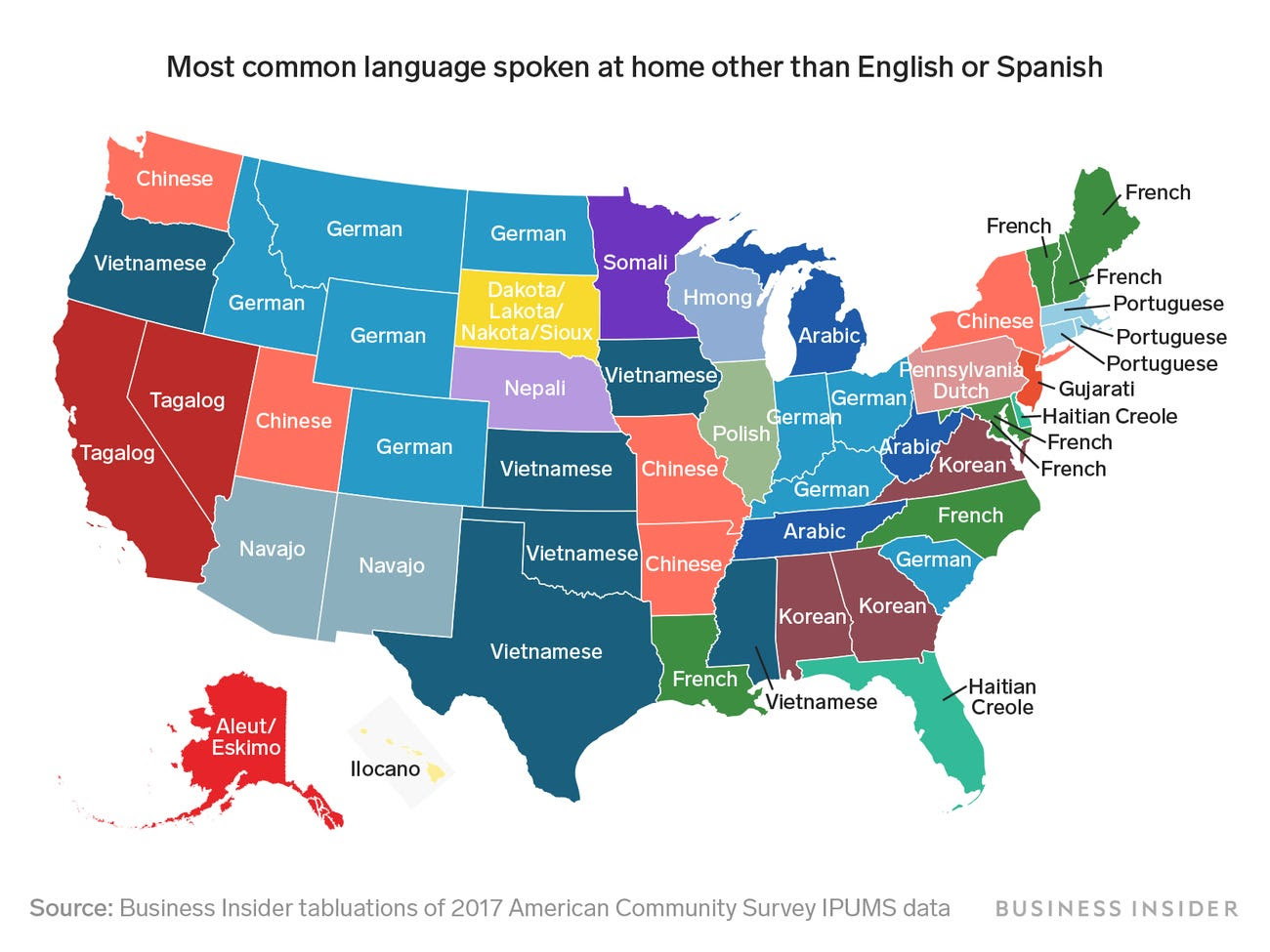
Not really. Very few immigrants in the early 20th century failed to learn at least spoken English. Relatively few passed their native tongue to the next generation.
According to this, those German and Polish immigrants have passed down their language:
How do you figure that from this map?
Anonymous
09/03/2023 16:31
Subject: Why so many human development indices favor Scandinavian countries?
I think it's because they don't have a systematically disadvantaged underclass.
Anonymous
09/03/2023 16:31
Subject: Re:Why so many human development indices favor Scandinavian countries?
Anonymous wrote:Anonymous wrote:Anonymous wrote:I really don't think this is a difficult analysis. A strong social safety net including universal healthcare and a guaranteed pension, plus strong worker's rights including guaranteed sick leave, vacation leave, parental leave, etc. And generally high government standards against corruption couple with a belief that government is in existence to work for the people.
Homogeneity definitely helps, but the issue with immigrants isn't just that they look different. It's that many of them don't want to assimilate and embrace the culture of their adopted country.
It's funny how Americans are so quick to jump to "they don't want to assimilate and embrace the culture of their adopted country" while forgetting that they probably have an immigrant Italian nonna who came to America at 20 years old yet went to the grave at 80 still barely speaking a lick of English. They forget that in the 1920s most of the major cities in America had newspapers that were published in German, or Italian, or Polish, or a number of other languages, reflecting the language and culture of the immigrants. Assimilation doesn't happen overnight. It didn't for your own ancestors, either.
Not really. Very few immigrants in the early 20th century failed to learn at least spoken English. Relatively few passed their native tongue to the next generation.
This is so crazy wrong!
 I’m a descendant of primarily Norwegian and German ancestors and I live in the upper Midwest. Norwegian language newspapers lived on into the 1960s in some areas (Decorah, Iowa represent). White immigrants ghettoized themselves if they weren’t ghettoized by others and their kids learned the language, too. My grandpa and his siblings were all born here to German immigrants and they all spoke fluent German.
Anonymous
09/03/2023 16:29
Subject: Re:Why so many human development indices favor Scandinavian countries?
Anonymous wrote:Anonymous wrote:Cue the racists who’ll say it’s because they are homogeneous countries. I have family in both Sweden and Finland and have traveled extensively in both. They are not as homogeneous as people think. Also, not as happy as these “studies” show.
Right, let's see how well Scandinavian countries do when their leftists force them to take in over one million illegal immigrants per year like they do in the US.
Well that would be a weird amount of people to land there, wouldn’t it, considering Norway’s population isn’t even 6 million. They already have about a million immigrants living there, so I’d say as a percentage of their country, they’re not doing too poorly.
Norway also offers free language classes to all immigrants. Here, “rightists” only offer scorn and literal spit.
Anonymous
09/03/2023 16:13
Subject: Why so many human development indices favor Scandinavian countries?
They just don’t worship greed the way other countries do. They don’t have billionaire oligarchs, private equity, and other sociopaths looting their economies and they don’t let the oligarchs and billionaire a$$holes from other countries buy up properties in their cities and coastal areas. You cannot buy residential property in Denmark if you are not a resident.
Anonymous
09/03/2023 15:50
Subject: Re:Why so many human development indices favor Scandinavian countries?
Anonymous wrote:Anonymous wrote:Anonymous wrote:I really don't think this is a difficult analysis. A strong social safety net including universal healthcare and a guaranteed pension, plus strong worker's rights including guaranteed sick leave, vacation leave, parental leave, etc. And generally high government standards against corruption couple with a belief that government is in existence to work for the people.
Homogeneity definitely helps, but the issue with immigrants isn't just that they look different. It's that many of them don't want to assimilate and embrace the culture of their adopted country.
It's funny how Americans are so quick to jump to "they don't want to assimilate and embrace the culture of their adopted country" while forgetting that they probably have an immigrant Italian nonna who came to America at 20 years old yet went to the grave at 80 still barely speaking a lick of English. They forget that in the 1920s most of the major cities in America had newspapers that were published in German, or Italian, or Polish, or a number of other languages, reflecting the language and culture of the immigrants. Assimilation doesn't happen overnight. It didn't for your own ancestors, either.
Not really. Very few immigrants in the early 20th century failed to learn at least spoken English. Relatively few passed their native tongue to the next generation.
According to this, those German and Polish immigrants have passed down their language:
Anonymous
09/03/2023 15:43
Subject: Re:Why so many human development indices favor Scandinavian countries?
Anonymous wrote:These indices compare countries that vary enormously by size. When one leaves out countries under 25 million, though still small vis-a-vis the U.S., the U.S. ranks quite high.
In addition, having a national health care system tends to be rated very heavily in these indices, regardless of what the outcomes of that system are, and the U.S. does not have one. Educational performance in grades K-12 also tends to be weighted very heavily and U.S. performance on the international tests is lackluster.
What do you mean regardless of outcome? All is takes is Google to learn that healthcare outcomes are better, and usually for a lot less money than we spend as a country. The only thing that's difficult to understand is why Americans are so intent on refusing to accept that truth.