Anonymous
 08/23/2017 16:09
Subject: MCPS Alg1 PARCC scores for MS went down
08/23/2017 16:09
Subject: MCPS Alg1 PARCC scores for MS went down
Anonymous wrote:I'm a professional test prep tutor. There is a difference between teaching kids Algebra throughout the year and re-teaching/reviewing with them in the few weeks leading up to the exam so they can do well.
My DS took Algebra this past year. It was well-taught with good enrichment, but the preparation for PARCC Algebra was terrible.
I also think the PARCC Algebra exam is poorly constructed and so many skill sets are conflated in 1 question that it is not really a good measure of "proficiency". Also, IMO, the reading level on PARCC is too high or the questionwriting sucks. Many bright kids come out of PARCC saying they didn't understand what a question was asking.
This is true across the board for PARCC. Our teachers have said that several of the brightest kids often "overthink" the questions - - in other words they understand that there is more than one way to interpret the question the way it was written, or it incorrectly uses a term, etc. I've seen it in practice questions that get sent home and DH and totally understand why the kids aren't sure what is being asked and why the correct answer seems wrong.

Anonymous
08/23/2017 15:54
Subject: MCPS Alg1 PARCC scores for MS went down
Anonymous wrote:I'm a professional test prep tutor. There is a difference between teaching kids Algebra throughout the year and re-teaching/reviewing with them in the few weeks leading up to the exam so they can do well.
My DS took Algebra this past year. It was well-taught with good enrichment, but the preparation for PARCC Algebra was terrible.
I also think the PARCC Algebra exam is poorly constructed and so many skill sets are conflated in 1 question that it is not really a good measure of "proficiency". Also, IMO, the reading level on PARCC is too high or the questionwriting sucks. Many bright kids come out of PARCC saying they didn't understand what a question was asking.
OP here. Thanks. I think this more likely explains why this year's scores were lower than previous years. Perhaps this year's prep was really poorly done?
I can't understand why kids this year would tank a standardized tests since kids have been taking such tests for years, whether it's PARCC or MSA.
I do think PARCC is probably harder than MSAs.
Anonymous
08/23/2017 15:47
Subject: MCPS Alg1 PARCC scores for MS went down
Anonymous wrote:Can someone explain MS math options? I though Alg. 1 in 8th grade was advanced, but looking at this it seems that some MS kids are taking Alg. 1 in 7th. Is that true at all schools?
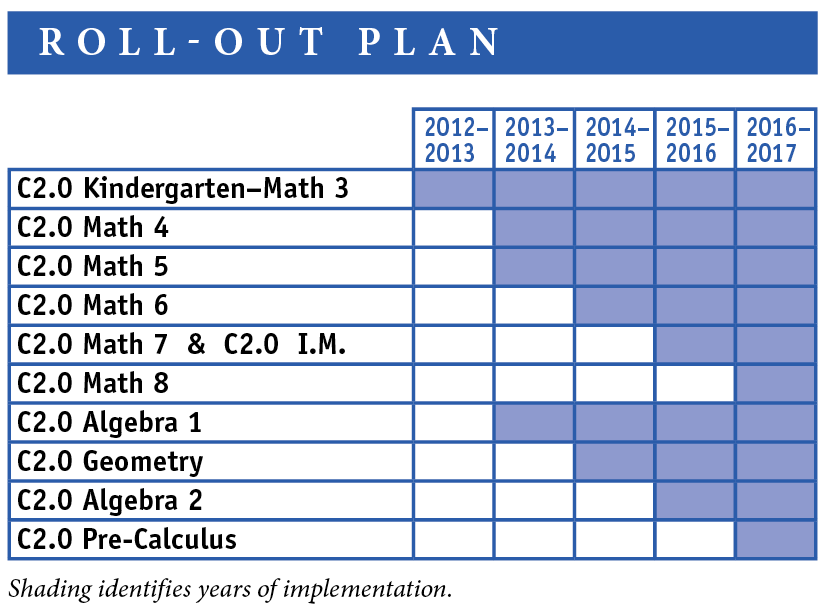
This currently varies across schools based on when 2.0 was rolled out in your school. My older kid took the most advanced math available in elementary school which put her on track for taking Algebra 1 in 8th grade (last year). Three years later, the curriculum had changed an my younger kid also took the most advanced available in her ES (compacted math) but is on track for Algebra 1 in 7th. (Kids in the older kid's year are frustrated to find out that they are a year 'behind' the others going in to their high school.)
Anonymous
08/23/2017 14:18
Subject: MCPS Alg1 PARCC scores for MS went down
I'm a professional test prep tutor. There is a difference between teaching kids Algebra throughout the year and re-teaching/reviewing with them in the few weeks leading up to the exam so they can do well.
My DS took Algebra this past year. It was well-taught with good enrichment, but the preparation for PARCC Algebra was terrible.
I also think the PARCC Algebra exam is poorly constructed and so many skill sets are conflated in 1 question that it is not really a good measure of "proficiency". Also, IMO, the reading level on PARCC is too high or the questionwriting sucks. Many bright kids come out of PARCC saying they didn't understand what a question was asking.
My DS took Algebra this past year. It was well-taught with good enrichment, but the preparation for PARCC Algebra was terrible.
I also think the PARCC Algebra exam is poorly constructed and so many skill sets are conflated in 1 question that it is not really a good measure of "proficiency". Also, IMO, the reading level on PARCC is too high or the questionwriting sucks. Many bright kids come out of PARCC saying they didn't understand what a question was asking.
Anonymous
08/23/2017 13:39
Subject: MCPS Alg1 PARCC scores for MS went down
My child took Algebra in 7th last year. It was a poorly taught class and there is no text back to refer back to or any type of study guide etc. 6th grade IM wasn't much better. Hoping that the math improves in high school.
Anonymous
08/23/2017 13:13
Subject: MCPS Alg1 PARCC scores for MS went down
Anonymous wrote:The problem with aggregating Algebra I scores is that you can't tell which kids are taking the test when. Everyone will take the test, but not everyone is planning to go to college and not everyone is good at math.
I looked at DCPS's scores, which are broken down by grade and subject (and demographics), and the kids who took Algebra I in 7th grade at Deal all passed 4+ (except literally one student). The numbers dropped for the kids taking it in 8th, and much more for much larger number taking it in 9th city-wide. You would expect this, as each successive year eliminates the top students and widens the pool of test takers, thus bringing down the average. But if you aggregate them all, you would lose the great results of those top 7th graders to the averages of the total number of students.
So in your case, you would want to try to find the scores for 7th graders at your school taking Algebra I. Also, remember that these are real kids, not just a group numbers, and some classes are stronger in some years than others. If you have more than one kid, you may get this already, as one kid's cohort may be stronger than the others'. Teachers certainly know it, as each class has its own personality and abilities.
Or if that breakdown doesn't exist, look for scores on the Geometry test. Last year was the first year it was given so nothing to compare, but these are the same students who were in Alg in 7th and the pass rates are significantly better in the more motivated group.
Anonymous
08/23/2017 13:03
Subject: MCPS Alg1 PARCC scores for MS went down
Anonymous wrote:I would say the kids are overtested, and they know these tests are meaningless. It doesn't count in their GPA, doesn't go on their college transcripts, doesn't count for placement anywhere, etc.. Our kids have enough to worry about, and are gaming the system to get what they want/need, and PARCC gets them nothing.
And for those holier-than-thou who think their little snowflakes would never do something like that, you are wrong.
As of 2016-2017 passing the Algebra PARCC is a graduation requirement in Maryland, so it's not meaningless.
Anonymous
08/23/2017 13:00
Subject: MCPS Alg1 PARCC scores for MS went down
Anonymous wrote:Can someone explain MS math options? I though Alg. 1 in 8th grade was advanced, but looking at this it seems that some MS kids are taking Alg. 1 in 7th. Is that true at all schools?
Algebra 1 by eigth grade is the stated MCPS goal. I think currently only about 60% achieve this. Algebra 1 in 7th is the advanced track, the natural continuation of the compacted math track in ES.
Anonymous
08/23/2017 12:58
Subject: Re:MCPS Alg1 PARCC scores for MS went down
My DC was in Alg 1 this year which means he was also in the rollout year of curriculum 2.0 IM (pre algebra) the year prior. Basically, he has been a guinea pig for curriculum 2.0 since 2nd grade (our ES had a pilot program one year early). Kids one year ahead in school missed 2.0 until Alg 1. From this point forward students are essentailly 2.0 native. Couldn't say if this is a curriculum problem or a rollout problem but I'd believe the score drop is 2.0 rollout realted. The past two years in particular the materials and teaching I've witnessed have been atrocious. I've spoken with both teachers and they are gung ho about the curriculum and full of jargon, but hard to engage on actual math concepts. Lots of mis-information in howework and test grading. Maybe that's just our bad luck of the draw, but we've been committed to preping out of class. Obviously I haven't seen DC's results yet. MS students may not be motivated but that wouldn't explain a drop in scores.
Anonymous
08/23/2017 12:48
Subject: MCPS Alg1 PARCC scores for MS went down
Can someone explain MS math options? I though Alg. 1 in 8th grade was advanced, but looking at this it seems that some MS kids are taking Alg. 1 in 7th. Is that true at all schools?
Anonymous
08/23/2017 12:38
Subject: MCPS Alg1 PARCC scores for MS went down
I would say the kids are overtested, and they know these tests are meaningless. It doesn't count in their GPA, doesn't go on their college transcripts, doesn't count for placement anywhere, etc.. Our kids have enough to worry about, and are gaming the system to get what they want/need, and PARCC gets them nothing.
And for those holier-than-thou who think their little snowflakes would never do something like that, you are wrong.
And for those holier-than-thou who think their little snowflakes would never do something like that, you are wrong.
Anonymous
08/23/2017 12:25
Subject: MCPS Alg1 PARCC scores for MS went down
Anonymous wrote:The problem with aggregating Algebra I scores is that you can't tell which kids are taking the test when. Everyone will take the test, but not everyone is planning to go to college and not everyone is good at math.
I looked at DCPS's scores, which are broken down by grade and subject (and demographics), and the kids who took Algebra I in 7th grade at Deal all passed 4+ (except literally one student). The numbers dropped for the kids taking it in 8th, and much more for much larger number taking it in 9th city-wide. You would expect this, as each successive year eliminates the top students and widens the pool of test takers, thus bringing down the average. But if you aggregate them all, you would lose the great results of those top 7th graders to the averages of the total number of students.
So in your case, you would want to try to find the scores for 7th graders at your school taking Algebra I. Also, remember that these are real kids, not just a group numbers, and some classes are stronger in some years than others. If you have more than one kid, you may get this already, as one kid's cohort may be stronger than the others'. Teachers certainly know it, as each class has its own personality and abilities.
But teachers are supposed to make sure every students is college and career ready even if they have no business going to college.
Anonymous
08/23/2017 12:16
Subject: MCPS Alg1 PARCC scores for MS went down
The problem with aggregating Algebra I scores is that you can't tell which kids are taking the test when. Everyone will take the test, but not everyone is planning to go to college and not everyone is good at math.
I looked at DCPS's scores, which are broken down by grade and subject (and demographics), and the kids who took Algebra I in 7th grade at Deal all passed 4+ (except literally one student). The numbers dropped for the kids taking it in 8th, and much more for much larger number taking it in 9th city-wide. You would expect this, as each successive year eliminates the top students and widens the pool of test takers, thus bringing down the average. But if you aggregate them all, you would lose the great results of those top 7th graders to the averages of the total number of students.
So in your case, you would want to try to find the scores for 7th graders at your school taking Algebra I. Also, remember that these are real kids, not just a group numbers, and some classes are stronger in some years than others. If you have more than one kid, you may get this already, as one kid's cohort may be stronger than the others'. Teachers certainly know it, as each class has its own personality and abilities.
I looked at DCPS's scores, which are broken down by grade and subject (and demographics), and the kids who took Algebra I in 7th grade at Deal all passed 4+ (except literally one student). The numbers dropped for the kids taking it in 8th, and much more for much larger number taking it in 9th city-wide. You would expect this, as each successive year eliminates the top students and widens the pool of test takers, thus bringing down the average. But if you aggregate them all, you would lose the great results of those top 7th graders to the averages of the total number of students.
So in your case, you would want to try to find the scores for 7th graders at your school taking Algebra I. Also, remember that these are real kids, not just a group numbers, and some classes are stronger in some years than others. If you have more than one kid, you may get this already, as one kid's cohort may be stronger than the others'. Teachers certainly know it, as each class has its own personality and abilities.
Anonymous
08/23/2017 11:57
Subject: Re:MCPS Alg1 PARCC scores for MS went down
Middle schoolers generally don't care about testing or much of anything for that matter. I wish the powers that be would watch videos of middle schoolers taking the PARCC test. I proctor it every year and the middle schoolers either fly through it or start off by taking it seriously but once they see their peers staring at them because they are taking so long that they quickly wrap it up. Compare that with 3rd and 4rd graders who actually still care about taking this test.
Anonymous
08/23/2017 11:46
Subject: MCPS Alg1 PARCC scores for MS went down
Almost all of the MS Alg 1 PARCC scores went down from 2016 to 2017.
My DS will be taking Alg 1 in 7th in MCPS MS. DS is strong in math, but this is kind of concerning.
What is going on? Or are kids just not caring about PARCC so they are tanking it (s/o from the Why is Whitman only rated 4 thread). Or something not right with the Alg 1 curriculum and/or teachers in MCPS. Yes, I know lots of parents hate the 2.0 curriculum. But, 2016 and 2015 Alg 1 parcc scores weren't as bad as 2017. And kids who took Alg 1 in 2015 and 2016 were under 2.0 math curriculum, too.
http://data.baltimoresun.com/news/parcc2017/all-tests/
My DS will be taking Alg 1 in 7th in MCPS MS. DS is strong in math, but this is kind of concerning.
What is going on? Or are kids just not caring about PARCC so they are tanking it (s/o from the Why is Whitman only rated 4 thread). Or something not right with the Alg 1 curriculum and/or teachers in MCPS. Yes, I know lots of parents hate the 2.0 curriculum. But, 2016 and 2015 Alg 1 parcc scores weren't as bad as 2017. And kids who took Alg 1 in 2015 and 2016 were under 2.0 math curriculum, too.
http://data.baltimoresun.com/news/parcc2017/all-tests/