Anonymous
 08/30/2023 20:33
Subject: What is this ES math??
08/30/2023 20:33
Subject: What is this ES math??
Another approach. Teach them the concepts using traditional methods before they encounter the topic in class. Once they learn the concept, it is easier to see where the teacher is coming from with new alternative methods. That may be why some parents think the current approach is interesting, because they already know the road map. When a kid is learning the new methods in class for the first time without a road map, it's more confusing.

Anonymous
08/30/2023 20:16
Subject: What is this ES math??
Anonymous wrote:Anonymous wrote:Anonymous wrote:OP, basic math understanding means that you should be able to recall your way of getting the right answer, then work backwards from that to figure out the teacher's way, and then explain the teacher's way to your kid (and also your way, because the more they understand that there are different ways of getting to the answer, the better it is for logical reasoning).
At least, this is what I've always done. My kids are older teens now, and went the advanced math track route.
-research scientist.
I think I’m looking at this from the opposite direction. The important thing is to understand the math principle in the lesson. As the Pp indicated, there may be multiple mathematically valid methods to approach a problem. Presumably the school is teaching the method that they think will best teach the student the mathematical concept. However, if the method isn’t making sense to you or your child, teach them the method that does make mathematical sense to you Just make sure to teach them WHY it works (the underlying concept). The teacher can clarify the method in school, but that’s not the goal. Think of it like the teacher giving directions to a destination. The directions will be for what the teacher thinks is the best route, but if there’s a roadblock, you take a detour. But keep in mind, the destination isn’t a correct answer, it’s mathematical understanding.
This doesn’t work in ES. If the teacher asks you to solve the problem using, say, number bonds and the kid solves using the algorithm, then the kid gets zero points and it considered behind. The kid needs to know each strategy, rather than the single strategy we learned.
Khan academy videos are great.
No, I agree with the PP. This is math people do it. Just teaching your kid the teacher's steps is going to get them nowhere fast. They'll get the points for the day, but they won't understand the underlying math. Heed the advice of actual mathy people on this thread. Teach your kid all the methods. You can start with yours. You can start with the teacher's. But you need to get at the math behind the methods.
It's so easy to tell who has actual math understanding on these types of thread, and who just followed the steps at school.
Anonymous
08/30/2023 20:09
Subject: What is this ES math??
Anonymous wrote:Anonymous wrote:OP, basic math understanding means that you should be able to recall your way of getting the right answer, then work backwards from that to figure out the teacher's way, and then explain the teacher's way to your kid (and also your way, because the more they understand that there are different ways of getting to the answer, the better it is for logical reasoning).
At least, this is what I've always done. My kids are older teens now, and went the advanced math track route.
-research scientist.
I think I’m looking at this from the opposite direction. The important thing is to understand the math principle in the lesson. As the Pp indicated, there may be multiple mathematically valid methods to approach a problem. Presumably the school is teaching the method that they think will best teach the student the mathematical concept. However, if the method isn’t making sense to you or your child, teach them the method that does make mathematical sense to you Just make sure to teach them WHY it works (the underlying concept). The teacher can clarify the method in school, but that’s not the goal. Think of it like the teacher giving directions to a destination. The directions will be for what the teacher thinks is the best route, but if there’s a roadblock, you take a detour. But keep in mind, the destination isn’t a correct answer, it’s mathematical understanding.
This doesn’t work in ES. If the teacher asks you to solve the problem using, say, number bonds and the kid solves using the algorithm, then the kid gets zero points and it considered behind. The kid needs to know each strategy, rather than the single strategy we learned.
Khan academy videos are great.
Anonymous
08/30/2023 20:05
Subject: What is this ES math??
Anonymous wrote:OP, basic math understanding means that you should be able to recall your way of getting the right answer, then work backwards from that to figure out the teacher's way, and then explain the teacher's way to your kid (and also your way, because the more they understand that there are different ways of getting to the answer, the better it is for logical reasoning).
At least, this is what I've always done. My kids are older teens now, and went the advanced math track route.
-research scientist.
I think I’m looking at this from the opposite direction. The important thing is to understand the math principle in the lesson. As the Pp indicated, there may be multiple mathematically valid methods to approach a problem. Presumably the school is teaching the method that they think will best teach the student the mathematical concept. However, if the method isn’t making sense to you or your child, teach them the method that does make mathematical sense to you Just make sure to teach them WHY it works (the underlying concept). The teacher can clarify the method in school, but that’s not the goal. Think of it like the teacher giving directions to a destination. The directions will be for what the teacher thinks is the best route, but if there’s a roadblock, you take a detour. But keep in mind, the destination isn’t a correct answer, it’s mathematical understanding.
Anonymous
08/30/2023 20:05
Subject: What is this ES math??
Anonymous wrote:Google the videos. They are all online and explain the concepts. They are slow, so speed them up to 1.5 speed.
This is what I did. By about third or fourth grade, my kid was Googling the videos herself and didn’t even need me.
Anonymous
08/30/2023 19:53
Subject: What is this ES math??
Anonymous wrote:Anonymous wrote:OP, basic math understanding means that you should be able to recall your way of getting the right answer, then work backwards from that to figure out the teacher's way, and then explain the teacher's way to your kid (and also your way, because the more they understand that there are different ways of getting to the answer, the better it is for logical reasoning).
At least, this is what I've always done. My kids are older teens now, and went the advanced math track route.
-research scientist.
Cool. My older kid also went the advanced route and is self sufficient and I could help problem solve along the way.
But when I kid doesn't get it at all, I'm starting from scratch every night and studying the material myself before attempting to teach it? I don't think this is supposed to be how this works.
The means is not important, OP. The results matter: that your child understands the very easy primary school math. So figure it out, watch videos, get a tutor, whatever's needed. If you have no clue now, what you earth will you do when your kid struggles in middle and high school?
If your only option is to sweat it out every night, well, that's what you do. Surely you're not proposing to leave your kid hanging?
I come at this from the perspective of having taught material to my child with special needs every afternoon of every school day of every year of elementary school. In middle and high school, I could afford a few tutors. That child is now in a good university.
Your hard work (or your hard-earned money) will pay off. Stop whining. This is also parenting.
Anonymous
08/30/2023 19:52
Subject: What is this ES math??
It took me a while to come around to Eureka, but I did eventually. Eureka devotes 5 lessons to a concept before finally, on lesson 6, teaching the way we learned. It arms kids with methods. Great for critical thinking skills too.
Anonymous
08/30/2023 19:48
Subject: What is this ES math??
OP- There are Parent Tip sheets that teacher can (and should) send home just for this. They can also be found on the Greatminds site.
Ask you teacher to send them home with students. It’s also a great way for parents to see what students are working on.
Ask you teacher to send them home with students. It’s also a great way for parents to see what students are working on.
Anonymous
08/30/2023 19:39
Subject: What is this ES math??
Try looking for a video on YouTube for that particular lesson (example, search Eureka grade 2 module 2 lesson 4). The top of the homework page will tell you what lesson it is. There are a lot of instructional videos out there since the pandemic.
Anonymous
08/30/2023 19:39
Subject: What is this ES math??
Google the videos. They are all online and explain the concepts. They are slow, so speed them up to 1.5 speed.
Anonymous
08/30/2023 19:33
Subject: What is this ES math??
Anonymous wrote:OP, basic math understanding means that you should be able to recall your way of getting the right answer, then work backwards from that to figure out the teacher's way, and then explain the teacher's way to your kid (and also your way, because the more they understand that there are different ways of getting to the answer, the better it is for logical reasoning).
At least, this is what I've always done. My kids are older teens now, and went the advanced math track route.
-research scientist.
Cool. My older kid also went the advanced route and is self sufficient and I could help problem solve along the way.
But when I kid doesn't get it at all, I'm starting from scratch every night and studying the material myself before attempting to teach it? I don't think this is supposed to be how this works.
Anonymous
08/30/2023 19:27
Subject: What is this ES math??
OP, basic math understanding means that you should be able to recall your way of getting the right answer, then work backwards from that to figure out the teacher's way, and then explain the teacher's way to your kid (and also your way, because the more they understand that there are different ways of getting to the answer, the better it is for logical reasoning).
At least, this is what I've always done. My kids are older teens now, and went the advanced math track route.
-research scientist.
At least, this is what I've always done. My kids are older teens now, and went the advanced math track route.
-research scientist.
Anonymous
08/30/2023 19:25
Subject: What is this ES math??
Tape chart!
Anonymous
08/30/2023 19:23
Subject: Re:What is this ES math??
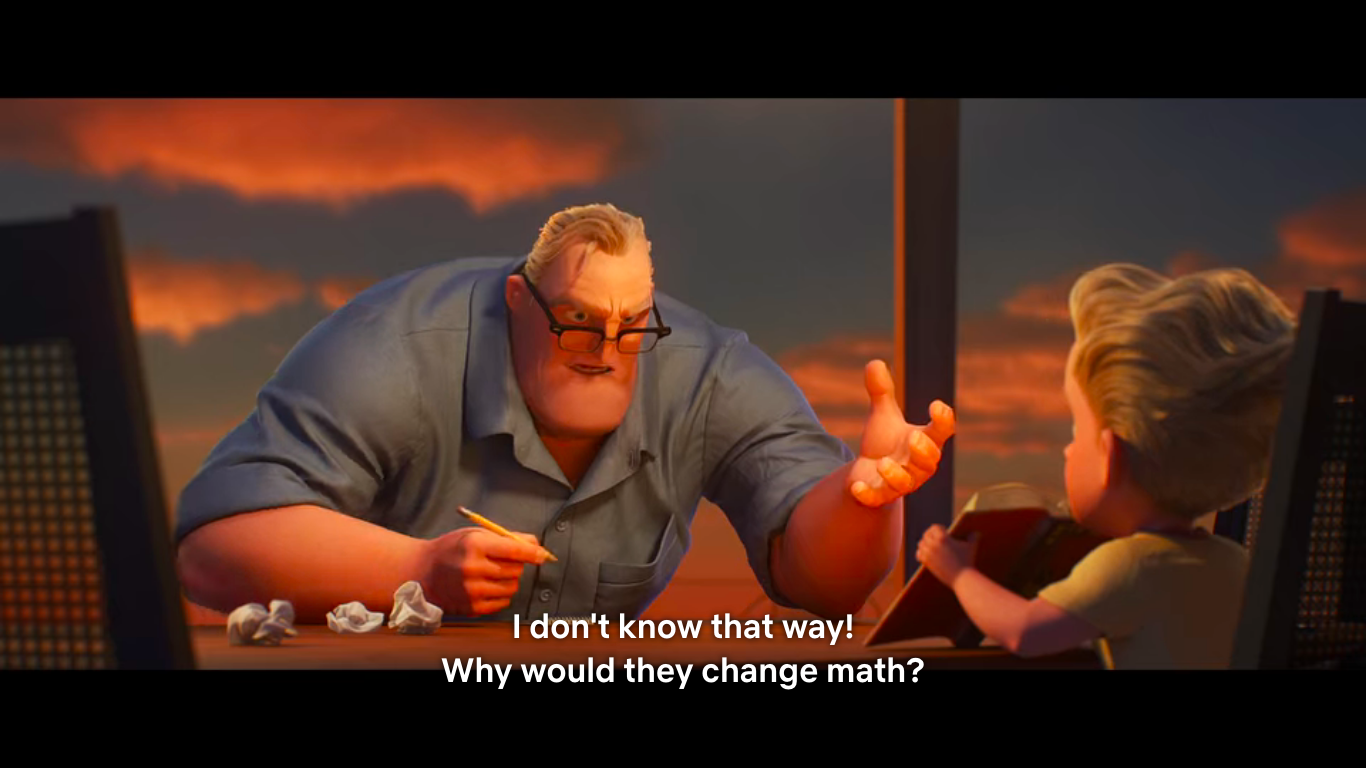
Anonymous
08/30/2023 19:21
Subject: What is this ES math??
I apparently capped out of being capable of math in early elementary school. My kid needs a lot of extra support. I am educated and generally good at teaching her things that are hard for her. How do I help my kid if the work makes no sense???
Schools want parental support but the eureka books are basically a foreign language.
Schools want parental support but the eureka books are basically a foreign language.